
While planning this marie claire photo shoot, it emerged that the three women being profiled all knew one another. The not-for-profit organisations they lead – each dedicated to helping people rebuild after crises – are entwined in a network of support and solidarity.
“We work extremely collaboratively,” says Ren Fernando, co-founder of ReLove. “Our first project was helping five women from WAGEC [Women’s & Girls’ Emergency Centre] leave the refuge … It feels like we’re each contributing our own bit, and when we work together it doesn’t feel futile.”
The epidemic of domestic violence in Australia can indeed feel insurmountable. In 2024, PM Anthony Albanese declared a national crisis of violence against women. Two years later, at the time of writing, 15 women have already been killed in 2026.
One in four women around the country are victim-survivors of intimate partner violence and one in three men have used intimate partner violence, a statistic that demands greater attention. The women interviewed for this story agree that systems are broken, calling for urgent public funding and resources.
But on a micro level – within their own work and organisations – they champion women supporting women. The phrase is often bandied about as a byword for friendship or mentorship, though it also reflects something deeper – the groups, leaders and volunteers helping victim-survivors recover and thrive, breaking the chains of intergenerational trauma.
This drives change, demonstrating the power of collective action and goodwill. Here, they share their stories.
Sonia Casanova, CEO Of Dress For Success NSW & ACT
As a little girl, Sonia Casanova was told that the world was her oyster. Her family, parents and ballet teacher taught her that no dream was out of reach, and in her early career she was lucky to be mentored by inspirational women.
So as she progressed up the professional ladder, she was shocked to come up against invisible barriers, judgement and gender inequality. Today, as the CEO of Dress for Success NSW & ACT, Casanova has come full circle as an advocate for women.
“Our mission is simple but powerful,” she says. “We exist to empower women to achieve economic mobility.”
The not-for-profit organisation, which has affiliates around the country and the world, provides career training and free professional attire for women who are re-entering the workforce and rebuilding their life after hardship. Notably, 44 per cent have experienced domestic violence.

“I remember one woman who came to Dress for Success with low self-esteem,” remembers Casanova. “She went with one of our volunteer stylists and they gave her an outfit, and she came out of the change room, looked at herself in the mirror and said, ‘I remember her.’ She shared that her former partner had taken away her confidence, made her feel she wasn’t worthy and told her she’d never amount to anything without him. But there she was, standing with so much courage and determination.”
Last year, powered by 500 volunteers, the organisation styled 3100 women. They dressed them in tailored suits and smart shoes, equipping them with confidence for job interviews, court cases and other significant life events.
“There’s no single or typical story, but more than half the women we support here hold tertiary qualifications,” notes Casanova. “People think that domestic violence and other challenges are contained to a certain subset of the community, but actually, women face those challenges in all corners of our community, and we need to remove those misconceptions.”
The CEO speaks emotionally about a woman who came to Dress for Success three days after leaving jail. With no permanent place to live, she already had a job interview lined up. “She said, ‘I’m determined I’m never going back there. I’m going to change my life,’” shares Casanova, who’s now dedicated to passing on the sense of opportunity and self-worth that was instilled in her as a little girl. “I think someone else’s belief in you can be transformational,” she adds.
Nicole Yade, CEO Of Women’s & Girls’ Emergency Centre
When people find out that Nicole Yade, an accomplished and award-winning CEO, is a survivor of domestic violence, surprise flickers in their eyes. “They say, ‘But you seem pretty together, Nic. How did you end up like that?’”
Her response is loud and true: “Domestic violence can happen to any one of us.” Yade grew up around family violence, left home at 18 and got into a relationship that soon turned abusive. “I tried to leave so many times I lost count,” she recalls. “The final time was when I was 23 or 24, and I had a baby daughter who was five or six months old … She moved me to action because I was determined that I didn’t want her to grow up in violence with the fear I’d had as a kid. I wanted better for her and that really spurred me on to make big, scary changes.”
Today, Yade leads the Women’s & Girls’ Emergency Centre (WAGEC), the Sydney-based not-for-profit that every night provides support and shelter to 200 women and children impacted by domestic violence, homelessness and systemic disadvantage. “Often they come to us directly from the hospital or the police station,” she says. “We’re on the frontline, the first point of call for people when they’re going through some of the hardest days of their life.”
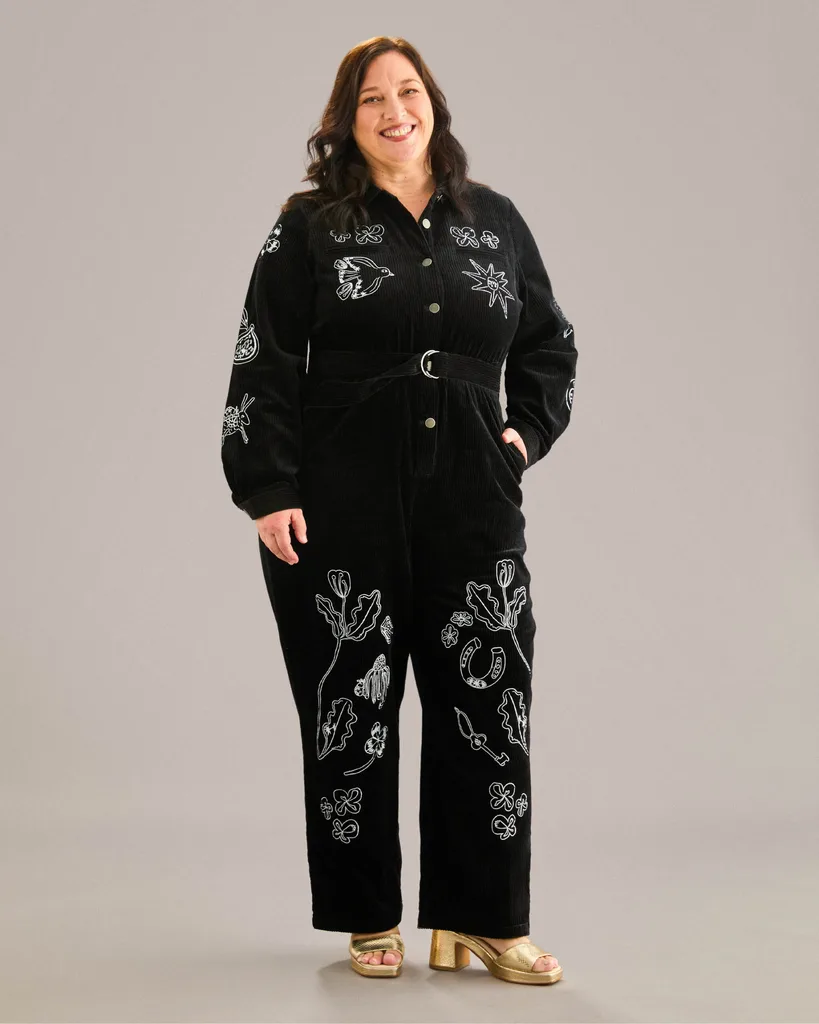
Those days and nights can be dark and emotionally heavy, but Yade feels privileged to do the work. “We have the great honour of serving some of the most courageous women in our community,” she says. “You get to see people start to smile again, see their posture change and their confidence grow as they come towards the end of their journey with us. They’re finding a home, rebuilding their lives and starting a new chapter free from violence.”
Yade’s lived experience, she believes, puts her in a unique position to empower and identify with victim-survivors on a deep level. “I want them to know, ‘You’re not just a simple victim. You are strong, resilient, powerful and capable … In the future, you’re going to become the CEO of WAGEC or do something else amazing. These experiences don’t have to ruin your life. Who knows what’s possible? Extraordinary things can happen.’ If that’s true for me, that’s true for every victim-survivor going through tough times. I know there are great things ahead for all of them.”
Ren Fernando, Co-Founder Of ReLove
An architect by trade, Ren Fernando has a strong concept of home: it’s a roof over your head; it’s safety and shelter; it’s well-designed spaces that balance function and form. But it’s also what’s inside. “A home requires everything you need to sleep well, to eat well, to cook, to study,” she says.
“It’s basic things but also frivolous things: it’s that nostalgic scented candle or the floral sofa that reminds you of your nanna.” In 2021, Fernando launched ReLove with co-founder Ben Stammer.
The non-profit enterprise provides quality furniture and essentials for people rebuilding their homes and lives after crisis. As they embark on a fresh start, they can visit the Sydney warehouse and go “free shopping” for everything from dining tables to textiles and toasters, all donated by corporate partners and everyday people (while conveniently saving items from ending up in landfill).
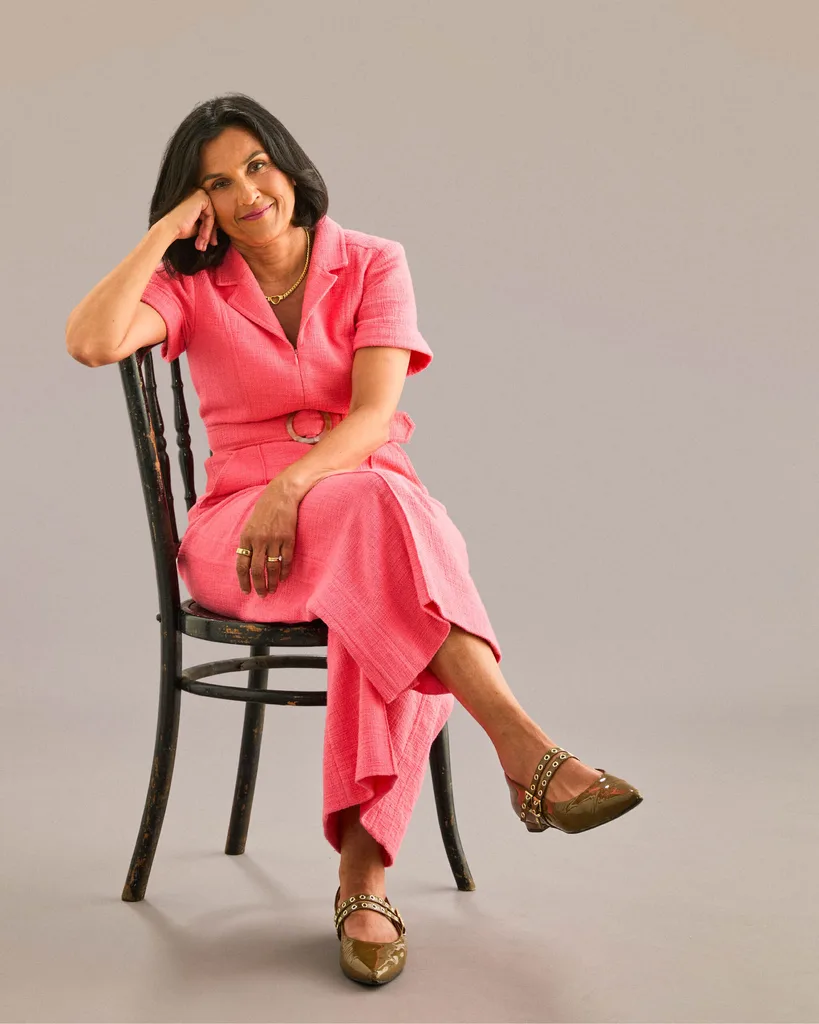
So far, ReLove has supported 8500 people in need, 75 per cent of whom were impacted by domestic violence and homelessness. “It’s a monumental logistic challenge to actually leave a crisis situation, and one of the big barriers is that even if you get into housing, there’s nothing inside it,” points out Fernando. “The wraparound programs and services for employment, education and recovery don’t work if you come home at night and you’re sleeping on the floor. That doesn’t bring a sense of self-worth and dignity.” Heart-lifting moments at ReLove ground Fernando’s purpose.
“We had a 15-year-old boy whose family was starting over after domestic violence,” she says. “He had to come in with the caseworker and do the shopping. He got a sofa, but he also picked up a little marble affirmation stone that said, ‘Follow your dreams’ and put it in his pocket.”
Another young girl, a victim-survivor of abuse and an avid reader, came to ReLove with nothing but a bag of books. “She was so excited to get a bookshelf,” remembers Fernando. “And then she got a desk, and two years later she’s just enrolled in university.” Fernando acknowledges her army of volunteers, some of whom were originally supported by the organisation. “They give their time with such compassion and openness. And they get a lot out of being here – there’s a whole other level of helping people through loneliness,” she says.
“The world is hard right now, but what happens under the roof of ReLove is people coming together to help those around us. We have love in our name because I believe in it. Love is at the heart of everything that we do.”

Related stories

Native ad body.

Native ad body.



Native ad body.