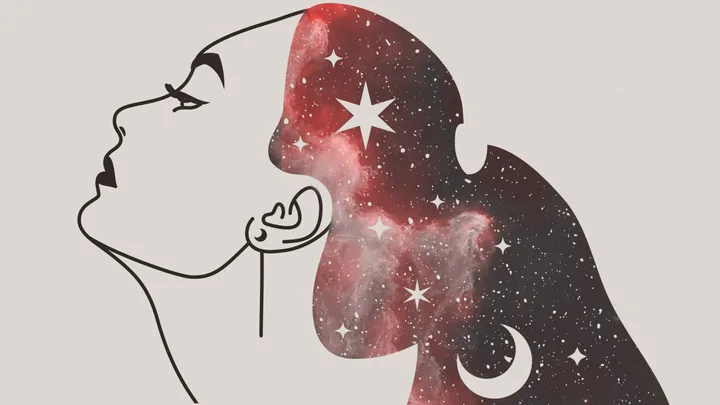
In a large grey bowl beside my bed, I keep a collection of crystals: amethyst for dreams, rose quartz for love, clear quartz for manifestation and tourmaline to ward off negativity. I’ll spend this winter-solstice in a class called Body Medicine, moving and breathing in unison with other women. Once a year, before my birthday, my numerologist, Jacqueline, tells me how the movement of the planets will impact my life in the year ahead. To varying degrees, this interest in the occult and ritual is something I share with most of my friends. And we’re certainly not alone. In the past several years, TikTok’s WitchTok and its many diviners and spell-casters have amassed tens of billions of views. According to a recent Pew report, 30 per cent of Americans regularly engage with some esoteric practice including astrology, tarot cards and fortune telling.
Experts say it’s understandable that we’re turning to magic and looking for answers in mysterious places. Times are uncertain, years of global political, economic and climate instability have led to the erosion of trust in institutions, and research suggests that people reach for these practices seeking guidance, reassurance and the opportunity for self-reflection. At the end of 2024, I drove from New York to Salem, Massachusetts, in search of some understanding of our collective desire for the mystical. I was convinced that ground-zero of the most famous witch trials in history would unearth something about the secrets of the universe and the ancient forces that have largely disappeared from modern life.
It was the first stop on a journey that revealed a harsher truth about the way we live and the male-dominated, masculine-coded world we’ve become accustomed to existing in. In one way, the experts were right: we are turning to the occult because of uncertain times. But what their explanation fails to account for is that our instinct to reach for witchcraft runs deeper and is more primal than mental health or light amusement. It goes to the core of how and why our political and economic systems are showing quite alarming cracks – from the frequency of once-in-a-generation extreme weather events to the wars sending financial markets into crisis. Both are products of a patriarchal order that sees the environment as a resource to exploit and other countries as territories to dominate. That patriarchal order was established and entrenched centuries ago as the world’s industrialised and colonial powers expanded. What most of us don’t realise is that the Industrial Revolution began at the end of the witch-hunts.
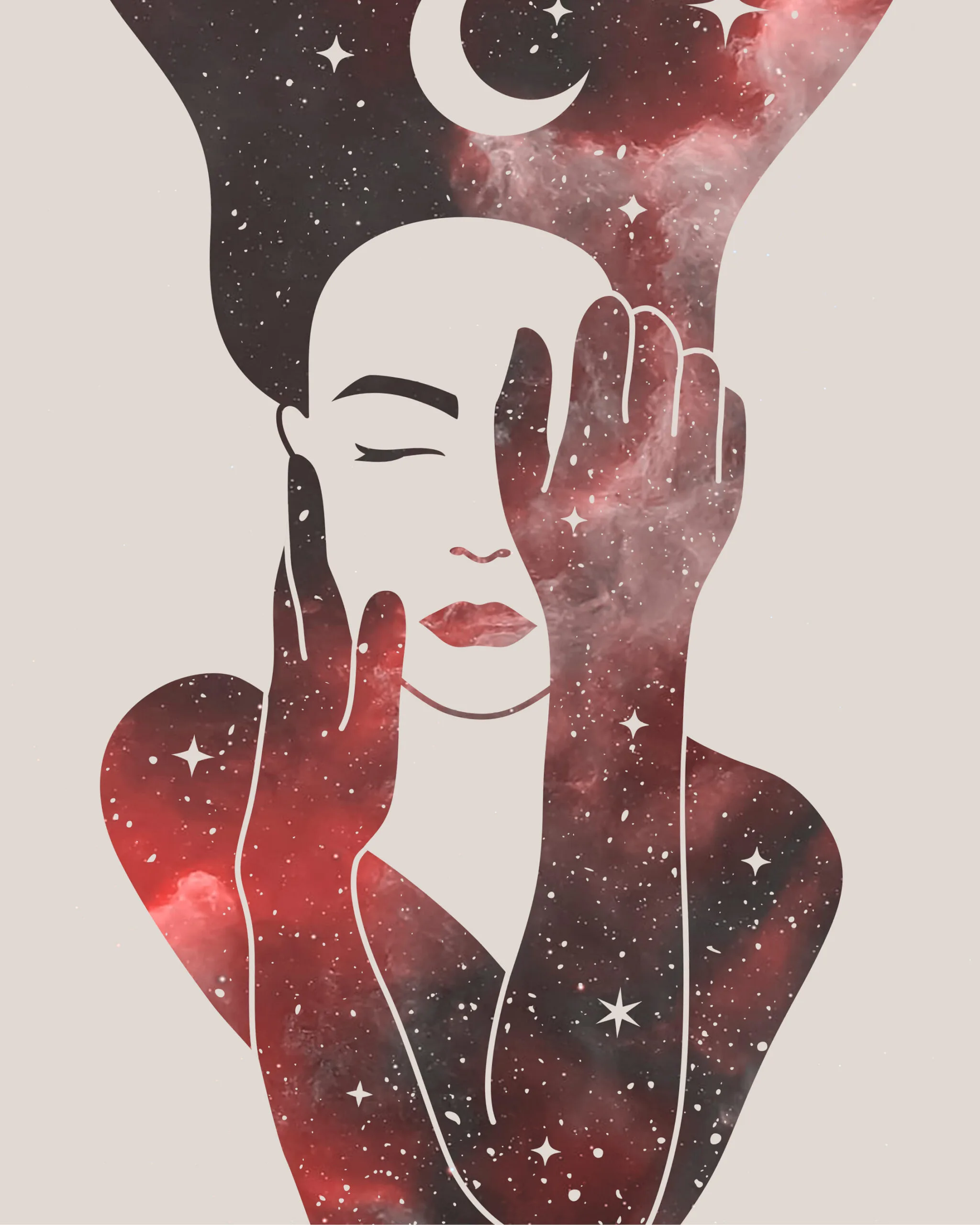
Our current economic system was established on the back of a 300-year-long campaign that saw women stripped of their economic and social power. Ever since, we’ve lived in a world where feminine softness, beauty, creativity and intuition is undervalued. We’re reaching for the occult because, somewhere in our bones, we know it represents a time when something else prevailed, when the world still felt enchanted. The European witch-hunts spanned the 15th to 18th centuries and traversed countries and continents: Germany, Italy, France, Denmark-Norway, Scotland, England and finally across the seas to the New English colonies.
Records suggest as many as 100,000 people were tried for witchcraft, 80 per cent of them women. Out of fear of being maligned as a witch, people were forced to abandon their beliefs in supernatural forces, including that the natural world was animate and sacred and that human beings had an obligation to protect and nurture it. When we take a wide lens, the list of things historical witches got in trouble for reads like a weekend away: friendship, dancing, wine (they called it sack), swimming, stargazing, forest bathing and weather watching. But there were bigger things, professions and social structures that were targeted, things that have a hidden, pervasive impact on modern life.
Take medical misogyny. Modern medicine’s poor treatment of women – from under-researched chronic pain conditions to studies that reveal it takes longer for doctors to correctly diagnose women – has roots in the persecution of female healers by the witch-hunters who maligned their knowledge of herbs and the body as superstitious sorcery. They were aided by the church and academics who legislated to exclude women from universities and the training required to work as doctors. The effect of this was to remove women and their understanding of the body from the medical profession at a pivotal moment in history, when the principles that shaped modern medicine were being established alongside scientific advancements and discoveries that would accelerate across the next 200 years.
This exclusion has manifested in two big ways. Firstly, for the entirety of modern medicine, women’s healthcare has been based on what we know about men’s bodies – women were largely excluded from medical trials until the 1990s. Secondly, in the hierarchy that places doctors above nurses and cures above care, modern medicine and its approach to health and wellness might look very different had the witch-hunters never targeted female healers who had the holistic knowledge to treat disease and the skills to administer care. In her book, All in Her Head: The Truth and Lies Early Medicine Taught Us About Women’s Bodies and Why it Matters Today, Dr Elizabeth Comen – a breast cancer specialist at Memorial Sloan Kettering Cancer Center in Manhattan – asks: “What would medicine look like if all the female energy that was squeezed out and sidelined … was allowed back in?” The echoes of the witch-hunts reverberate through other fields and professions, too. Witch-hunters targeted spinsters, women who spun yarn to make money, devaluing their work and denigrating their economic independence as vulgar and dishonest.
Now, centuries later, this work is still painfully undervalued; only 2 per cent of garment workers make a living wage. Women who knew how to live off the land, who gardened and grew the food and fibre that fed and clothed their families, were also targeted. Their connection to the land was severed so food could be farmed for profit instead of subsistence. We are still living inside the problematic industrial food system that was born in its wake – a system that sees one in 11 people go hungry while, according to the United Nations, a third of the world’s food is not being eaten. It’s a system that serves up shiny packets of ultra-processed food that are low in nutrients but high in calories, that are addictive and bad for our health but somehow cheaper and more readily available than locally grown fresh fruit and vegetables.
In many ways, the final frontier for the witch-hunters was female friendship. Women’s work was performed in groups, so they spent days and hours talking and theorising, building knowledge about psychology, sociology, family life, heartache and love. Witch-hunters saw this intimacy as a threat to their authority and launched campaigns to undermine women’s sociability. Female gatherings were framed as Witches’ Sabbats where the devil was present and diabolical acts were performed. It became dangerous to have friends and, in the years that followed, women’s lives went from intermingled and communal in the village to the isolation of the family home in the suburbs.
After Salem, I travelled to Scotland and England and the far north of Norway, visiting towns where witches were discovered, persecuted and burnt at the stake or hanged. What I learnt about enchantment had very little to do with the crystals by my bed or the ancient art of divination. Each place was geographically awesome, the landscapes wild and fiercely, eerily beautiful. What I learnt was that the witch-hunters were not just determined to destroy feminine power, they were determined to dominate and destroy nature’s power, too. To do this, they launched a steady campaign to demystify and disenchant the world, and across the West the belief in nature as sacred and magical that runs through our folklore and fairytales was abandoned. They left us believing that if something cannot be measured it does not exist, and that we were to stop wondering at the silence in the depths of a forest, the beauty of the ocean at sunrise or fireflies glowing white against the dark night sky.
Ultimately, what I learnt of enchantment, and why we all seem to be reaching for it now, is that it might just be the through line, the thing that brings us back to what matters: taking care of each other, taking care of the earth.
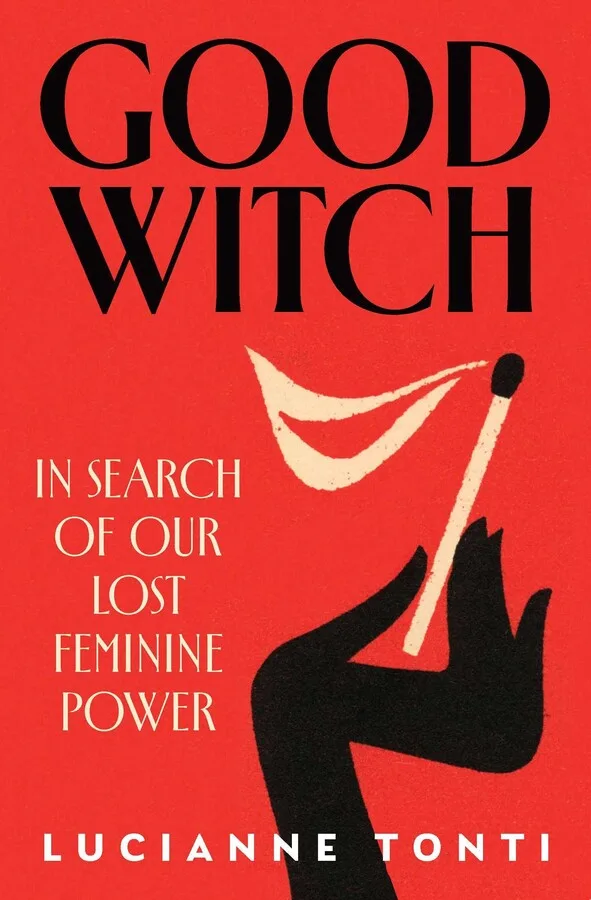
Words: Lucianne Tonti

Related stories
Native ad body.

Native ad body.
Native ad body.