Skincare has quietly become one of the most science-literate corners of the beauty industry. Consumers now speak fluently about retinoids, barrier repair and active ingredients, dissecting ingredient lists with the scrutiny once reserved for food labels.
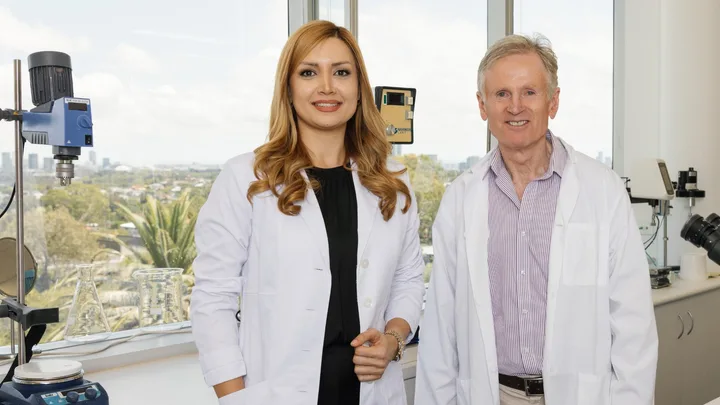
Behind that shift sits a new generation of scientists translating complex research into the products lining our bathroom shelves. Among them is Dr Sally Noushini, Head of Research and Development at Ultraceuticals.

With graduate degrees in Chemistry and Biomolecular Science, she has spent more than 15 years working across academia, pharmaceutical research and cosmetic science.
But her career also sits within a broader conversation about women in STEM — and the visibility of female scientists in leadership roles.
“Evidence-based outcomes are what drives me,” Noushini says. “Launching innovation driven by data and leading the high-performing team behind the science speaks more loudly than anything.”
After more than a decade in academic and pharmaceutical laboratories, Noushini entered the beauty industry with a clear objective: bringing scientific rigour to a category often shaped by marketing claims.
At Ultraceuticals, where she has led research and development since 2020, she oversees the use of advanced active ingredients and delivery technologies, ensuring formulations are supported by clinical data.
The approach reflects a wider shift across the industry. As consumers become increasingly ingredient-savvy, skincare brands are under growing pressure to demonstrate results through research rather than rhetoric.
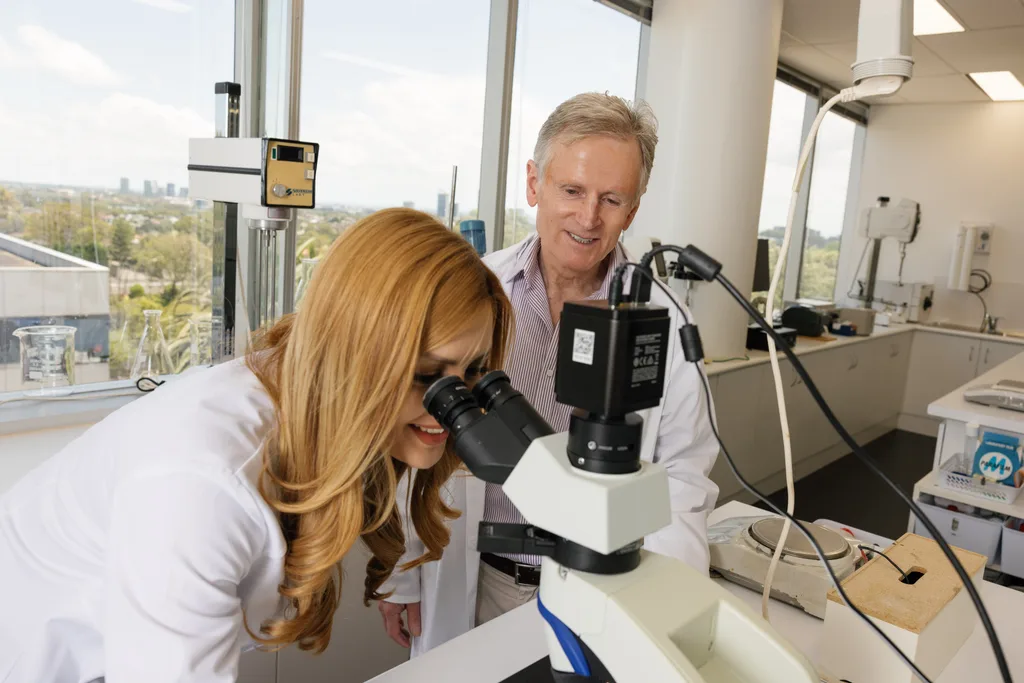
For Noushini, that means filtering trends through a scientific lens.
“Trends inspire direction, but science drives credibility,” she says. “My role is translating consumer language into biological mechanisms. If a trend offers a genuine benefit to skin physiology or barrier function, we can elevate it with evidence. If not, we simply don’t pursue it.”
While the beauty industry is often perceived as female-dominated, the scientific fields underpinning product development have historically been less balanced. For Noushini, credibility as a female scientific leader has been built the same way it is in any laboratory: through results.
“The scientific sector has increasingly become gender-neutral driven,” she says. “Skills, merit and competence are so tangible in our work now that technical authority tends to shine through and outdo any bias.”
Still, she acknowledges that many female scientists feel pressure to consistently prove themselves.
“I would say female scientists really do set the bar very high to repeatedly demonstrate their expertise,” she explains.
Noushini’s own path reflects that philosophy. After completing a PhD and spending more than a decade in academic research before moving into the beauty industry, she came to see credibility as something that accumulates over time.
“Credibility compounds,” she says. “Launching innovation driven by data and leading the high-performing team behind the science speaks more loudly than anything. Evidence-based outcomes are what drives me. Results are the most powerful equaliser.”
Leadership itself, she adds, has historically been filtered through gendered expectations.
“As we know across many sectors, authority from women has sometimes been interpreted through a narrower lens,” she says. “Decisiveness labelled as ‘difficult’, collaboration perceived as ‘soft’.”
In scientific leadership, however, both qualities are essential.
“Effective leadership isn’t about dominance,” Noushini explains. “It’s about clarity of thought, empowerment, collaboration and accountability. When a scientist leads with data, transparency and strategic thinking, authority is grounded in trust rather than hierarchy.”
For Noushini, meaningful progress for women in STEM will depend on more than visibility alone.
“Support means equitable pay, transparent career pathways and sponsorship as well as mentorship,” she says. “Mentors advise you, but sponsors advocate for you in the rooms you are not in.”
In an industry increasingly shaped by both data and demand, Dr Sally Noushini represents a new generation of scientists reshaping beauty from behind the lab bench, proving that rigorous science, and the women leading it, are central to skincare’s future.

Related stories

Native ad body.

Native ad body.


Native ad body.

The Future Of Care: The Australians Quietly Changing Lives