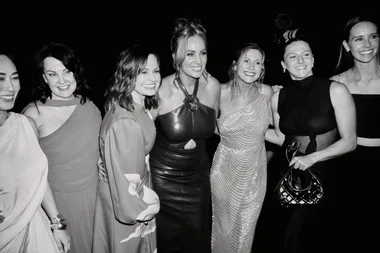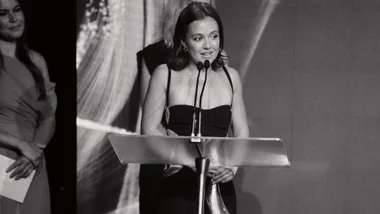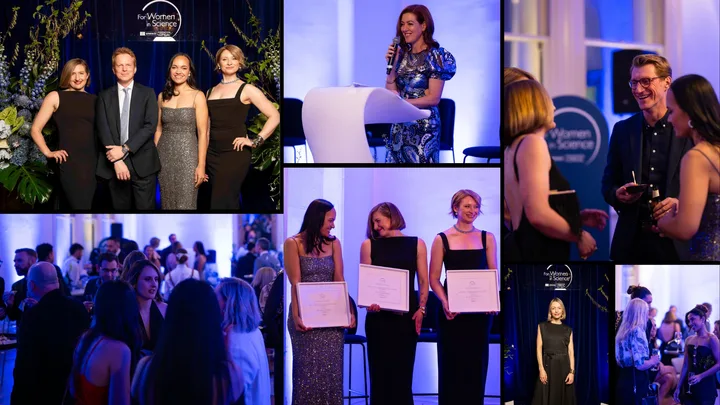
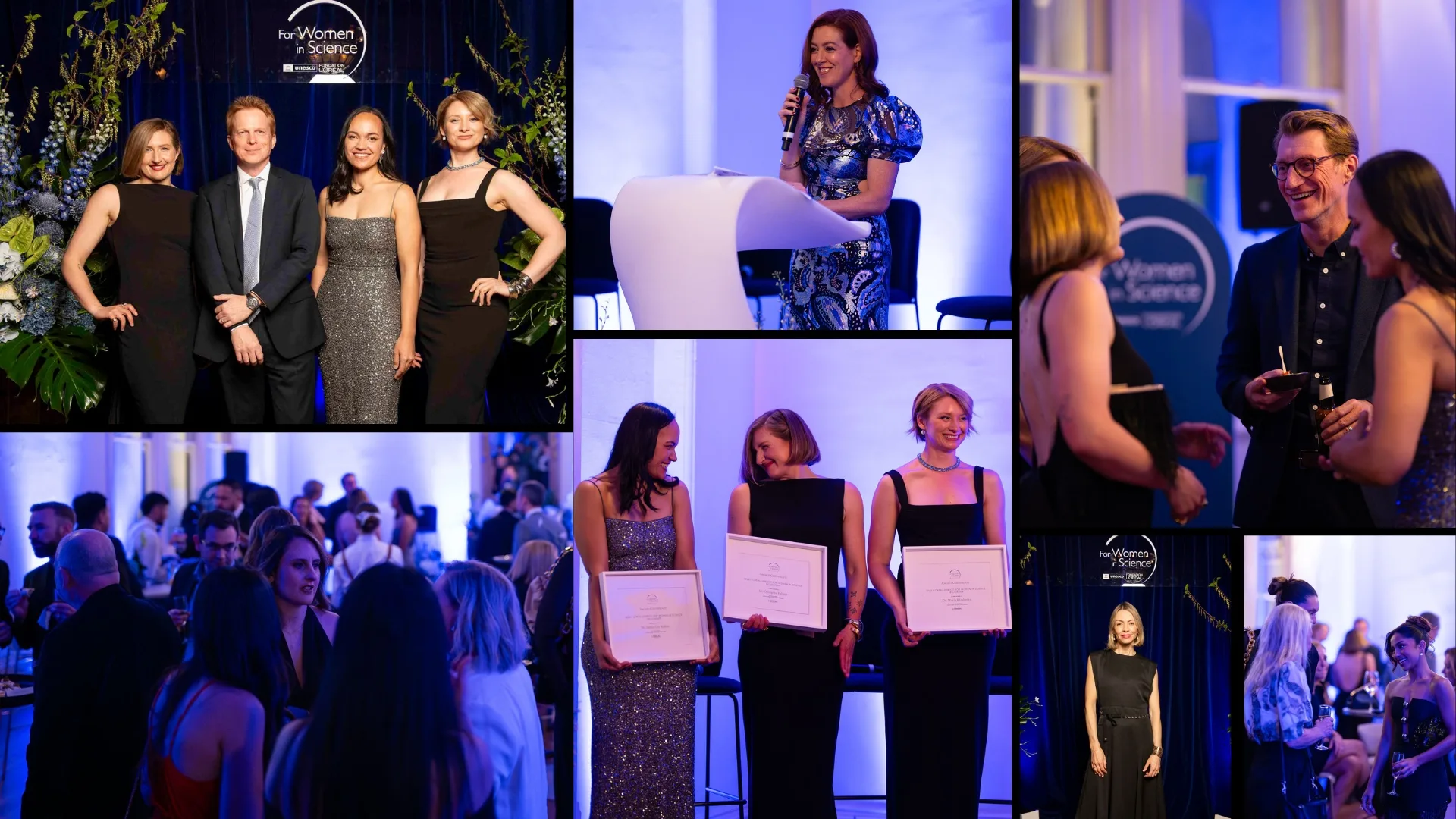
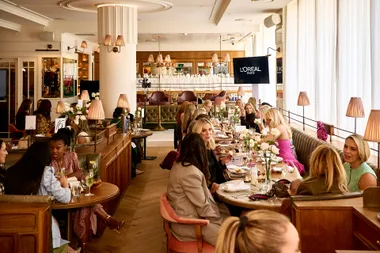
At a glittering awards evening in Melbourne, the message was clear: the world needs science, and science needs women.
The annual L’Oréal-UNESCO For Women in Science initiative recently celebrated the extraordinary achievements of brilliant female scientists at a glittering Melbourne event, while encouraging women into the world of STEM.
About L’Oréal-UNESCO For Women in Science
A collaborative initiative between L’Oréal-UNESCO, the annual For Women in Science awards celebrate the extraordinary achievements of brilliant female scientists across Australia and New Zealand.
Designed to support early-career female scientists in Australia and New Zealand as well as offer them professional training, visibility, and engagement opportunities to help them thrive, the annual $25,000 grants help four recipients access essential professional needs such as research equipment, mentoring, conferences and even childcare.
The awards also help to highlight, to younger women and the larger community in general, the importance of having women in science and other STEM related subjects.
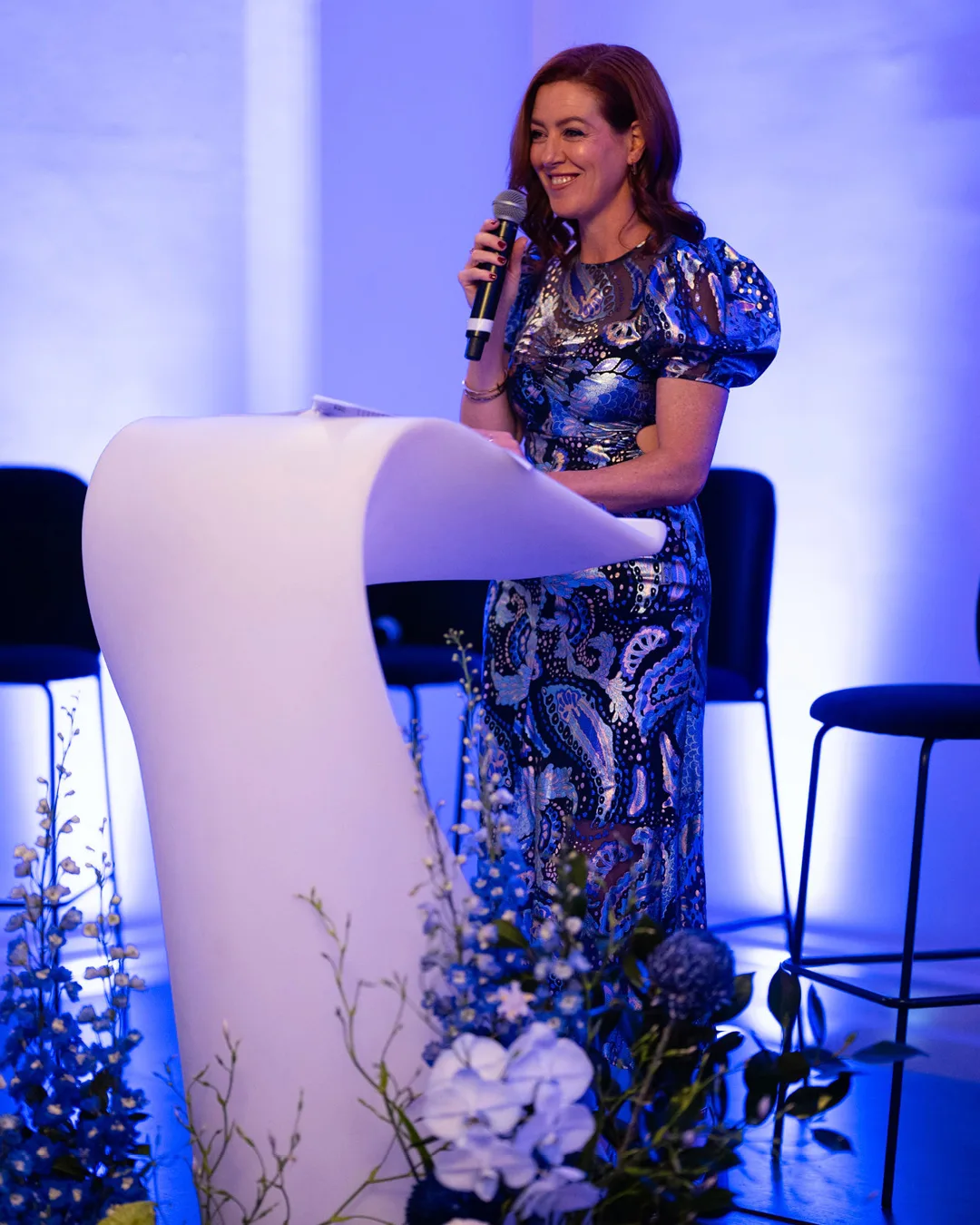
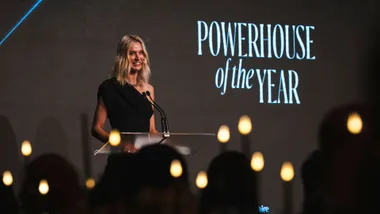
Former co-host of The Project Gorgi Coghlan was the host for the evening. Fitting, seeing as Coghlan was once a VCE science teacher.
“The L’Oréal-UNESCO For Women in Science awards is about celebrating excellence,” says Coghlan. “This year, the initiative has honoured four brilliant researchers [while also serving] to highlight a future where girls see science as a space that they belong in – that they can lead in, and they can thrive in.”
“It’s about visibility. It’s about inspiration and possibility.”
Gorgi Coghlan
Because beyond the sparkle of the evening there is an urgent call to action: the need to fix the barriers that keep young women and girls from pursuing careers in STEM.
“L’Oreal-UNESCO Women in Science celebrates the extraordinary achievements of women in science, and in the process, we renew our commitment to empowering even more women to reach their full potential in the scientific world,” says Alex Davidson, Chief Executive Officer at L’Oreal Australia and New Zealand. “Because, as we know, the world needs science, and science needs women.”
Why a lack of women in STEM is an issue
For a long time now, L’Oreal has repeated the phrase “you can’t be what you can’t see”. Meaning women not seeing women in STEM roles, in turn, means less women in science and mathematics-related roles.
The data is sobering. Women make up just 29 per cent of the global STEM workforce. In Australia, only 25 per cent of senior management roles in STEM industries are held by women, with just 10 per cent sitting at CEO level. Perhaps most disheartening is the findings that show that more than half of Australian schoolgirls – 52 per cent – now believe STEM subjects are “too hard” for them, a sizeable jump from 40 per cent the year before.
“These numbers tell us we still have an issue with so many obstacles in the way for girls and women,” adds Coghlan. “We want to show women what’s possible when you follow your curiosity and you have support.”
A lack of women in science, (and diversity as a whole) has a very real knock-on effect. If only one group of people are coming up with the problems, solutions to untapped issues will remain unresolved.
Seat-belts are a great example of this: early testing was done only on male crash test dummies, which in lead to a lack of understanding of how seat belts and airbags might affect women in an accident. Women think differently so they come up with different problems, and solve with different answers.
Breaking down barriers
The metaphor shared by Davidson during the evening was a powerful one: imagine a road to a party at a house that is riddled with potholes. You could give a few select guests a monster truck to make it through, or you could fix the road itself. For years, programs have focused on monster trucks, supporting exceptional women to overcome barriers and act as role models. But to create lasting change, we must repair the road.
“The absence of visible role models discourages girls women entering or staying in STEM,” explains Davidson. “It reinforces stereotypes and a lack of representation. It is an enduring issue here in Australia and New Zealand and also globally.”
It’s investments like this one by L’Oreal and UNESCO that help smooth the “potholes” that women face throughout their careers, whether that is juggling research, accessing equitable funding, finding mentorship or childcare.
The recipients
This year, four extraordinary women were celebrated for driving change.
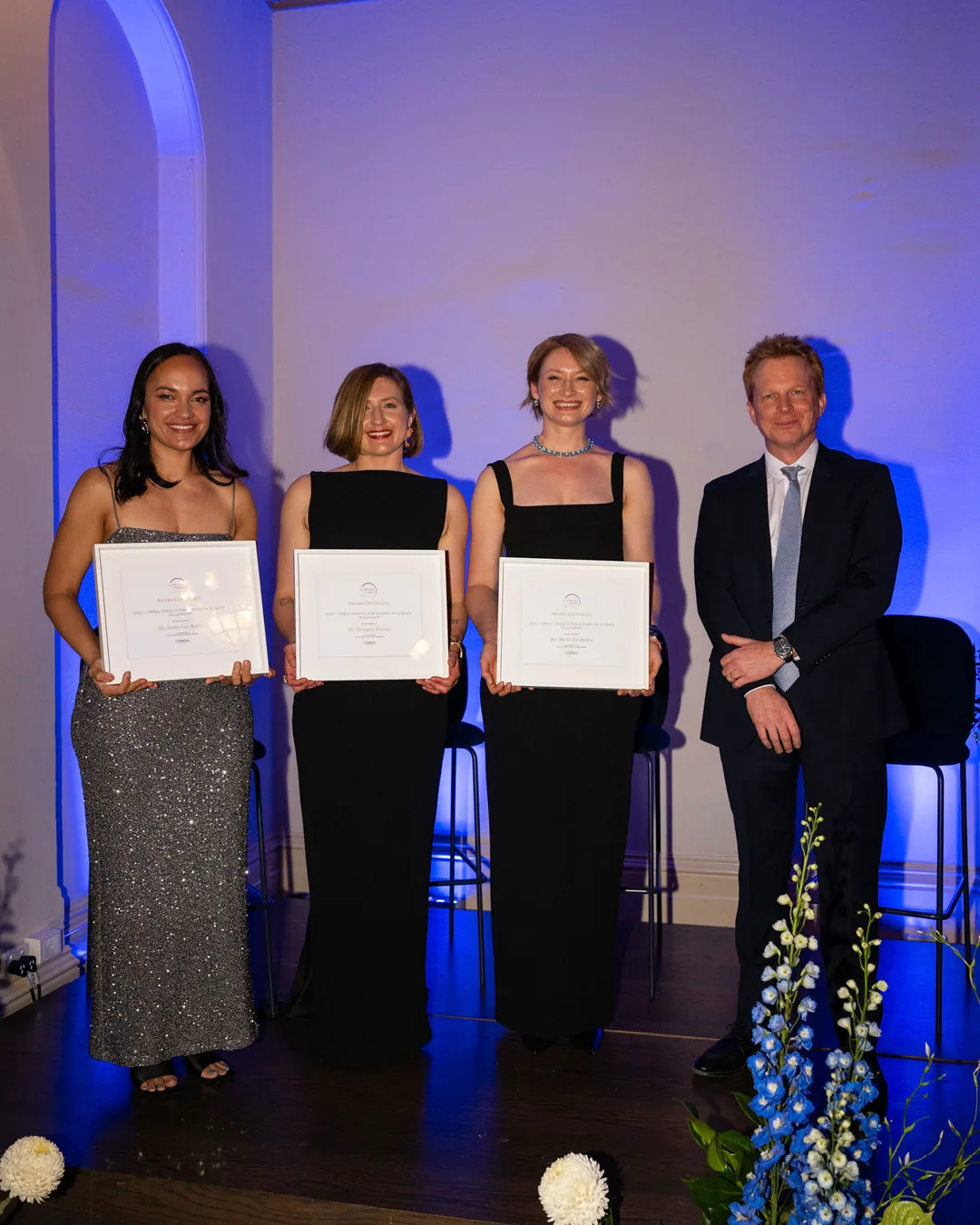
Among them: Dr Jessica A. Kretzmann, whose pioneering work in DNA origami could revolutionise medicine. There is mathematician Dr Maria Kleshnina (the first mathematician to win the award in Australia and New Zealand), who applies game theory to help solve environmental decision-making.
Climate scientist Dr Georgina Falster’s work focuses on Australia’s climate history as a way to help predict drought. While Dr Jamie-Lee Rahiri is a surgical researcher championing for fairer and more equal pathways to surgery and health equity for Māori communities.
The future
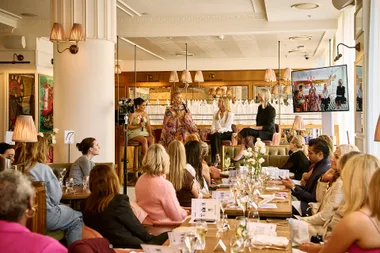
Crucially, the initiative is about inspiring the next generation. At this year’s event, a group of schoolgirls had the chance to meet their science heroes up close, asking questions of the new fellows, not just about their PhDs but also about life, balance, and purpose.
And the students saw, as the audience did, that these female scientists are not only geniuses in lab coats, but real women with passions, family, life juggles and the desire to make the world a better place.
For more information head to For Women In Science

Related stories
Native ad body.

Native ad body.
Native ad body.