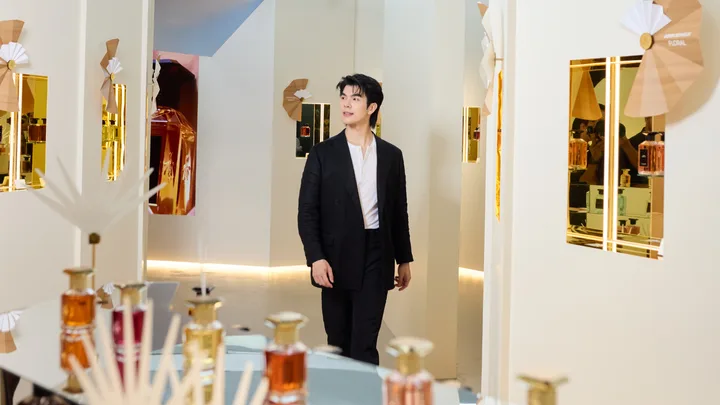
If you want your brand to take off, having an empress cherish it as a wedding gift is a very good way to start.
This is what happened to Pierre-François-Pascal Guerlain. Opening his store on Paris’ famed Rue de Rivoli in 1828, the perfumer’s success really started to peak in 1853. When, he created a fragrance as a gift to commemorate the marriage of Empress Eugénie and Emperor Napoleon III.
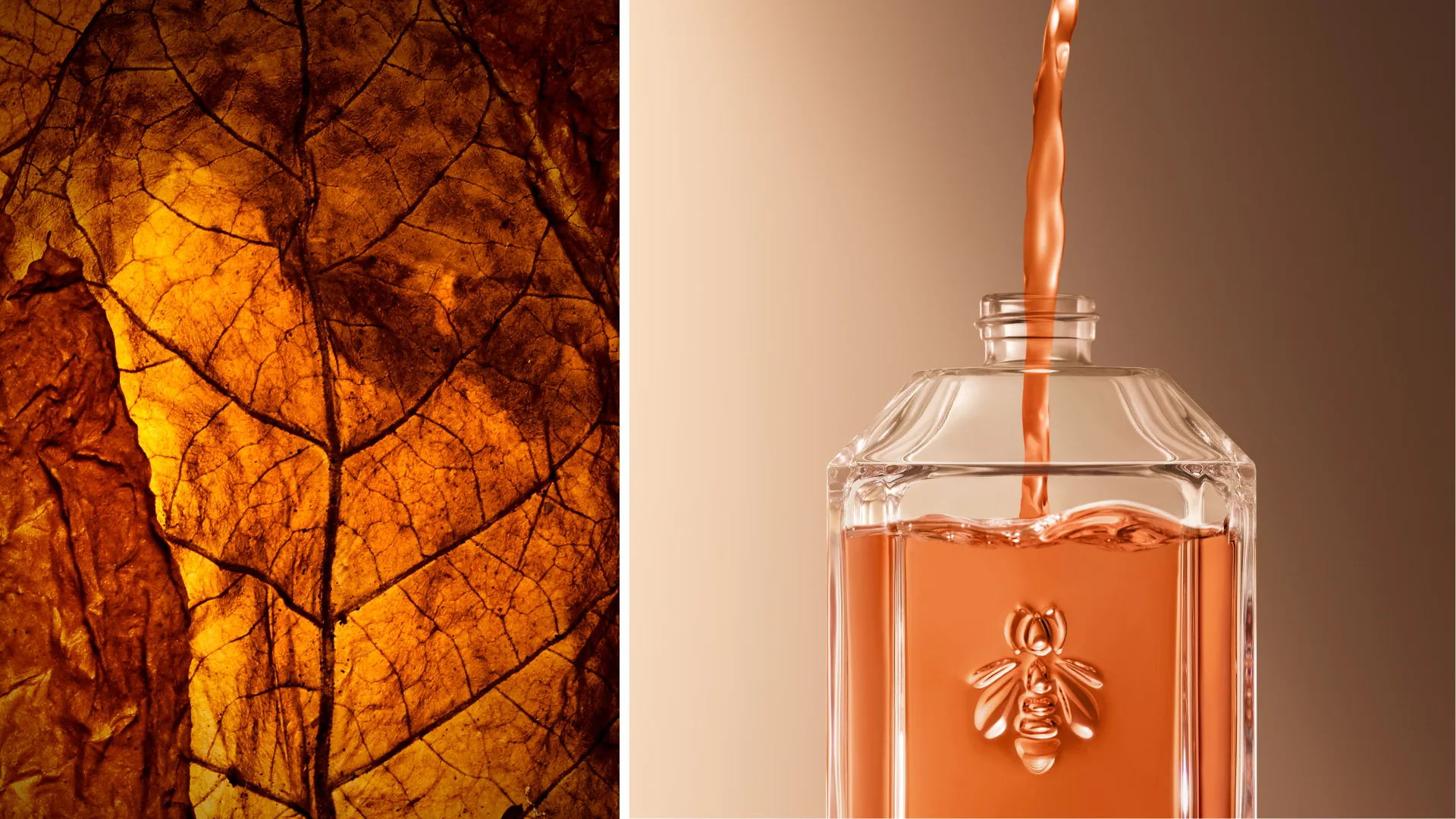
The fragrance was Eau de Cologne Impériale and Guerlain housed it in a stunning (and now hugely famous) Bee Bottle. Eugénie had a fascination for craftsmanship and the arts, and impeccable taste. Truly the original influencer, her nod of approval very quickly made Guerlain wildly popular.
This act of gifting also earned Guerlain the prestigious title of Official Perfumer to His Majesty
“It opened the doors of all the royal courts in Europe and beyond,” says Thierry Wasser, the maison’s master perfumer.
Guerlain went on to create fragrances for royalty all over Europe, including Queen Victoria, who reigned from 1837 until 1901.
Wasser is the house’s fifth master perfumer. An impressively small lineup considering the brand has been around for almost 200 years. We are sitting together inside a spacious suite within the newly opened Ritz-Carlton, looking out at the Bangkok skyline.
The conversation steers towards the balancing act a brand such as Guerlain must perform. That chord it needs to strike to keep its heritage alive. While maintaining relevance in an industry that thrives on the new. It’s a concept Wasser lives daily.
“For some people, heritage is a burden,” he tells me. “For me, I look at it as a springboard.”
As luxury brands race to capture the attention of younger consumers, maintaining not only relevance but desirability is key
“What you need is to be aware,” explains Wasser. “You don’t sit on your heritage; you need presence. A lot of people miss being present in the moment.”
It pays to lean into the moment because for a luxury brand such as Guerlain, it’s a long game. Wasser has been with the maison since 2008, mentored by and eventually taking over from the legendary perfumer, Jean-Paul Guerlain. Monsieur Guerlain, who was at the helm for 60 years, was tutored by his grandfather, Jacques Guerlain. One of the great perfumers of his time, he created cult fragrances such as L’Heure Bleue in 1912 and Shalimar in 1925.
“I learnt from observing him,” Wasser says of the friendship with Jean-Paul that has spanned decades. “There is a common thread between us: we are both curious, think like 12-year-old boys, and we are perfumers – both of us. The encounter was magic. I cherish it.”
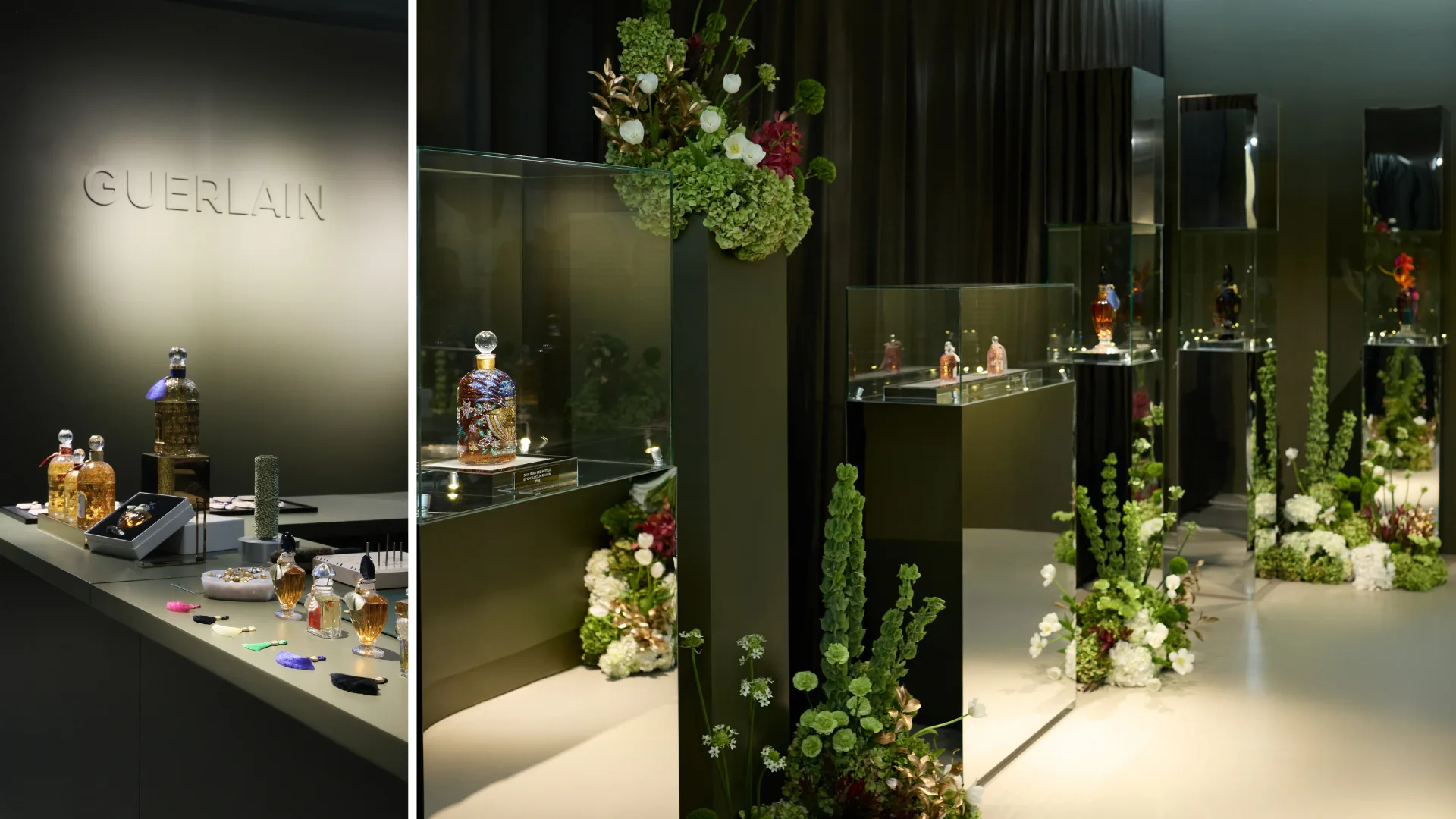
We are in Thailand for the launch of the maison’s first large-scale exhibition of its Exceptional Creations
A long tradition of the house, each of these glittering pieces showcase the transformation of some of Guerlain’s most iconic bottles. Including that first Bee Bottle created for Empress Eugénie, into works of art. Over the years, the brand has collaborated with some of the world’s most impressive artists and craftspeople, including jeweller Begüm Khan and the House of Matisse.
Honouring Guerlain’s heritage, and reinterpreting it with the artist’s vision, these one-of-a-kind creations blur the line between fragrance and art and are certainly incredible to witness. Drawing dignitaries, actors, press and influencers alike, the pieces were in Thailand to be revered and (if your bank balance allows) purchased.
Also on display was the house’s L’Art & La Matière collection of luxury fragrances, which deftly honour the brand’s heritage, while also showcasing its love of nature and the finest raw materials.
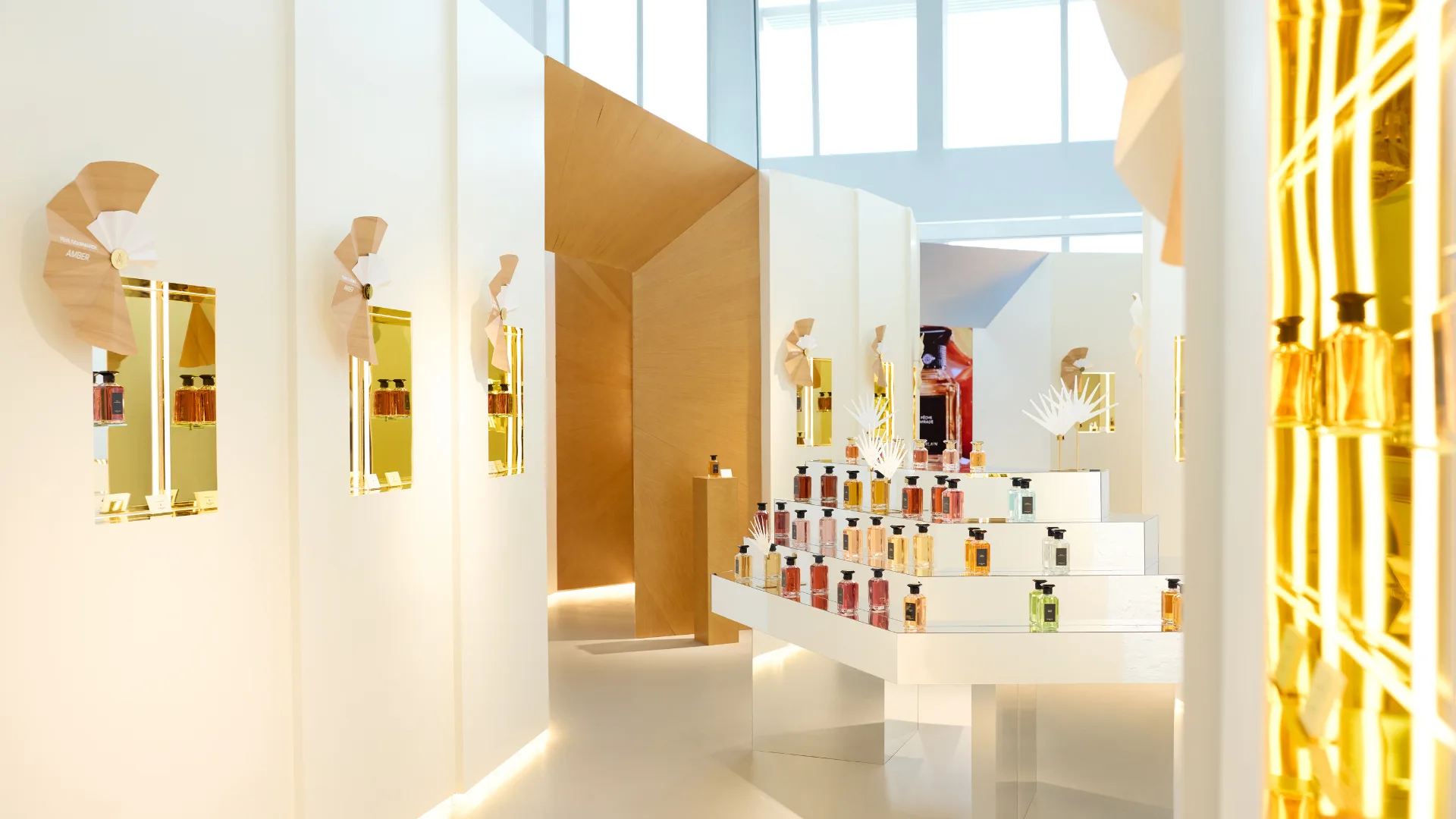
Each fragrance is so distinct you could be forgiven for writing yourself a wish list
A tip: if you haven’t smelt the warming sweet notes of Tobacco Honey you really should head to David Jones to do so.
“For Tobacco Honey, it’s the first time ever that we have real honey in a fragrance,” explains Wasser, who was inspired both creatively by watching women add honey to their tea and technically by an engineer in the South of France.
From the rosewood communities in the Amazon, to farmers in South India, Wasser spends much of his time sourcing these raw materials firsthand. Those trips, he says, are among the most rewarding parts of his role. “Every time, we have to reassess the situation, and it’s so cool,” he says. “Sourcing is about 40 per cent of my job and I really do believe that it’s the best part of my job. It is so enjoyable.”
“I believe the love, the hope and the pride of people are in our bottles”
– Thierry Wasser, Guerlain’s master perfumer
Intrepidness and curiosity are traits that Wasser seems to have in surplus
I have met him once before in Singapore, where he spoke about his love of raw materials, and the exploration and negotiations it can take to find the very best.
“The humanity is at its best when you’re sourcing,” he says. “You have to understand the other person. You have to listen. You have to find a way to create something together.”
As well as the precious oils they extract from the raw materials, it is the relationships with the farmers and growers that also become part of Wasser’s fragrances.
“I believe the love, the hope and the pride of people are in our bottles,” he says. “It sounds esoteric, but our fragrances are not just made, they are incarnated.”
While many lovers of Guerlain might be buying in for the sheer decadence of the fragrances on offer, this sentiment of focusing on craftsmanship, the best nature has to offer, and the human custodians of it, feels modern
According to Ann Caroline Prazan, Guerlain’s director of art, culture & heritage, that shift plays directly into the maison’s strengths.
“I think younger generations are very interested in the story and legacy of brands,” she says when we meet at the exhibition in the ultra-modern One Bangkok. “They don’t want fake history. They want sincerity.” For Prazan, heritage and modernity are complementary. “The future of the brand needs to know the past,” she explains. “Not to recreate it, but to reinterpret it.”
That philosophy was expressed admirably when Guerlain collaborated with New York street artist JonOne to create one of the house’s exceptional pieces. Prazan explains that the artist selected the Bee Bottle as his canvas.
“The symbol of Napoleon’s bee mixed with a street artist from Brooklyn; everybody told me it was impossible,” says Prazan. “I said, ‘Let’s do it and see what happens.’”
The result was precisely the creative frisson she seeks.
“People want to be excited. They want their imagination to be stretched”
– Ann Caroline Prazan, Guerlain’s director of art, culture & heritage
“I love when there is a bridge between the past and modernity,” she says. “That tension makes something exciting.” It’s also a powerful way of introducing new audiences to the brand. Through partnerships with artists, museums and cultural institutions around the world, Prazan sees creativity as a way of keeping heritage breathing rather than relegated to history books.
Luxury itself, she believes, is undergoing a similar transformation.
“I don’t think luxury is about logos anymore,” she says. “Luxury is timeless. It’s savoir faire, storytelling, heritage and authenticity … Guerlain is not a marketing world, it’s a family name. The Guerlain family were genius, visionaries and [patrons] of the beauty and performance industries.”
Today’s consumers want more than products, Prazan argues. They want experiences, access and emotional connection. For example, at Guerlain’s Paris store, which still stands on Rue de Rivoli, visitors can explore the maison’s archives through immersive experiences that blend history with digital innovation.
“People want to be excited,” she says. “They want their imagination to be stretched.”
This, of course, aligns closely with Wasser’s own vision for the future. While he is reluctant to predict exactly what lies ahead, he believes Guerlain’s greatest strength remains its ability to balance its past with a deep desire to move forward and continue creating.
“You’re not 200 years old by chance,” he says. “It’s because you believe.”
And what does Wasser believe in? Surrounding himself with younger talent, such as perfumer Delphine Jelk, who has created much-loved Guerlain fragrances including Patchouli Paris in 2024 and Pêche Mirage last year.
“I hired Delphine Jelk and today she’s the creative director,” Wasser says. “I think it is part of what is expected from me – not just to design fragrances – to have a vision for the future.”
For Wasser, that vision means remaining curious, taking chances, continuing to evolve and never losing sight of where Guerlain began.
Photography courtesy Guerlain

Related stories
Native ad body.
Native ad body.
Native ad body.