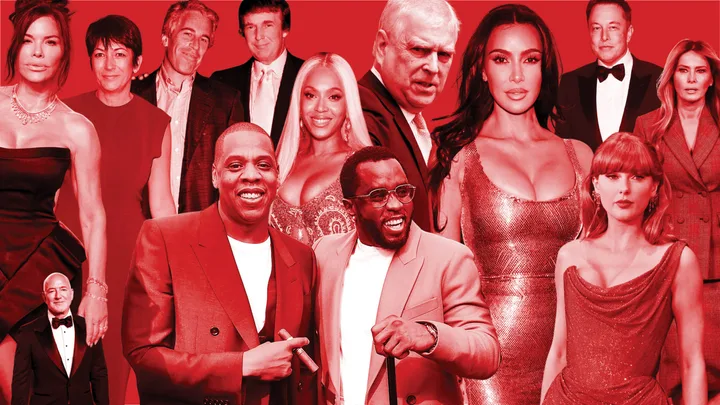
The annual announcement of the Met Gala typically lands in a whirl of glamour and speculation. Social media feeds fill with galleries of defining moments and archival looks – impossible trains unfurling down the steps of New York’s Metropolitan Museum of Art – along with memes celebrating the outrageous, the iconic and the ironic.
Fashion sleuths dissect and decode the starry benefit’s latest theme, posing questions and parsing for clues. How many costume changes can we expect from Zendaya? Will Louis Vuitton or Miu Miu win the night? How many Kardashians will be invited? And who will come dressed as a lamp?
The 2026 announcement – which unveiled not only Beyoncé, Nicole Kidman, Venus Williams and Anna Wintour as co-chairs of the gala, but also Amazon founder Jeff Bezos and his wife, Lauren Sanchez Bezos, as honorary chairs and sponsors of the museum’s spring exhibition – hit differently. And the theme, Fashion Is Art, was met with a new line of questioning: less frivolous, more fired up. If fashion is art, wrote users on Instagram, isn’t it political too?
“Bezos is literally the anti-artist. He is everything opposite of what art stands for. Gross,” commented one user under The Met’s big reveal. “The Met Gala was dying, and this has put the nail in the coffin,” said another. The dissonance between billionaire Bezos posing on the red carpet alongside couture-clad models – photo ops sure to secure front pages – and the struggles of thousands of Amazon employees reliant on food stamps due to low wages – news that barely makes a ripple – was glaring.
Activist group @EveryoneHatesElon_, one of the collectives that wreaked organised chaos in Venice during the Bezos-Sanchez wedding festivities last year, set up a campaign to troll Bezos’ Met Gala and highlight the human cost behind corporate greed machines like Amazon.
The sentiment goes: when the masses are living paycheque to paycheque, when the world is burning and wars are raging, should our attention be fixed upon a $100,000-a-ticket fancy dress party for the world’s most privileged and powerful? “The downfall of ‘celebrities’ is going on, finally!” one user rejoiced beneath a post urging followers to boycott the Met. Since the beginning of time, society has elevated certain figures above the rest.
Part spectacle, part social ritual, it’s a cultural understanding that some lives are worth watching, studying and emulating. “The desire to look up to social figures is a human condition,” explains Dr Paul Harrison, who specialises in marketing and consumer behaviour at Deakin University. “It’s because existing is hard, and we look to others to go, ‘OK,so how should I behave?’”
Historically, religious leaders, philosophers and monarchs commanded our admiration and adulation and established ideals to live by. “This shifted when religion became less prominent, and when we stopped living in small villages and became more distant from our families and communities, we started looking to other well-known figures,” continues Harrison. Celebrity culture as we know it began to emerge at the turn of the 20th century, propelled by Hollywood film studios and society magazines.
Since then, actors, musicians and sportspeople – talented or ridiculously good-looking, or preferably both – have been idolised, glorified and elevated above the ordinary. But in 2026 the proverbial celebrity pedestal seems wobbly. On January 30 this year, the US Department of Justice uploaded more than three million pages of documents linked to the late child sex offender Jeffrey Epstein.
Among the approximately 2000 videos and 180,000 images were mentions of hundreds of high-profile individuals: politicians and presidents, royalty, tech bros and Hollywood stars. Andrew Mountbatten-Windsor is pictured reclining across the laps of five unidentified women, with the now imprisoned child sex offender Ghislaine Maxwell smiling behind them. Bill Clinton is photographed with Epstein, Maxwell, Michael Jackson, Mick Jagger, Kevin Spacey and Diana Ross.
Entrepreneur Elon Musk corresponds with Epstein about a trip to his island. Deepak Chopra, spiritual guru to the stars and author of some 90 personal development books, described once by Time magazine as “one of the top 100 heroes and icons of the century”, is named more than 3000 times.
In 2017, his emails to Epstein had phrases such as, “If you want use a fake name. Bring your girls”, and “God is a construct. Cute girls are real.” Being named or pictured in the documents does not indicate that an individual was aware of, nor involved in, Epstein’s criminal activities, and marie claire does not imply any wrongdoing on their part.
What the unfolding case illuminates, though, is how fame – or proximity to fame – is often falsely equated with moral integrity, and how social capital has long provided protection and insulation from accountability.
This follows the #MeToo movement of 2017, which revealed how networks of power in Hollywood enabled sexual misconduct, and the 2025 legal case of rapper Sean “Diddy” Combs, who was found guilty on two counts of transporting women for prostitution, raising questions about who in his orbit knew of his depraved behaviour. Of course celebrity scandals are as old as, well, the concept of celebrity itself (Cleopatra’s whispered-about romances; the trial of Socrates; the royal excess of French queen Marie Antoinette, ultimately leading to her execution by guillotine).
But today, fuelled by the relentless accountability engine of the internet, which sees fans sifting through court documents as readily as red-carpet photos, along with the rigorous work of investigative reporters, a reckoning seems nigh. Is it time to stop worshipping celebrities? And if so, who would we look up to instead?
Perhaps our gaze could shift to artists over entertainers, to the innovators quietly reshaping the world, to scientists making life-changing breakthroughs and the everyday heroes choosing courage over apathy. Or, with studies consistently showing that people who don’t engage with celebrity culture have higher self-esteem, should we look within our own inner circles for inspiration and aspiration?
Then again, if we stopped elevating the A-list, would we simply refocus on niche micro-influencers and reality stars? Relatable and flawed but just sparkly enough, they’d reflect back to us who we are, and who we want to be. Despite calls from a chorus on social media – the new town hall – to eat the rich and tear down the entire system of celebrity, Harrison believes any meaningful change is unlikely in a capitalist society.
“[People] keep saying that trust in celebrities and trust in institutions has dropped, but it hasn’t really changed behaviour,” he says. “And that’s the critical thing – ultimately we can have a small, non-significant drop in trust with a celebrity, but how does it change behaviour? Does it change people’s social media usage if they stop trusting a celebrity? And generally, the evidence would say no.”
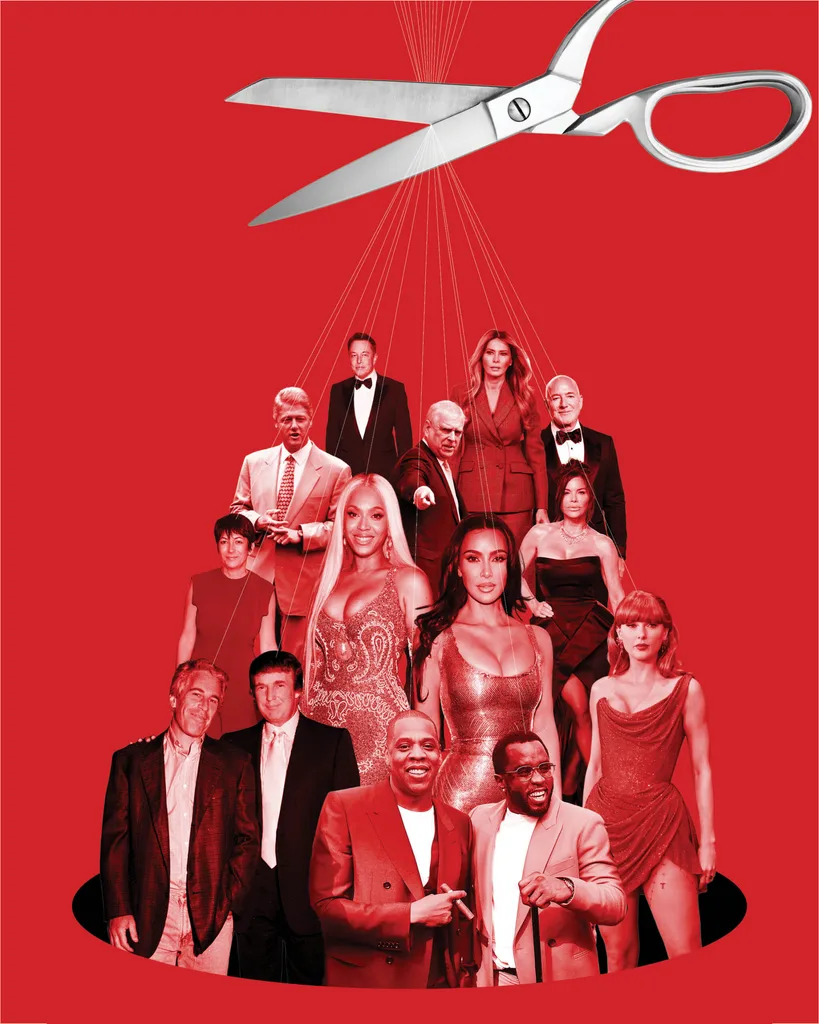
In 2024, a social media campaign saw users cast a “digitine” (a digital guillotine) to the accounts of high-profile figures who failed to support or speak out on humanitarian causes. Different celebrities were selected to block each day – a bid to shrink their influence and challenge the market forces that reward fame – but it quickly descended into hashtag warfare. For most of the targeted influencers, the blockout barely registered, with followers still scrolling hungrily for their workout tips and lip-colour combinations. Not quite a revolution, Marie Antoinette style.
And yet this year’s Oscars, once the night of nights, saw viewing figures dip to a four-year low. This nods to the death of the monoculture, but also to the changing cultural pull of traditional megastars. Even Taylor Swift and Beyoncé combined couldn’t make much of an impact on the 2024 US election result.
Perhaps Oscar Wilde was most astute on notions of fame and celebrity, writing in 1890’s The Picture of Dorian Gray, “There is only one thing in the world worse than being talked about, and that is not being talked about.”
It’s a reminder that even now, in a grossly unequal world, the powerless hold one epic superpower: attention. We might be simultaneously outraged by the systemic abuse perpetuated by well-connected men, fixated on the latest Bravo cheating scandal, and dazzled by celebrities in fancy dress, the height of escapism. After all, we contain multitudes. But the spotlight only shines where we aim it.

Related stories
Native ad body.
Native ad body.

Native ad body.