Content warning: This story discusses domestic and family violence, child murder and trauma. If you need support, contact 1800RESPECT on 1800 737 732.
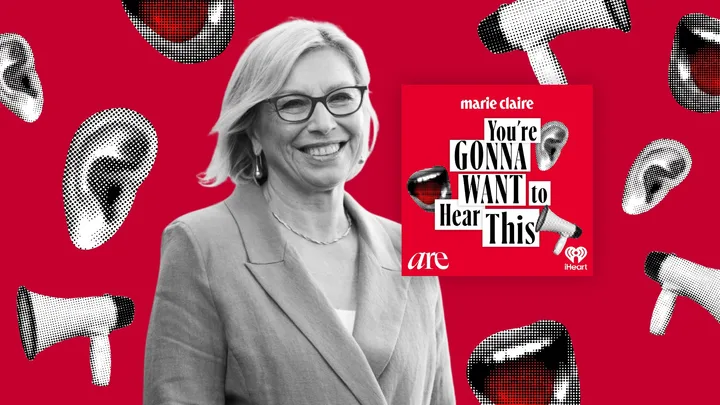
On You’re Gonna Want To Hear This, the podcast where fun and frankness is always in style, Rosie Batty reflects on grief, anger, hope and the myths that still surround domestic violence. More than a decade after the night that changed Australia, Rosie Batty is still reshaping the national conversation around domestic and family violence. In the latest episode of You’re Gonna Want To Hear This, hosted by Marie Claire Australia editor Georgie McCourt, Batty speaks with clarity about what she has learned in the twelv years since her 11-year-old son Luke was murdered by his father at a suburban cricket ground in 2014.
“It changed catastrophically and permanently,” Batty says in the episode.
The Evening That Changed Everything
That evening was, by all accounts, ordinary. A hot summer night. Cricket practice. A small gesture of goodwill in allowing Luke to spend a few extra minutes with his father.
“What happened was beyond my comprehension,” Batty recalls.
Within hours, she would be standing in front of cameras, speaking with a composure that stunned the nation. Shock, she explains, protected her in those first hours and weeks. “You cannot absorb it,” she says of the enormity of losing a child to deliberate violence.
But survival is not the same as acceptance.
“I remember feeling like you can’t reverse this… no matter what you are trying to do, you can’t change this,” she says. Advocacy, she reflects, gave her a reason to get up each day – and perhaps a distraction from the “intense grief” that followed.
Listen To You’re Gonna Want To Hear This
Shattering The Myth Of “Other Women”
One of the most powerful moments in the episode comes when Batty dismantles the stereotype that domestic violence happens only in certain homes or communities.
“It’s not just women and families in low socio-economic postcodes… it’s women who are educated, who live in nice homes,” she says. Judges. Executives. Politicians. Middle-class mothers. “It indeed is all around us, and it always has been,” she adds.
Batty knows that part of what shocked Australia in 2014 was that she did not fit the stereotype. In forcing the country to look at her – and at itself – she shifted the conversation from whispered shame to systemic accountability. The violence, she insists, belongs to the perpetrator, not the woman who experiences it.
Why Leaving Is Often The Most Dangerous Moment
Another misconception Batty addresses is the assumption that once a woman leaves, she is safe. “That intense period of relationship breakdown… is the moment of greater risk,” she explains.
Leaving, she says, is not a neat solution but the beginning of another complex chapter – one that can involve court appearances, financial strain, coercive control and the weaponisation of children. “We need to park our judgment and create space… to try to understand,” she says.
Domestic violence is rarely a single incident. It is engineered, layered and often prolonged. The decision to leave is frequently made in desperation – and can carry profound risk.
On Anger, Forgiveness And Refusing To Be Defined
Many assume rage would define Batty’s response. Instead, she describes something more nuanced. She does not “sit simmering in anger,” she says. Forgiveness, in her view, does not mean excusing what happened; it means refusing to let it consume her. “I am not going to let him ruin my life,” she says. That stance has shaped the past decade of her advocacy – an insistence that grief can coexist with dignity, and that trauma need not calcify into bitterness.
A Life Shaped By Loss
Long before 2014, Batty understood grief. She lost her own mother at six years old – an experience she believes profoundly shaped her. That early trauma, she suggests, created a kind of resilience – a “knowing” that she had to keep going, even when she could not articulate how.
Stepping into motherhood with Luke, she says, was the greatest joy of her life. The fear of loss never left her. And yet, when the unimaginable happened, she drew on that earlier strength in ways she is still unpacking.
Over ten years on, Batty’s second book is titled Hope – and when asked what gives her hope today, her answer is disarmingly simple. “Really the simple things in life,” she says. Gratitude. Friendship. Moments of contentment. She speaks of meeting extraordinary people – advocates, journalists, politicians – who are committed to social change.
“We need to feel that we matter,” she says. Purpose, she explains, is what anchors her. She also acknowledges the fragility that remains – the toll of public life, the trolling – but is clear about what she allows into her orbit.
“To some people, I have given them hope… courage… that call to action,” she reflects.
The Conversation We Must Keep Having
A decade after Luke’s death, Rosie Batty’s advocacy has helped drive reform and reshape the way Australia speaks about coercive control and family violence. But in this episode of You’re Gonna Want To Hear This, she is not only an advocate. She is a mother. A woman navigating grief. A human being choosing, every day, to step forward.
If this story has raised concerns for you, support is available via 1800RESPECT (1800 737 732), a confidential 24-hour service for people impacted by domestic, family and sexual violence.

Related stories
Native ad body.

Native ad body.
Native ad body.