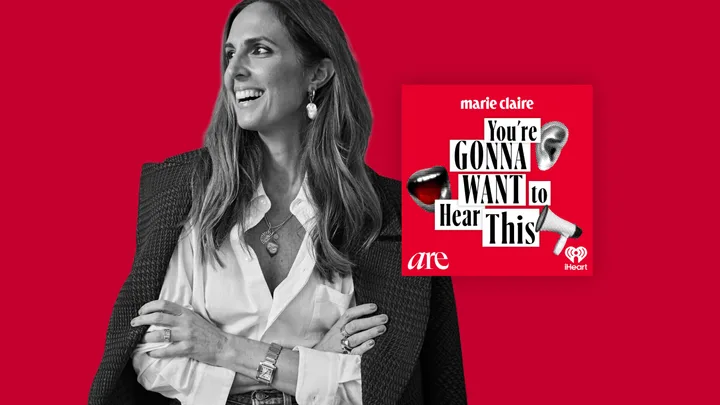
Tash Sefton has spent more than two decades helping Australian women work out what makes them feel like themselves – often through the lens of fashion. But in a candid new interview, the stylist, entrepreneur and digital creator has opened up about what happened when she had to rediscover her own identity after the end of a 22-year marriage.
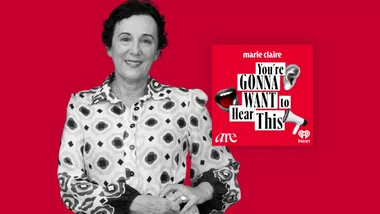
Speaking on marie claire’s podcast You’re Gonna Want To Hear This, Sefton reflected on divorce, motherhood, learning to be alone, co-parenting and the unexpected second love story that followed.
“I was married for 22 years,” she said. “I didn’t clock that until I got divorced, and then went, ‘Wow, that was 22 years.’”
Listen To You’re Gonna Want To Hear This
For Sefton, the end of the marriage wasn’t marked by one defining moment. “I don’t know if I fell out of love as such,” she said, explaining that she and her former husband had always kept their family life largely away from social media. “People probably don’t know even now that I got divorced,” she said. “It’s not like you’re having a baby and you go, ‘I’m having a baby.’ It’s not something that you go, ‘I got divorced.’ It’s a very strange thing.”
“We were really protective of our kids during that whole time.” The decision to separate was ultimately one they reached together. “I just remember we went for a walk one day, and we just talked about maybe it’s time for us to not be married,” Sefton recalled. “There’s lots of reasons, but we kind of decided together.” From the beginning, she says, their sons came first. “It was the only way we were going to separate if it was amicable, because the kids were more important than us,” she said.
“We did it for our kids. I didn’t want the kids to be part of a really messy divorce.” That did not make the process painless. “It wasn’t easy,” she stressed. “It wasn’t like, ‘Oh yeah, we got divorced and yay.’ It was difficult.”
Even telling their sons brought an unexpected moment of levity. “We sat them down and we’re like, ‘We just want to let you know that we’re going to separate,’” she said. “And the first thing both of them did was… they looked at each other and they said, ‘Am I going to get an awful stepmother?’” “They didn’t say anything about us separating. They just were worried about the stepmother.”
Sefton laughs now at the memory, explaining that her sons had absorbed the familiar pop-culture trope of the evil stepparent. “They were more worried about the stepmother being, like, a witch or something with a big hat.” Her former husband moved nearby and they built a flexible co-parenting arrangement around their children. “We’ve just made it… whatever the boys want to do,” she said.
The separation also forced Sefton to confront some of the practical realities of starting over. She has spoken about discovering how little visibility she had over the couple’s finances and being shocked when, after separating, she struggled to establish credit in her own name. “I was terrified,” she said. “I had no visibility.” The experience left her with a simple piece of advice for other women: “Make sure you have your own name on credit cards and accounts.”
But emotionally, Sefton says one of the hardest parts was overcoming the sense that her divorce represented some kind of personal failure. Her parents had been married for decades, and within her Croatian family, long marriages were the norm. “I just felt embarrassed,” she admitted. “I feel like I’ve done the wrong thing. I still felt like a naughty little girl.”
“I understand that if women do want to leave, it is really hard… and also being alone is kind of lonely as well.” Yet it was learning to be alone that ultimately became one of the most important parts of Sefton’s story. After spending most of her adult life as part of a couple, she had no interest in rushing into another relationship.
“I just wanted to be by myself,” she said. “I realised that I had to have a relationship with myself before I could have relationships with anyone else. And doing that, and being okay with who I am, was the most important thing of me being okay as a single mother.”
She focused on her sons and creating a sense of calm. “I was adamant that I didn’t want to meet anyone,” she said. “I wanted to just focus on my kids and just make everything calm.” There was something liberating about discovering that she was genuinely content on her own. “I just remember being happy,” she said. “Not happy like happy, but happy, like, just within myself.”
Running became part of that process. “I would run for, like, hours. I’d have music really loud in my ears, and it was just a way of me… finding what my settled life was.”
Friends naturally began trying to encourage her to date.
Her answer?
“No. Do not. Like, do not do that. I am not interested.”
And that, perhaps inevitably, is when Adam came into her life.
The pair already knew one another and began spending time together while both navigating the end of previous marriages. There was no dramatic first date or instant declaration of love.
“It wasn’t like, ‘Oh my God, hi, let’s date,’” Sefton said. “It was just, like, a very subtle thing.”
At the time, she remained completely comfortable with the idea of being single.
“I was so happy to not be with anyone — like, no one,” she said. “I was happy to just be by myself with the kids and my friends and my family.”
When love did begin to emerge, her instinct was not immediately to embrace it.
“I wasn’t looking for it. It came to me. I rejected it,” Sefton said. “I was like, ‘No, I want to be by myself.’”
“And then it took a lot to just go, ‘Okay, I think I can do this.’”
Part of that hesitation came from knowing how much more was at stake the second time around.
“I didn’t want to be rejected again,” she said. “If it didn’t work out, then that’s even more painful, and that’s even more trauma for your kids. So you kind of have to get it right.”
There was also the sheer vulnerability of allowing someone into a life she had worked so hard to rebuild.
Sefton remembers Adam doing something as innocuous as opening a door for her and finding herself unsettled by the gesture.
“I’m like, ‘Stop opening the door. It’s freaking me out.’”
“Stop being nice to me,” she joked.
Looking back, she recognises that instinct as self-protection.
“We don’t want to hurt,” she said. “It’s the same with friendships. It’s the same with partners. It’s the same with work. You don’t want to be rejected, and so you kind of go, ‘Okay, I’m going to tread lightly.’”
Eventually, though, she let herself fall in love.
“When you’re an adult and you find it again… it’s like you feel it more,” she said.
Her family noticed the shift too.
“My family say that I’m so much calmer,” Sefton said. “I’m just at one.”
After nervously introducing Adam to her parents — including facing some “hard questions” from her mother — Sefton says they could ultimately see what mattered most.
“They just see me happy,” she said. “I think that’s all my parents want. They only just want their kids to be happy.”
The couple eventually married in Melbourne in an intimate ceremony attended by their children and immediate families.
Sefton deliberately wanted the wedding to feel completely different to her first.
“I’d had the big wedding,” she said. “I had the huge celebration with the big gown and everything, and I just wanted to be really modern, a modern bride.”
After the civil ceremony, they crossed the road to Di Stasio for lunch.
“It was this coming together of two families,” she said. “We just wanted it to be like you’re in my house. Family.”
They then continued the celebrations with friends in Daylesford, where their five children surprised guests by revealing the couple were already married.
“Our children — so we have five children between us — announced that we’d already got married, and they wrote poems and messages about our future love and stuff,” Sefton recalled. “It was really beautiful.”
Now, another new chapter is beginning.
Sefton recently turned 50, a milestone she admits caused far more anxiety than she expected.
“I actually don’t know [why],” she said. “But it gave me great anxiety.”
“I didn’t want presents. I didn’t want anything.”
Her two closest girlfriends eventually took her away to New Zealand rather than throwing the party she emphatically did not want.
“We literally just danced,” she said. “We would run around in the garden dancing, like being idiots, like school kids.”
“It wasn’t about my birthday. It was just about us being together.”
When she returned home, Adam and her sons had filled the house with tulips.
“Every room had tulips in it,” she said. “I was like, ‘Okay. Okay, it’s okay, I can celebrate now.’”
And, with the benefit of hindsight, the age she feared now looks rather different.
“I don’t know why 50 really terrified me,” Sefton said, “because I have a new life now.”
It’s that sense of a second chapter — rather than simply a second marriage — that sits at the heart of Sefton’s story.
She did not leave one relationship in search of another. She rebuilt a life she was content to live alone. Love became an addition to that life rather than the thing required to complete it.
“I think you’re meant to meet people when you’re meant to meet people,” she said. “Not just to do with men. Friendships — people come and go in your life.”
Her advice for those searching for a relationship now is almost counterintuitive.
“I almost want to say to them to stop trying,” she said.
“I feel like it comes when you don’t expect it.”
“That was definitely my reality, because it just was like a whole new life.”
Listen to the full Tash Sefton episode of You’re Gonna Want To Hear This, a marie claire podcast.

Related stories
Native ad body.
Native ad body.

Native ad body.