
Endometriosis affects an estimated one in seven women and girls of reproductive age in Australia, roughly 1 million people, yet it remains one of the most misunderstood conditions in women’s health.
For those living with it, the experience can be difficult to put into words. While pain is a defining feature, it is rarely the only symptom.


It can present as severe period pain and heavy bleeding, but also extends far beyond the menstrual cycle, showing up as chronic pelvic pain, fatigue, discomfort during or after sex, digestive issues, and a persistent sense that something in the body is not quite right.
And still, it is routinely minimised, collapsed into the reductive shorthand of “bad period pain” in conversations that fail to capture its full scope. In reality, endometriosis can permeate nearly every dimension of daily life, shaping not only physical health, but emotional wellbeing, relationships, and one’s capacity to move through the world with autonomy and ease.
For Jess Blizzard, that reality unfolded gradually, before escalating into something far more overwhelming, marked by increasingly drastic medical recommendations.
For much of her twenties, Jess describes moving through life with a quiet but persistent dissonance, a sense that she was moving through life without fully understanding what was happening inside her own body.
There were the symptoms, persistent pain, fatigue, hormonal fluctuations, but no clear explanation. Instead, there were years of appointments, scans and shifting diagnoses that never quite fit.
“I knew something wasn’t right,” she says. “But it took nearly ten years to actually get answers.”
Jess, now co-founder of Australian wellness brand M BODY Minerals, is one of many women who have endured the protracted and often circuitous path to diagnosis. Looking back at her medical records, she recalls a pattern that will feel familiar to many. “There were notes about anxiety, depression, food intolerances, but no one was really looking at my hormones, my cycle, or how everything connected,” she says.
“There were times I couldn’t move properly,” she adds. “And a lot of the time, I couldn’t explain why.”
It was not until she was 29, during surgery for a near-ruptured appendix, that endometriosis was finally identified. “The surgeon told me there was a lot going on,” she says. “And I remember thinking, I’ve been trying to figure this out for years.”
But the diagnosis did not arrive with resolution. Instead, it marked the beginning of a different kind of uncertainty, one in which the condition finally had a name, but no clear or consistent pathway forward.
Like many women with chronic pain, Jess found herself relying on strong pain medication just to get through the day. “It got to a point where I was only managing symptoms, rather than actually understanding them,” she says.
At 33, after multiple surgeries, she was presented with what doctors described as her remaining option: a hysterectomy or medically induced menopause.
“I was told that was the next step,” she says. “And I really had to sit with that.”
For many women, the challenge isn’t just the condition itself, but navigating a system that still struggles to fully understand and support it long term. Jess felt that tension acutely. Surgery had offered temporary relief, but little insight into why her symptoms persisted.
Rather than proceeding with the options presented to her, she chose to pause. What followed was a decisive recalibration of her approach to health, one that extended beyond the narrow pursuit of symptom suppression.
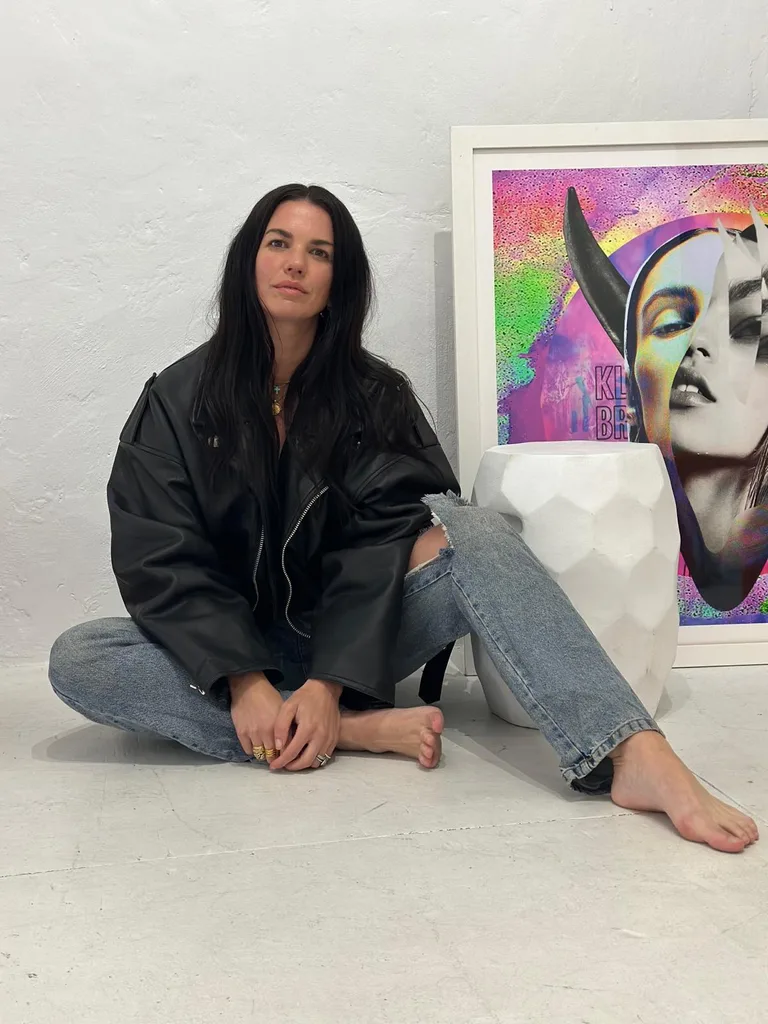
“I started asking different questions,” she says. “Not just how to remove the endometriosis, but what might be contributing to it.”
In the absence of definitive long-term solutions, Jess began to look beyond conventional symptom management, turning towards a more expansive, integrative understanding of her health.
From there, the changes were deliberate and cumulative. She focused on inflammation and its relationship to hormone regulation, refined her nutrition, and introduced targeted supplementation, including MSM. She began to interrogate the role of stress, reduced her workload, and worked closely with a women’s health practitioner to better understand her hormonal profile.
“It wasn’t a complete overhaul overnight,” she explains. “It was about making one change, seeing how my body responded, and building from there.”
Over time, those incremental shifts began to compound. What began as subtle improvements evolved into more substantive, sustained change.
Today, Jess has been pain-free for four years. She has also gone on to have two more children, something she had previously been told would not be possible.
“I don’t take that for granted,” she says. “It’s been a long process to get here.”
She is careful not to position her experience as prescriptive. Medical intervention, including surgery, remains an essential part of care. But, she suggests, there remains a significant gap in how endometriosis is understood and supported beyond diagnosis.
“We know how to diagnose it and treat it surgically,” she says. “But we don’t always talk about what might be driving it, or how to support women beyond that.”
For Jess, that broader, more integrative perspective, one that considers inflammation, lifestyle, stress, and hormonal balance, has been central. It is also what now informs her work and advocacy.
As Endometriosis Awareness Month unfolds, she hopes more women feel empowered to ask questions, seek support, and consider a wider spectrum of care.
“You don’t have to do everything at once,” she says. “But there are options, and there are ways to start understanding your body better.”
After years defined by uncertainty, that understanding can become a powerful point of departure, not only for managing symptoms, but for reshaping how women are taught to interpret, trust, and advocate for their own bodies.
Because, as Jess’s experience makes clear, a diagnosis is rarely the conclusion. More often, it is where the real work begins.

Related stories

Native ad body.

Native ad body.


Native ad body.