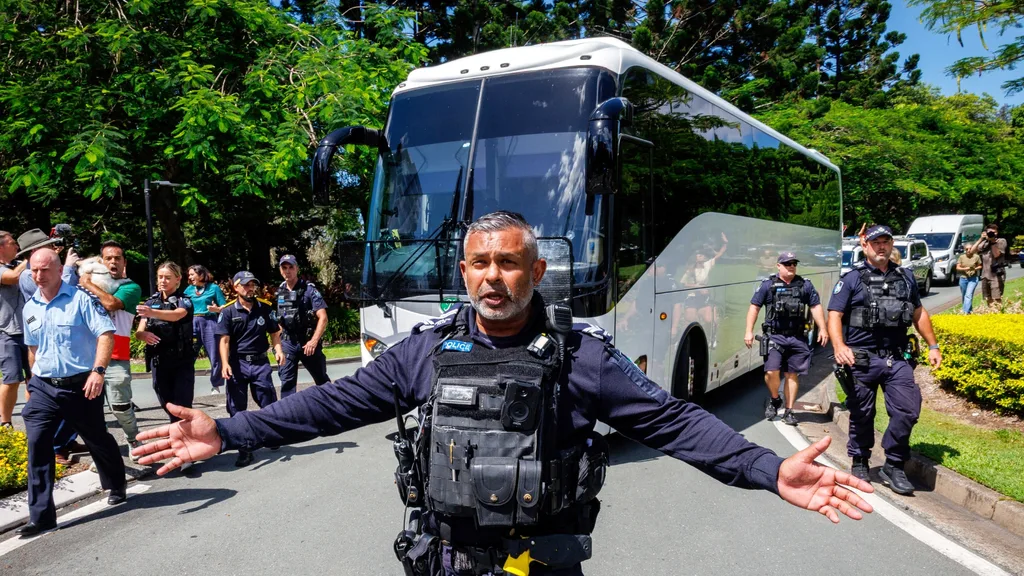
As the Iranian team bus pulled away from the stadium on the Gold Coast, protesters pressed against barricades chanting: “Save our girls.”
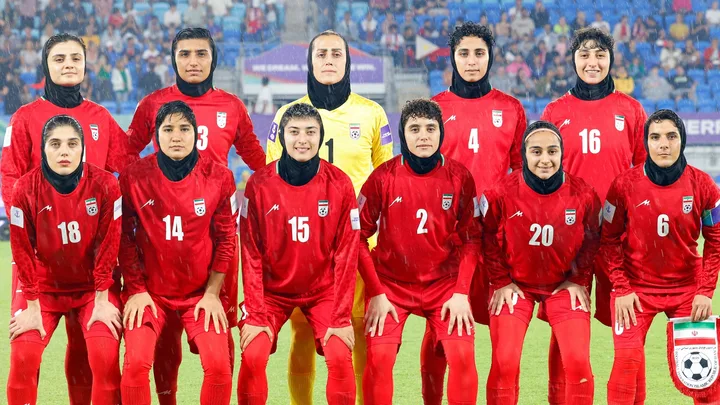
Hours earlier, Iran’s women’s football team had been eliminated from the Women’s Asian Cup after a 2–0 loss to the Philippines. Yet by that point the tournament had already become something far larger than a sporting contest.

Behind the scenes, several players were weighing a life-altering decision: whether to return to Iran at all.
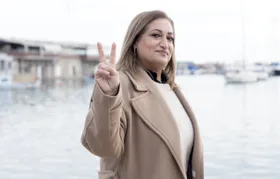
On Tuesday morning, the Australian government confirmed that five members of the squad had been granted humanitarian visas after privately indicating they did not feel safe returning home. Home affairs minister Tony Burke said the players had been moved to a “safe location” by Australian federal police after discussions that had been unfolding quietly for several days.
The players who chose to remain are Fatemeh Pasandideh, Zahra Ghanbari, Zahra Sarbali, Atefeh Ramazanzadeh and Mona Hamoudi.
“They want to be clear they are not political activists,” Burke said. “They are athletes who want to be safe.”
The visas will allow the women to live, work and study in Australia while their longer-term status is assessed.
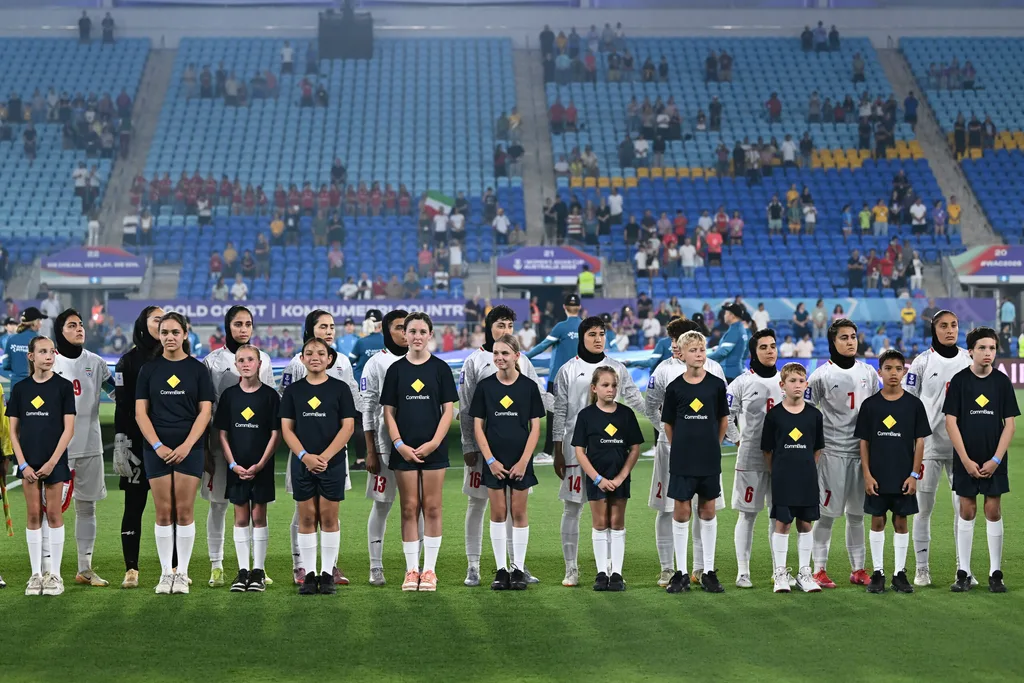
The situation surrounding the team had begun days earlier with a moment of defiance. Before their opening match against South Korea, the players stood silently as the Iranian national anthem played.
Less than 48 hours earlier, US and Israeli airstrikes had struck targets inside Iran. The team’s refusal to sing was widely interpreted as a protest.
The reaction back home was swift. On Iranian state television, commentators accused the players of being “wartime traitors” and suggested harsh punishment, saying the team’s behaviour was “the pinnacle of dishonour.”
Sources told SBS News that during the tournament the players were closely supervised, reportedly unable to move around their hotel unaccompanied and escorted to meals. Members of Australia’s Iranian diaspora also warned that officials travelling with the squad were monitoring the players closely.
When Iran faced Australia’s Matildas in their second match, the pressure appeared evident, with the players now choosing to sing the national anthem.
But privately, some had already begun exploring whether they could remain in Australia.
Their final group stage match against the Philippines on Sunday would determine whether they stayed in the competition. In relentless rain on the Gold Coast, Iran fought hard but ultimately lost 2–0.
Over the following days, a quiet effort unfolded as Australian authorities attempted to ensure players had the opportunity to speak privately with officials away from the Iranian delegation accompanying them.
Burke travelled to Queensland and arrangements were made for players to meet individually with authorities. A police officer was stationed inside the team’s hotel to create what he described as “the maximum amount of opportunities” for athletes to seek help if they wished.
On Monday, five players indicated they wanted to remain in Australia. Federal police quietly escorted them from the hotel to a secure location.
Shortly after they left, BBC reporters witnessed members of the Iranian delegation running through the hotel attempting to locate them.
Burke later met with the players and approved their humanitarian visa applications, which were finalised around 1.30am on Tuesday.
Following this, one additional player and a member of the team’s support staff also chose to remain in Australia, according to The Guardian. However, Burke later confirmed that one of the two had subsequently changed her mind and decided to depart with the rest of the squad.
The decision quickly drew international attention. US president Donald Trump called on Australia to grant asylum to the players, posting on his Truth Social platform that the government should “give asylum” and suggesting the United States would accept them if Australia did not.
Prime minister Anthony Albanese later confirmed that assistance had already been provided to those who requested it.
While five players chose to remain, the offer to stay was extended to the entire squad. Many ultimately decided to return to Iran, reportedly concerned about possible repercussions for family members at home.
Late on Tuesday evening, the remaining players travelled under police escort to Gold Coast Airport before flying to Sydney to depart Australia.
Earlier that day, activists had gathered outside the team’s hotel urging players to remain. Some protesters lay on the road attempting to block the team bus as it left, while the athletes watched from inside.
Former Socceroos captain Craig Foster, who has previously advocated for refugee athletes, said the most important thing was ensuring the players had a genuine choice.
“Some may feel able to return, others may not,” he said. “But what matters is that the opportunity to stay safely is offered.”
Their decision highlights the precarious position many female athletes occupy in countries where women’s freedoms remain tightly constrained. Around the world, women in sport continue to navigate not only competition but the political and cultural expectations placed upon their bodies, voices and choices.

Related stories

Native ad body.

Native ad body.



Native ad body.