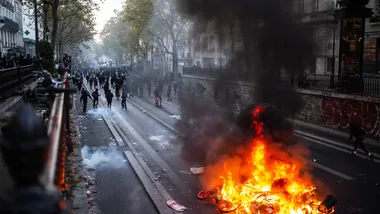
What began as a peaceful strike among shopkeepers over the country’s economic insecurity has turned into the worst domestic unrest the Islamic Republic of Iran has ever faced.
Despite a nationwide internet blackout, imposed by the government to limit communication and news reaching the outside world, the protests are playing out online, almost in real time.
At the time of writing, there are reports that between 2000 and 20,000 people have been killed in the protests. There is no official number as the communication blackout makes it impossible for agencies to follow their usual reporting process.
While Iran has faced periods of unrest in the past nearly 50 years since the 1979 revolution that overthrew the US-allied monarchy with an anti-American theocracy, they have escalated in frequency and severity since 2017.
The most recent protests were in 2022, when 22-year-old Masha Amini was reportedly killed by Iran’s morality police for not complying with the country’s hijab rules. For months after her death, protesters took to the streets chanting “Woman, life, freedom”. Women removed their hijabs en masse while calling for gender equality and the downfall of the regime.
More than 500 people were killed, and while the government eased up on some social restrictions, they doubled down on others, including smart cameras to identify violators in public spaces and in their cars.
Still, the current protests feel different. By all reports, this is the greatest crisis the Iranian Regime has ever faced. Iranians from all walks of life have united across the country, everyone from gen Z to pensioners are chanting “Death to the dictator”. Some experts believe these are the end days of the regime. Others wonder what the backup plan is.
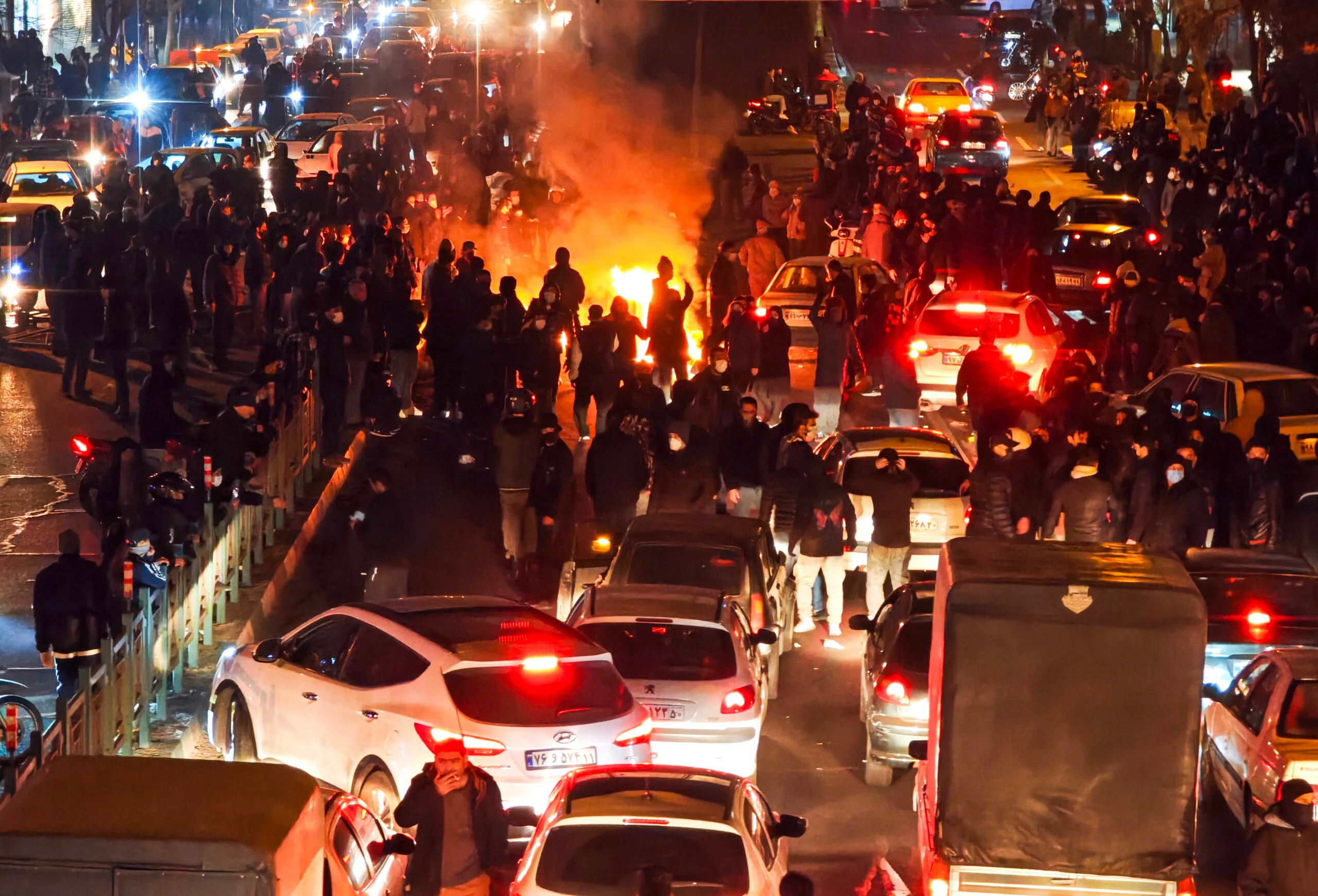
As of January 14, 2026, per The New York Times, at least 2400 people have been killed, including 12 children, according to the Washington-based organisation Human Rights Activists in Iran (HRANA). The Norway-based Iran Human Rights said that more than 3400 had been killed and thousands of others injured.
Iranian authorities deny this. They’ve taken the unusual step of acknowledging that there have been large numbers of casualties, but insist the dead are victims of violent protesters, who they call “terrorists”.
What’s Going On In Iran?
First, A Quick History Lesson
For 47 years, since the 1979 revolution saw the Islamic Regime take power, Iran has been “a powder keg looking for a spark”, wrote the political scientist, writer and former Iranian prisoner Kylie Moore-Gilbert in The Sydney Morning Herald.
The octogenarian Supreme Leader Ayatollah Ali Khamenei has held the top post since 1989, and the state has been reduced to a smattering of corrupt financial and military elites who neglect public interest in favour of personal enrichment.
The Islamic Republic of Iran has long failed to prioritise the welfare of its citizens. While they enjoy their riches, young Iranians are facing high rates of unemployment and underemployment, while older generations’ pension funds are largely insolvent. Power outages and water rationing are daily fixtures. Add to that Western-imposed sanctions and international isolation (it’s said that after North Korea, Iran is the most isolated country – made worse by the fact that its Supreme Leader was the only world leader to praise Hamas’ October 7 attacks) that increase the cost of living and decrease the value of people’s life savings.
In American politics, it’s said that 3 per cent inflation can topple a government. In Iran, inflation rates are among the world’s highest: more than 50 per cent. Iran’s current monthly minimum wage is about 104 million rials ($146). Nurses and teachers earn between 150 to 250 million rials ($210-$350) a month, and a semi-decent apartment in Tehran rents for about 200 million ($280).
How It Started
“I can’t do anything,” Iran’s president, Masoud Pezeskhian, admitted of the country’s economic difficulties on December 27. The next day, Iran erupted into a nationwide uprising.
The protests began peacefully enough: shopkeepers took to the streets of Tehran, the country’s capital, on strike. The sharp decline of the Iranian rial (it lost half its value in a year, and has nose-dived more than 99 per cent since the regime started) decimated people’s savings and left these shopkeepers, who rely on importing electrical goods they now cannot afford, struggling to stay in business.
It didn’t take long for the protests to gain followers and spread to cities in other provinces. At first, it was students and other impoverished Iranians most affected by the deepening economic crisis, before spreading to major cities across the country.
The protests shifted from being purely economically motivated to a broader antigovernment uprising with the goal of overthrowing an incompetent and vengeful theocratic leadership. Along with the fall of the rial, protesters are fighting for stability (they live in fear of military strikes, especially from the US) and against the regime’s backing of Hamas and Hezbollah. They believe backing the globally known terrorist organisations has drained the country’s resources and isolated it from both its Arab neighbours and the West.
Initially, President Pezeshkian – who was elected in 2024 – appeared keen to meet with representatives of protesters, with The Atlantic reporting that his spokesperson affirmed “the constitutional right of peaceful protest” for Iranians. He also promised to improve the same economy that he’d previously thrown his hands in the air about. His government announced plans to provide most citizens with a monthly payment equivalent to about $US 7.
It was far too little and way too late.
How It’s Going
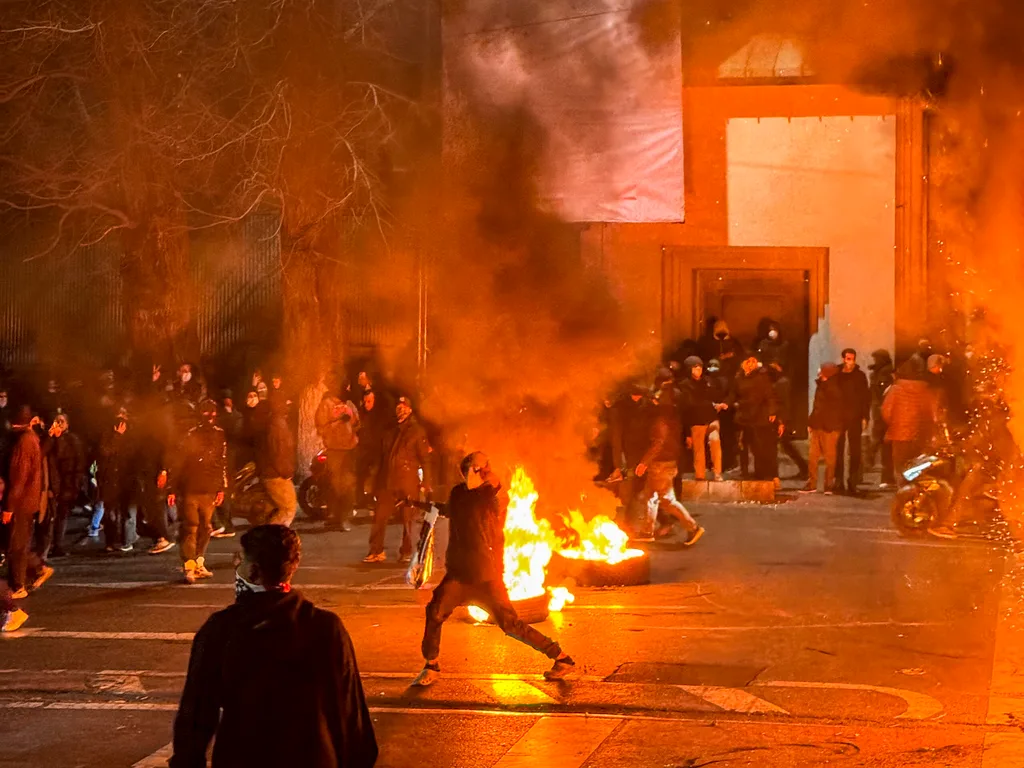
As the protests spread and people began calling for the downfall of the regime, Iranian officials stopped pretending to play nice. The government is said to be waging one of its deadliest crackdowns on protesters in more than a decade.
According to a timeline of events published by The New York Times, Khamenei acknowledged the hardship Iranians were facing, but blamed external enemies. He insisted that “rioters must be put in their place”. Around the country, the crackdown became more brutal.
The internet is now as much a weapon of war as guns. On January 8, the Iranian government shut down the internet, international phone lines and some domestic mobile connections.
Human rights groups have condemned the blackout as an abuse of power. A spokesperson for the UN’s Human rights office told the BBC it “impacts the works of those documenting human rights violations”.
Of course, the Iranian Regime line is that the shutdown is for the country’s own good, not a means of plunging a whole population into darkness while it systematically picks them off. Speaking to Al Jazeera TV, Iran’s Foreign Minister Abbas Araghchi said the internet had been cut off “after we confronted terrorist operations and realised orders were coming from outside the country”.
What they hadn’t counted on was the savviness of a post-1979 population when it comes to being online. Despite it being illegal, many Iranians are using smuggled Starlink satellite sets to send footage out of Iran to show the rest of the world how deadly it’s become under the cover of darkness.
Some of the most haunting images have been of family members moving along rows and rows of body bags, unzipping them one by one looking for loved ones. Videos of body bags lining the streets continue to flood social media.
It’s been tricky for news outlets to contact people on the ground in Iran: calls to Iran are blocked, but some people are able to call out or send voice notes.
According to eyewitness reports for The New York Times, government forces have begun opening fire, seemingly indiscriminately and apparently with automatic weapons, on unarmed protesters. Witnesses have spoken of seeing snipers positioned on rooftops and firing into crowds.
Doctors described seeing protesters declared dead on arrival with close-range bullet wounds to the head, neck, lungs and heart.
One protester named Yasi told The New York Times, “The regime is on a killing spree.” The thirtysomething publisher was marching with friends when she says security forces stormed in and shot a teenage boy in the leg in front of his mother.
A businessman named Saeed also managed to “get connected [on Starlink] for a few minutes just to say it’s a blood bath here,” he told The New York Times. “I personally saw a young man get shot in the head. I witnessed someone get shot with a bullet to the knee. The person fell to the ground unconscious, and then security forces gathered over him.”
Death-toll figures vary wildly, with most reports suggesting between 2000 and 3000 people, while other unconfirmed reports suggest the number is far higher: between 12,000 and 20,000 dead.
The BBC identified some of the protesters who were killed. Sorena Golgun, an 18-year-old university student, was reportedly “shot in the heart” running from an ambush by security forces, according to a family member.
Robina Aminian, a 23-year-old fashion-design student who hoped to study in Milan, was shot dead. Her mother travelled for six hours to collect Robina’s body, which she held in her arms on her way back. When she arrived home, security forces made her bury the body in a remote cemetery outside the city – with no other family or friends present.
Navid Salehi, a 24-year-old nurse in Kermanshah, wasn’t part of the protests but was shot multiple times while leaving work.
Are They Really Going To Hang Protestors In The Streets?
Iran was initially set to execute a young protester, Erfan Soltani. The 26-year-old was arrested at his home in Tehran and sentenced to death just days later, according to human rights groups and family members, per The New York Times. He was reportedly denied access to a lawyer, and his family learnt just four days after his arrest that his execution had been scheduled for Wednesday January 14.
Soltani’s family emphasised that he had never engaged in violence and had been peacefully protesting for basic freedoms for Iranians.
One of Soltani’s family members told CNN on the day of the scheduled execution that it did not go ahead as planned. She added that it had not been cancelled, and the family were waiting on more information. They had been allowed one farewell visit with Soltani ahead of Wednesday.
While Araghchi has said hangings are “out of the question”, Iran does have a history of meeting protests with deadly force. After the 2022-2023 Women, Life, Freedom protests, at least seven men were hanged. The New York Times also reported that on January 14, Iran’s chief justice, Gholam-Hossein Mohseni-Ejei, called for speedy trials and executions of “rioters” (their term for the protesters).
Protesters have also been arrested, including Sarira Karimi, head of a student union chapter at the University of Tehran, who has since been released.
According to HRANA, close to 100 forced confessions have been broadcast on state television since the protests began. The footage, often accompanied by dramatic music, shows detainees with their faces blurred, interspersed with clips purporting to show protesters attacking security forces.
What Does Trump Have To Do With It?
United States president Donald Trump took to social media to pledge support for the protesters and threatened strikes on Iran if it killed demonstrators. When he heard of Soltani’s imminent execution, he warned that there would be consequences if it went ahead.
“We will take very strong action if they do such a thing,” he said in an interview with CBS Evening News. “When they start killing thousands of people, and now you are telling me about hanging, we will see how that works for them. It’s not going to work out good.”
Iranian authorities are pushing propaganda that suggests protesters have been paid by external forces in an attempt to lure Trump to strike Iran. According to CNN, they’re also adamant that only “hundreds” of people have been killed. Quoting an interview he did with Fox News, CNN reports that Araghchi said the media was launching a “misinformation campaign”. He said that the first 10 days of protests were peaceful, before it turned into “a terrorist operation”.
The Guardian reports that Trump’s allies have managed to persuade him to hold off on military assault.
Wait, Elon Musk is doing something… good?
As he promises to stop Grok AI from undressing images of women on his social media platform X, Elon Musk – Silicon Valley’s enfant terrible – seems to have finally done one good thing with his tech empire.
He paused paid subscriptions for Starlink in Iran, so civilians can contact the outside world inconspicuously and for free. Starlink, which relies on a set of satellites and is part of Musk’s SpaceX company, is often the only way people can access the internet in conflict zones, remote areas and places hit by natural disasters (Ukrainian forces use it in the war against Russia.)
Starlink is illegal in Iran, and carries a punishment of up to two years in prison. It’s reported that there are at least 50,000 users in the country. Iranian authorities have been attempting to jam Starlink’s satellite signals, and so Musk granted customers a software upgrade to boost the signal and circumvent any jamming. Authorities have had to resort to searching for physical Starlink devices.
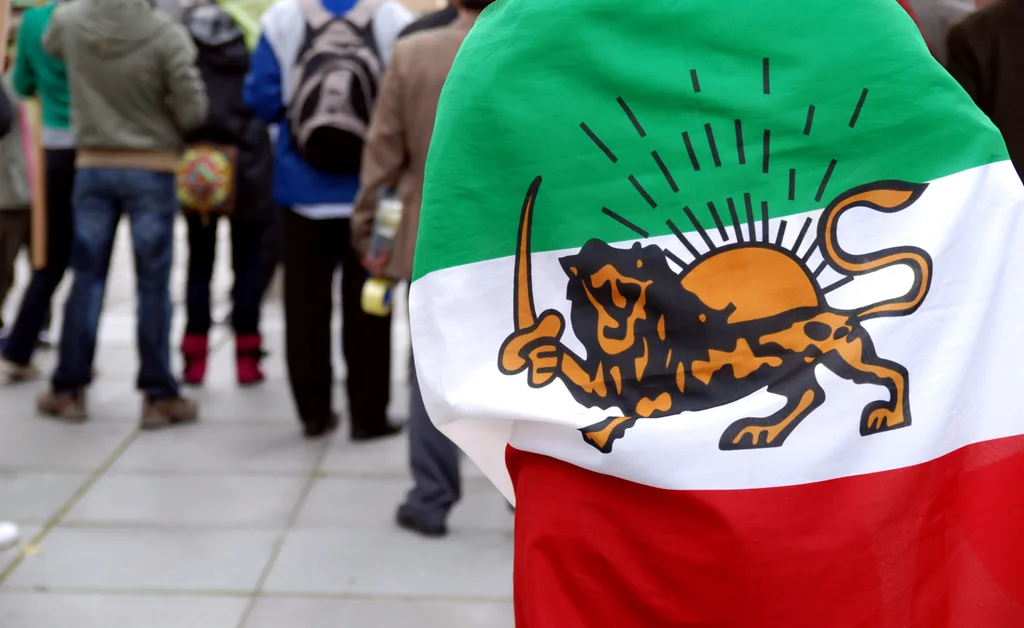
Musk also changed the Iranian flag emoji on X to the pre-Revolutionary flag, apparently in a sign of support for protesters. Although those protestors won’t see the update and a cynical reading of the change suggests it’s more about drumming up support for Musk and X than affecting any change on the ground.
And Who Is Reza Pahlavi?
While millions of Iranians want to see the end of the corrupt and repressive regime that pervades everything from the economy to their personal lives and what they wear, not everyone who is anti-regime can agree on who they want to run the country.
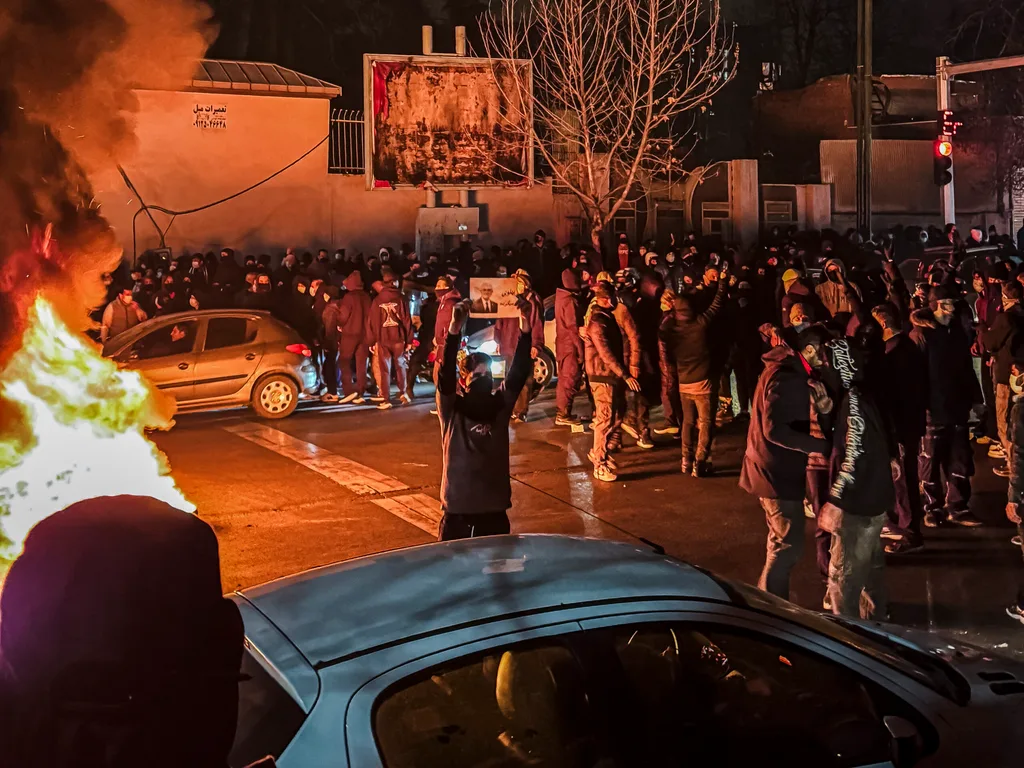
Many protesters are calling for Iran’s exiled former Crown Prince Reza Pahlavi (known as the shah), whose family ruled Iran before the 1979 revolution, to return as leader. On January 6, he called for protesters to rally, which resulted in one of the country’s largest turnouts. Objects were set on fire.
Pahlavi, who lives in a mansion in Maryland, is a divisive figure, and many anti-regime Iranians are against his claim to leadership. Essentially, Pahlavi has become the frontrunner because there are no other options. Many anti-regime leaders are in prison, including the Nobel Peace Prize laureate Narges Mohammadi and the former Cabinet minister Mostafa Tajzadeh, who both called for a “peaceful transition” away from the religious regime.
A return to Pahlavi would be a return to a monarchy, something many Iranians are against. According to Arash Azizi writing for The Atlantic, non-monarchist opposition forces “spend much of their time complaining about Pahlavi instead of organising their own ranks. The result is a divided opposition that wages war with itself rather than trying to build a united front against the regime.”
So, Could The Protestors Topple The Regime?
It’s unlikely, but protesters are trying to remain hopeful.
“I am happy from the bottom of my heart to see others in the streets,” a young woman who took part in protests told Azizi for The Atlantic. “But I also know that we are economically fucked and things won’t get better anytime soon. We also have no easy way of winning against these bastards. It is hard to be hopeful.”

Related stories

Native ad body.
Native ad body.


Native ad body.