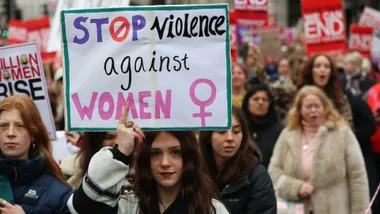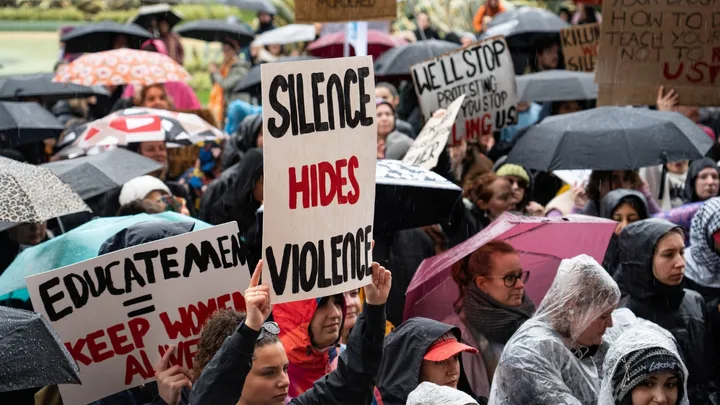
Over the past few weeks, the scale of violence against women in Australia has been laid bare through a heartbreaking succession of headlines.
“In the last two weeks in Australia, we have been bombarded by devastating headline after devastating headline, each one leaving women feeling less safe in their communities,” Australian Greens Leader and Spokesperson on Women Senator Larissa Waters said.
She continued, “Two years on from the last urgent National Cabinet meeting to address gendered violence, commitments remain unimplemented and underfunded. And they just gave themselves a one year extension to report – so much for this being an urgent crisis.”
On Wednesday, August 26, the National Cabinet convened to discuss a range of priorities affecting Australians, including progression on policies aimed at ending gender-based violence.
Following the meeting, we’re unpacking the key outcomes and what happens next.
RELATED: New Study Reveals An Alarming Rise In Misogyny And Sexism In Schools
What Is The New National Family & Domestic Violence Risk Assessment Framework?
A significant outcome from the meeting was the endorsement of the National Family and Domestic Violence Risk Assessment Framework. Australia’s National Research Organisation for Women’s Safety (ANROWS) was a key contributor to its development, which began in 2025.
The framework aims to help services across the country identify and respond to people experiencing domestic and family violence, ensuring survivors receive safe, appropriate and consistent support wherever they seek help, whether thats through the police, a GP or a hospital, regardless of the state or territory.
The department of social services also noted that a “Performance Measurement Framework has been developed to support monitoring and reporting during the Framework’s endorsement and alignment phases, which also helps with understanding how the Framework is being used and its impact.”
States and territories have been given two years to align with the framework.
What Is The Second Action Plan?
Currently national consultation is underway on the Second Action Plan under the National Plan to End Violence Against Women and Children 2022-2032; Safe and Supported; Our Ways – Strong Ways – Our Voices and the National Strategy to Prevent and Respond to Child Sexual Abuse 2021-2030.
Following the implementation of the First Action Plan, the Second Action Plan aims to:
- Build on First Action Plan achievements
- Respond to new evidence
- Address changing community needs
- Strengthen efforts to prevent violence before it occurs
- Improve outcomes for victim-survivors and children
- Support a more coordinated and effective national response
- Continue progress towards the National Plan.
National Cabinet agreed the priorities of the Second Action Plan are:
- Increasing support for victim survivors to leave violence safely and their recovery
- Earlier intervention which will assist in eliminating violence across health, education and community services
- Expanding support for children and young people affected by violence
- Bolstering efforts to prevent and respond to rising rates of sexual violence
- Tackling and preventing online harm
- Intervening early with people at risk of using violence and strengthening perpetrator accountability
What Further Action Has Been Agreed?
Alongside the Second Action Plan and the new National Family & Domestic Violence Risk Assessment Framework, First Ministers agreed that ministerial councils must act on various other priorities, including:
- Ensuring the effectiveness of respectful relationships education in schools
- Finalising National Standards for Men’s Behaviour Change programs
- Improving access to emergency accommodation
- Progressing recommendations of the Senate inquiry report on Missing and murdered First Nations women and children
- Progressing commonsense alcohol reforms
Is This Enough?
The main consensus is that immediate help is not readily available, with efforts focused on future processes. Activist Tarang Chawla noted that while there were many positive outcomes from the meeting, the focus should shift to implementing solutions.
“We should not confuse a list of existing investments and future processes with urgent action taken today,” he wrote on Instagram.
“Most of the funding cited was previously announced. The national-risk assessment framework was first promised in 2024, and jurisdictions now have another two years to implement it…For families like mine, gender-based violence is not occasionally placed on the agenda. It is on the agenda every day of our lives.”
MP Zali Steggall described the outcome as “weak and unacceptable.”
“The measures agreed to are piecemeal, and will make no immediate, material difference to women and children experiencing family, domestic and sexual violence.”