Trigger Warning: This article discusses domestic abuse. If you need support, contact 1800RESPECT on 1800 737 732.
On Monday, July 27, Australia’s new national warning system, AusAlert, will be tested across the country. As part of the test, an alert will appear on all compatible mobile phones and play a loud, siren-like warning sound for approximately 10 seconds.
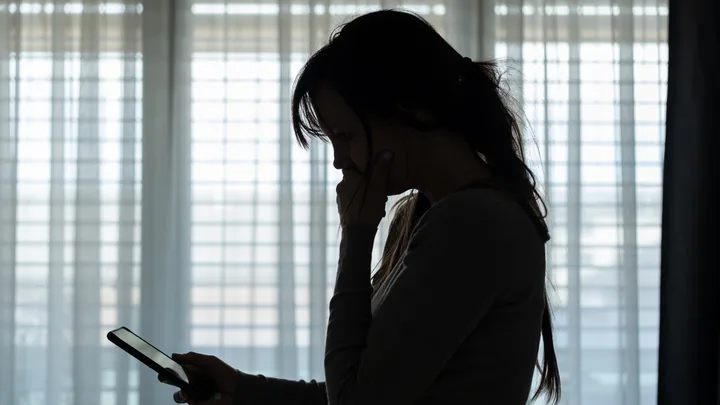
The aim of the initiative is to keep Australians informed quickly about emergencies ranging from natural disasters to security threats. However, for domestic violence survivors, the noise threatens the concealment of “safe phones”, emergency backup phones kept hidden from abusive partners and often the only active lifeline for those experiencing violence or coercive control.

Naomi Pearce, a psychological counsellor and domestic violence expert, explains just how important a safe phone is for victim-survivors of DV.
“A safe phone is not simply a second device. It can be the only connection a victim-survivor has to police, money, evidence, trusted people and a life beyond the perpetrator’s control. For someone experiencing coercive control, secrecy may be part of the architecture keeping them safe. A phone hidden from an abusive partner can be a vital lifeline to support services, trusted people and emergency assistance. It may also be the only device the perpetrator cannot monitor or access.”
However, if this phone sounds for 10 seconds, it could easily reveal the existence of the hidden device.
“If the alert sounds from a handbag, wardrobe, car or other hiding place, an abuser may discover that their partner has been seeking help or has a hidden device,” she explains.
“That discovery could lead to interrogation, confiscation of the phone, destruction of evidence, tighter surveillance or an immediate escalation in violence. For a victim-survivor, the risk is not simply that the phone is discovered. It is what that discovery may trigger.”
While the situation is concerning, Pearce said there are ways to prevent the alert from sounding.
“AusAlert advises people concerned about a hidden device to switch it off or place it in aeroplane mode at least one hour before the test and keep it that way for 24 hours. Smart watches and tablets must also be considered.”
However, she also notes this is not a one-size-fits-all solution.
“These steps should only be taken if it is safe. There is no universal safety instruction in coercive control. The safest choice depends on what the perpetrator monitors, what they already know and what may trigger them.”
Because victim-survivors know their perpetrator best, they’re the ones best placed to judge how to proceed.
“Someone who is uncertain should use a device the perpetrator cannot access to contact a specialist domestic violence service and review their individual safety plan. It is important that victim-survivors do not feel they have to take a particular action if doing so could create another risk,” she says.
So, what actions could the government take? According to Pearce, victim-survivors need to be considered from the outset when designing mass-alert systems, rather than after the hidden dangers have come to light.
“This should include earlier national communication, consultation with victim-survivors and frontline specialists, and multilingual advice distributed directly through refuges and support services. Public safety cannot be designed for the average citizen alone. A system may protect millions during a disaster while unintentionally placing a smaller, less visible group at immediate risk.”
DV Safe Phone, a national program that recycles, repurposes and distributes safe phones to people at risk, has donated more than 20,000 safe phones since its inception in 2020. Meanwhile, from 2014 to 2025, the Women’s Services Network (WESTNET) distributed more than 50,000 safe phones to women survivors of domestic and family violence, sexual assault and other forms of gender-based violence.
The necessity for these phones is critical, especially given that the prevalent use of technology can foster more control.
“This situation captures the central challenge of technology and coercive control. Phones, shared accounts, location services, smart cars, cameras and household devices can be useful in ordinary life, yet become tools of surveillance and intimidation when one person is determined to control another. Technology is increasingly woven into coercive control. A device that is designed to protect people in one context can create a risk in another.”
On Instagram, the official account for the National Emergency Management Agency (NEMA) replied to a comment asking about any safeguards that have been put in place by the government to protect victims.
While they acknowledged they were taking the safety of those who rely on a hidden safe phone “seriously,” they also noted, “As it currently stands, AusAlert has no opt-out functionality for the Critical Alert.”
The comment also detailed how they are “working on the development of information and collateral which is largely being distributed via specialist support organisations to assist in how they advise their clients.”
NEMA has also created a section under AusAlert with advice for those who have a safe phone.
Pearce has one key takeaway she hopes Australians can understand about the impacts of the emergency alert.
“If someone keeps a phone hidden, secrecy may be part of the architecture keeping them alive. Emergency systems should protect people from danger. To fulfil that promise, they must also be designed around those whose danger is already inside the home. The AusAlert test is an important public safety measure, but public safety cannot be designed for the average citizen alone. An alert that is a brief interruption for most Australians could expose a private device that a victim-survivor is relying on to escape an abusive partner.”
Time Of The AusAlert Notification By State On Monday, July 27
| State/Territory | Test Time | Time Zone |
|---|---|---|
| Australian Capital Territory | 2:00 pm | AEST |
| New South Wales | 2:00 pm | AEST |
| Queensland | 2:00 pm | AEST |
| Tasmania | 2:00 pm | AEST |
| Victoria | 2:00 pm | AEST |
| Northern Territory | 1:30 pm | ACST |
| South Australia (including Broken Hill) | 1:30 pm | ACST |
| Western Australia | 12:00 pm | AWST |

Related stories

Native ad body.

Native ad body.




Native ad body.