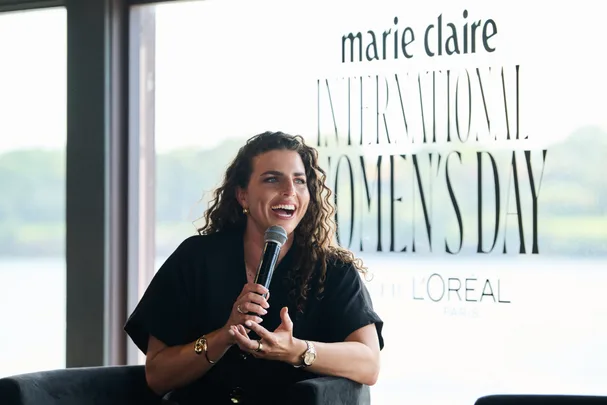
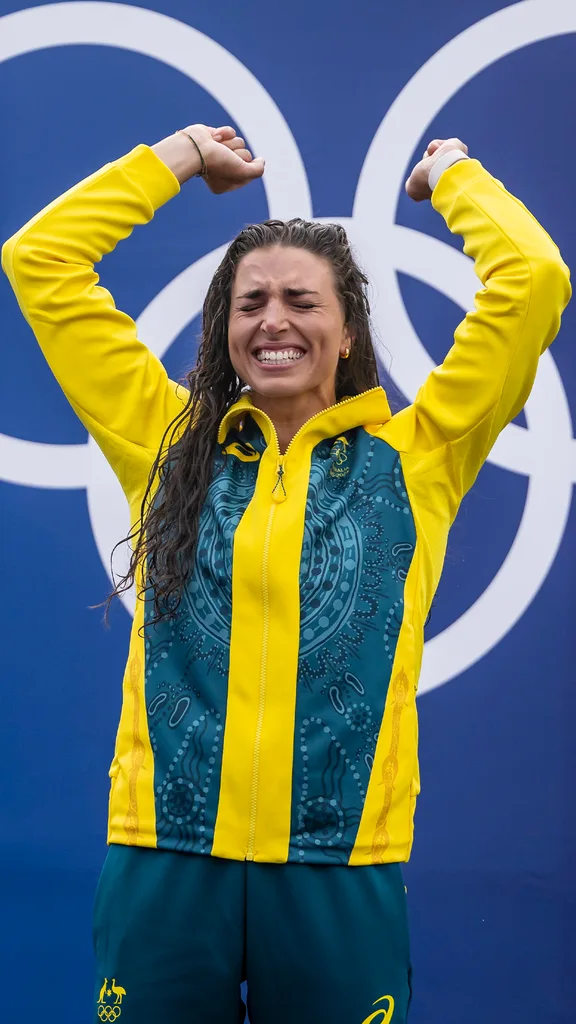
Australia’s most decorated Olympic paddler, Jessica Fox — who has three gold, one silver and two bronze medals under her belt (or, rather, race jersey) — credits many things to her success: a family in the biz, visualisation, and friendly sibling rivalry with her little sis’ and fellow Olympic medalist, Noemie Fox.
But the one piece of advice that resonated most with guests at marie claire‘s International Women’s Day lunch was her endorsement of the Three-Minute Power Cry.
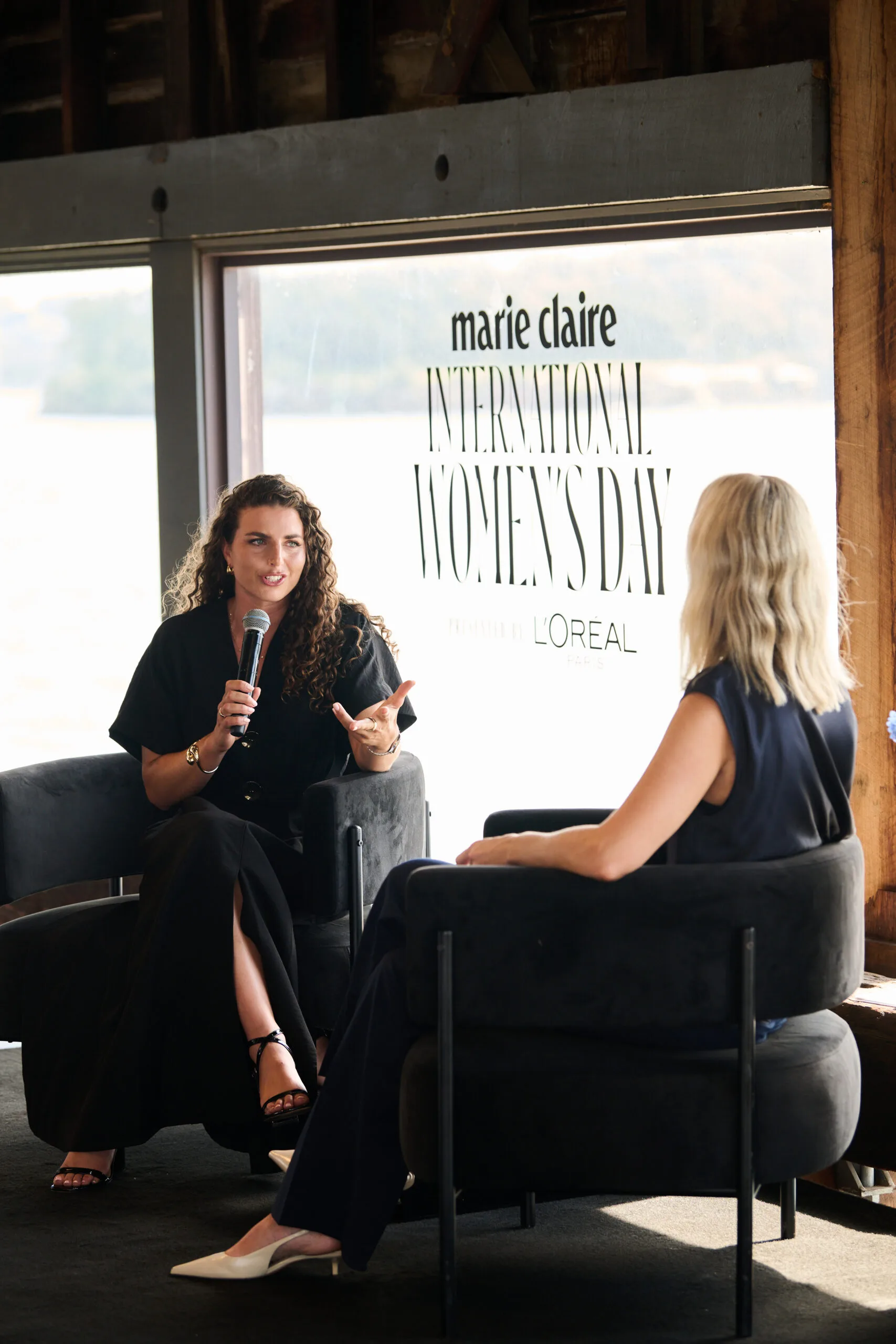
The 31-year-old L’Oreal Paris ambassador was speaking to marie claire editor Georgie McCourt about the Tokyo 2020 Olympics when she brought up her technique for moving past disappointment. Fox had been competing in the K1 class and was on track for gold when she touched two gates (not allowed). She received a four-second penalty, which meant she placed third.
“I was the favourite to win … so when I crossed the finish line [in third place], I was so frustrated, devastated, and I felt ashamed,” she said. “There were so many people who supported me to get there; I was, on paper, meant to win, because that’s not how sport works. So there was regret, frustration and anger.
“The media were like, ‘Oh, she’s won the silver. She won the bronze. There’s only one colour missing,'” she continued. “It was meant to be my moment, and it devastated me. I remember getting my medal and just choking back the tears and trying to smile through the moment, and then getting the car and driving back to the [Athlete’s] Village and crying the whole way, [as well as] the whole time on the physio table and that whole night.”
Fox needed to get back on the horse (in the canoe) two days later for another race. “I had to pivot in those 48 hours to try to get back to the start line for the canoe and give everything I had in that new opportunity to race for gold,” she said.
“I would start to time myself [crying], and give myself only the three minutes. It was getting draining! And I was like, ‘I need to let the emotion out and feel it.’ That’s important.”
It turns out Fox’s instinct was right: crying is, in fact, really good for you. (Full disclosure: a Big Crier is writing this.)
Crying is an evolutionary function that is designed to help us process and express emotions. Rather than seeing it as a sign of weakness or a lack of inner strength, consider this: emotional crying is exclusive to humans, so you may as well not waste the ability. Think of all those animals and birds who can’t let it all out.
Research has found that tears relieve the psychological pressure that accumulates in the sympathetic nervous system during times of distress. In the second before you burst into tears, your fight-or-flight instinct is at its peak, so having a good sob eventually brings you back to equillibrum.
Crying also releases the feel-good chemical oxytocin and natural painkillers.
But, Fox says, you’ve got to keep it short and sweet. “You’ve got to have a Power Cry,” she said. “You’re allowed three minutes, and I recommend it because you feel it and get the emotion out.”
Given how many women in the room turned to one another at the mention of the Three Minute Power Cry, it’s clear she’s onto something. The room hummed with whispers between guests: “That’s a good idea!” “I do that” “I used to run to the bathroom during meetings to do that!”
Forty-eight hours after scoring bronze (and yes, we say scoring because coming third is no easy feat), Fox won gold.
That’s all the evidence we need that a good (short) cry = success. Pass the tissues.

As the biggest beauty brand in the world, L’Oréal Paris has an unparalleled commitment to technology, research and innovation and providing ground-breaking, high-quality products for women and men of all ages and ethnicities.

Related stories

Native ad body.

Native ad body.




Native ad body.