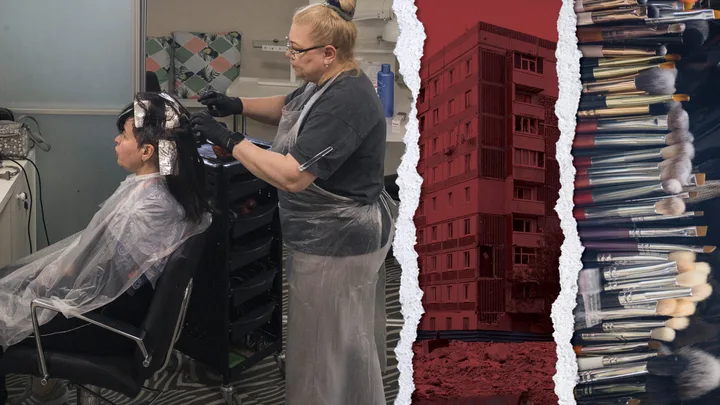
The hum of hairdryers filled a small beauty salon in the basement of an apartment complex in Kupiansk, a city in the eastern Kharkiv region of Ukraine. Hairstylists worked in silence while, outside on the streets, the deafening thuds of explosions rocked the city, and Russian jets flew overhead.
It was three days into Russia’s full-scale invasion of Ukraine, and soon after, Kupiansk would fall under occupation, leaving much of the city’s population trapped in one of the epicentres of the war.
Throughout the country, Russian troops would become known for their war crimes – sexually assaulting women and girls, torturing detainees and murdering civilians, leaving their bodies lining the streets of their villages, towns and cities.
In Kupiansk, as was true throughout occupied Ukraine, survival was not guaranteed, and liberation seemed a distant hope. Despite living amid the uncertainty of war, the women at the salon in Kupiansk found a sense of community.
There, they had a temporary respite from life under Russian control, and women would repeat a common phrase echoed throughout Ukraine: “If I die, at least I’ll die beautiful.” The war began just after 5am on February 24, 2022, as Russia invaded Ukraine from the north, east and south. Missiles rained down on the country, and once peaceful regions were turned into frontline positions.
Ukrainian soldiers and volunteers with the country’s Territorial Defense Forces battled against Russian troops who believed that the invasion would be an easy feat – that the capital city, Kyiv, would fall in a matter of days, and the rest of Ukraine would soon follow. Few Ukrainians had expected that a war of such attrition would unfold in the coming weeks – not in the 21st century, in the heart of Europe.
Less than a month into the invasion, Russia had seized 27 per cent of Ukraine’s land, much of which was located in the eastern and southern regions of the country.
At the heart of the initial battle on the eastern front was the occupation of parts of the Kharkiv region, which borders Russia and had a pre-war population of nearly 2.6 million.
Although Kharkiv city never fell, few in the region had time to prepare for the invasion before Russian troops had already set foot on its streets. Soon after, 32 per cent of the region would fall under Russian occupation and remain under Moscow’s control for the next six months.
Kupiansk, 119 kilometres from Kharkiv, was one of the first cities in Ukraine to fall to the Russians. Kateryna Pavlyukova, the owner of a beauty salon in Kupiansk, wanted to leave the city with her then-17-year-old daughter on the first day of the war.
That morning, they collected their documents, a few belongings and food for their two dogs in preparation for leaving for Lviv, a city in western Ukraine that had become a haven for internally displaced people from the hottest spots of the war.
But fear kept Pavlyukova in Kupiansk. Fleeing by car was a dangerous task – there had been reports of Moscow’s troops opening fire on civilians who attempted to flee from areas where they were present, and Russian checkpoints set up throughout the frontline regions could come under missile attack without a moment’s notice.
The main highway leaving Kupiansk was under constant attack, and no navigation app could find an alternative route out.
In Kupiansk, at least, Pavlyukova and her daughter could move into a friend’s home, and the mother hoped that Ukraine’s troops would soon push Russian forces out of the city. But that did not happen. Russia’s control of Kupiansk came with terror that Pavlyukova had never imagined she would experience in her lifetime.
At first, the city’s food supply was quickly depleted as civilians rushed to stores to stock up at home, and no new deliveries arrived.
Pavlyukova then forbade her daughter from leaving the apartment without her, as reports emerged of Russian soldiers abducting women and girls, holding them captive and sexually abusing them. Kupiansk was under constant surveillance by the Russians, who told residents that they were liberating them from “the Nazis” of Ukraine – a false accusation that Russian President Vladimir Putin has reiterated throughout the war as one of the reasons for his “special military operation” in Ukraine. Four-and-a-half years later, Putin has yet to call the invasion of Ukraine a war.
In the first week of the occupation, Pavlyukova said the residents of Kupiansk were “rude and bold” to the Russians – they stood up to their invaders.
Who did they think they were? Invading an independent country and trying to break the will of the Ukrainians, Pavlyukova and others in Kupiansk thought.
In an act of defiance, to show the Russians they would not control her and the people of Kupiansk, Pavlyukova reopened her beauty salon on the third day of the war. There was a need for beauty treatments at the time.
The women who were fleeing did not know where they were going or when they would next find a decent manicurist or hairstylist, and those who remained found that a simple trip to the salon was a way to cope with their present reality.
Feeling good about their appearance was one thing the women of Kupiansk could control at the time, and for what could be their final treatment they wanted to go to a beauty professional, known as “beauty masters” in Ukraine, whom they trusted.
They turned to Pavlyukova and her team to fulfil that task. “You look at yourself in the mirror and see that your hair roots are fine, your hands are fine,” said Pavlyukova in the backroom of a salon that she now rents in Kharkiv city.
Three months into the war, Pavlyukova and her daughter managed to flee Kupiansk, and she later moved to Kharkiv and opened up her practice.
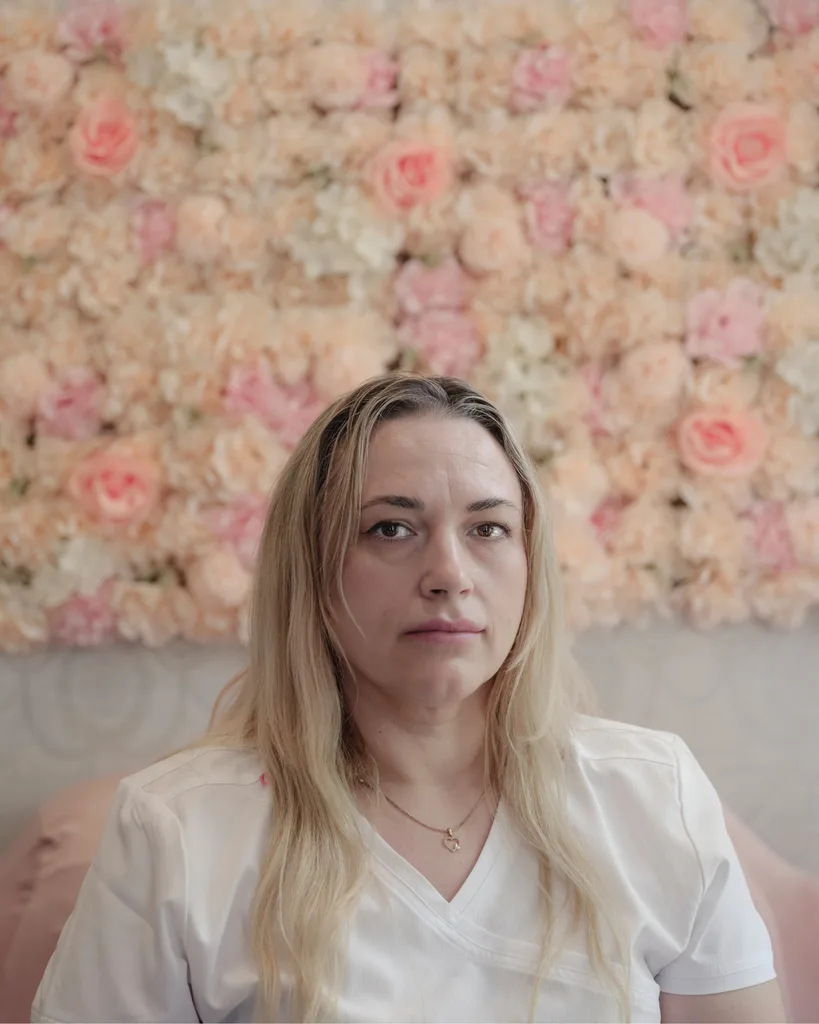
The room is small – made up of a manicure table with dozens of nail swatch sticks for clients to choose from, in various shades of pink, blue and brown, accompanied by glittering black and grey.
A large, light-pink massage chair sat next to the window for pedicures, in front of a large display of fake roses on a board hanging from the wall. “At least on the outside you feel normal, even if inside you’re dealing with something else. But at least what you see in the mirror is something you like,” Pavlyukova said.
The occupation of Kupiansk continued until September 2022, when Ukraine launched a surprise counter-offensive that led to the liberation of almost all of the Kharkiv region and served as a turning point in the war. Pavlyukova’s salon remained open until the week before the liberation occurred.
By that point, most of the clients they had once catered to had already fled the city as Russia and Ukraine opened humanitarian corridors for civilians to leave.
In Kharkiv, Pavlyukova’s life has fallen into a wartime normal. Hours after marie claire met with Pavlyukova at her new nail salon, the city came under attack. The high-pitched buzz of Russian drones flying over the city was met with the roar of Kharkiv’s air defence systems shooting them down, followed by explosions as they fell to the ground.
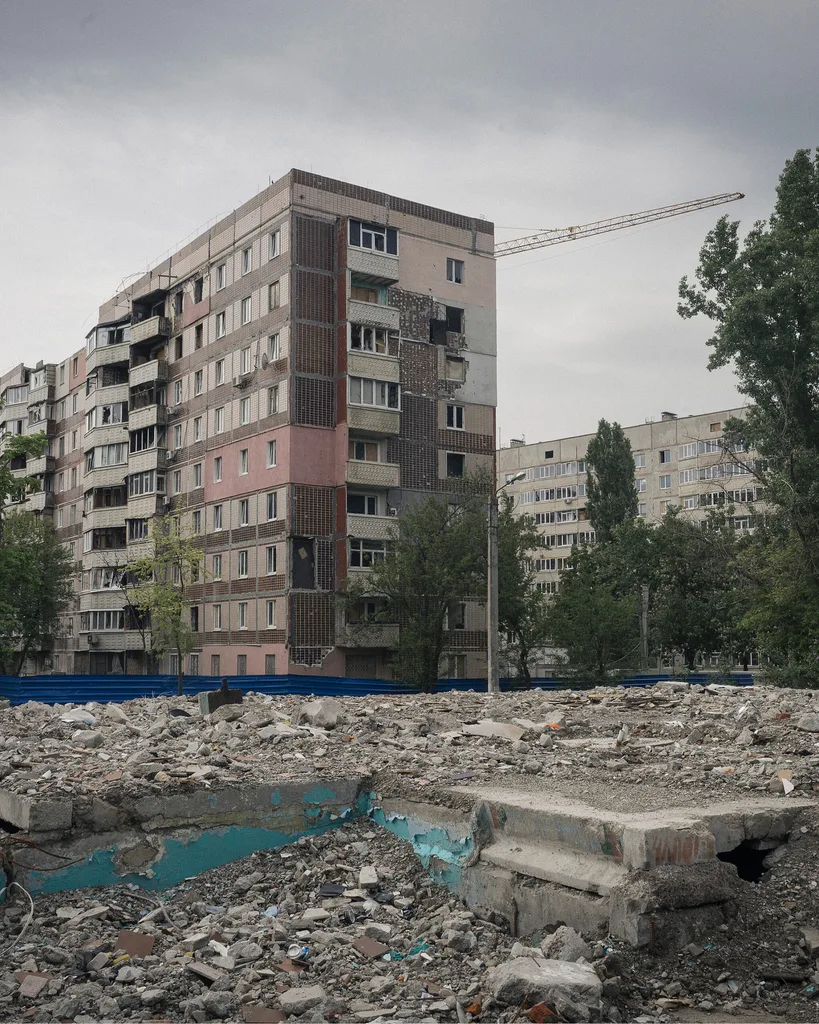
The brutalities of the war are omnipresent in Kharkiv. Destroyed buildings line the desolate streets of the city, and countless residential buildings have replaced their windows with wooden boards after being shattered multiple times due to the sheer force of Russian drone and missile attacks.
The daunting blare of air-raid alarms warning of possible attacks has become so routine that residents ignore them. Russia re-invaded the Kharkiv region in May 2024, and the frontlines are currently around 33 kilometres from the city centre.
The thud of explosions in the distance has since become a constant, inescapable reality. Perhaps nowhere in Kharkiv city has been as deeply affected by the constant attacks as the neighbourhood of Saltivka, the largest residential area of Ukraine, where 400,000 residents lived in massive Soviet-block buildings before the war began.
Few have an idea as to exactly why Russia attacks it with such force, but few buildings have been spared by Moscow’s wrath, and areas of the neighbourhood now sit in ruins.
There had already been one attack on Saltivka as marie claire drove into the neighbourhood – a drone had been shot down near a civilian bus stop, and emergency service workers were cleaning it up.
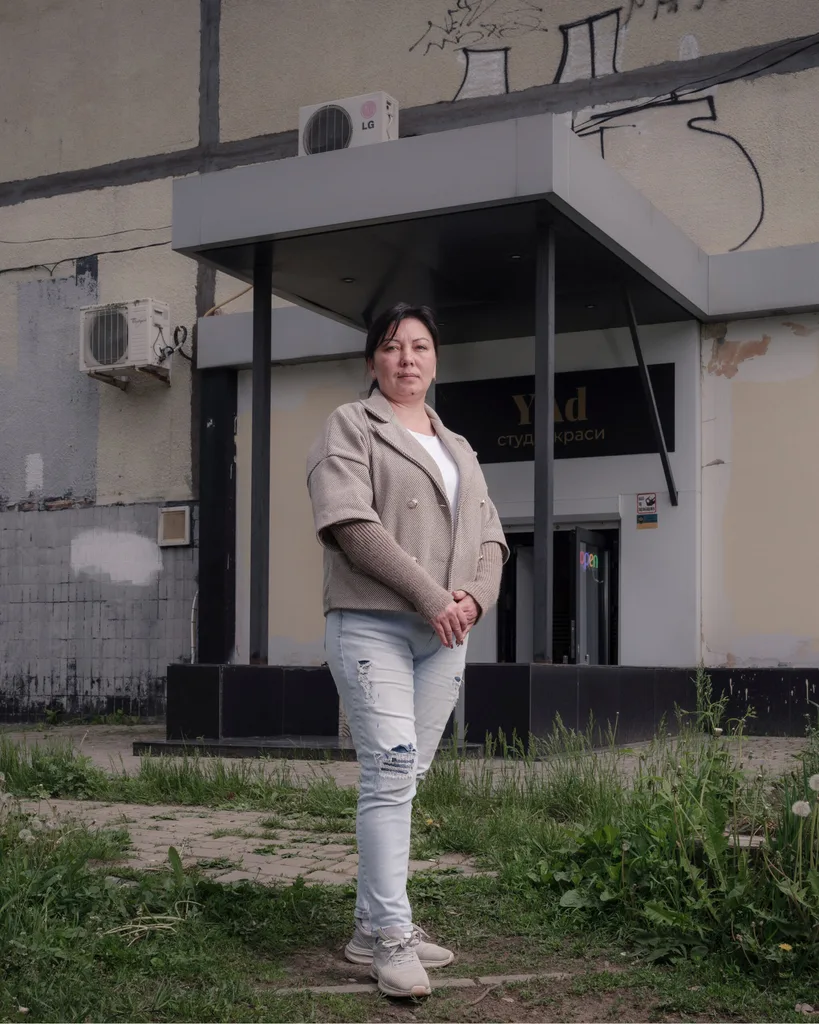
At the YAD beauty salon, owner Iryna Shamarina said that there are sometimes attacks within a few kilometres of her business. The night before we spoke, there was an attack across the intersection from her apartment, but she still woke up in the morning and went to the salon.
“We’re tired of living in fear. When the war lasts so long, you get used to it,” she said. “The first year was frightening, the second year, too, and by the third and fourth years, we were simply living in that rhythm – we had just gotten used to it.”
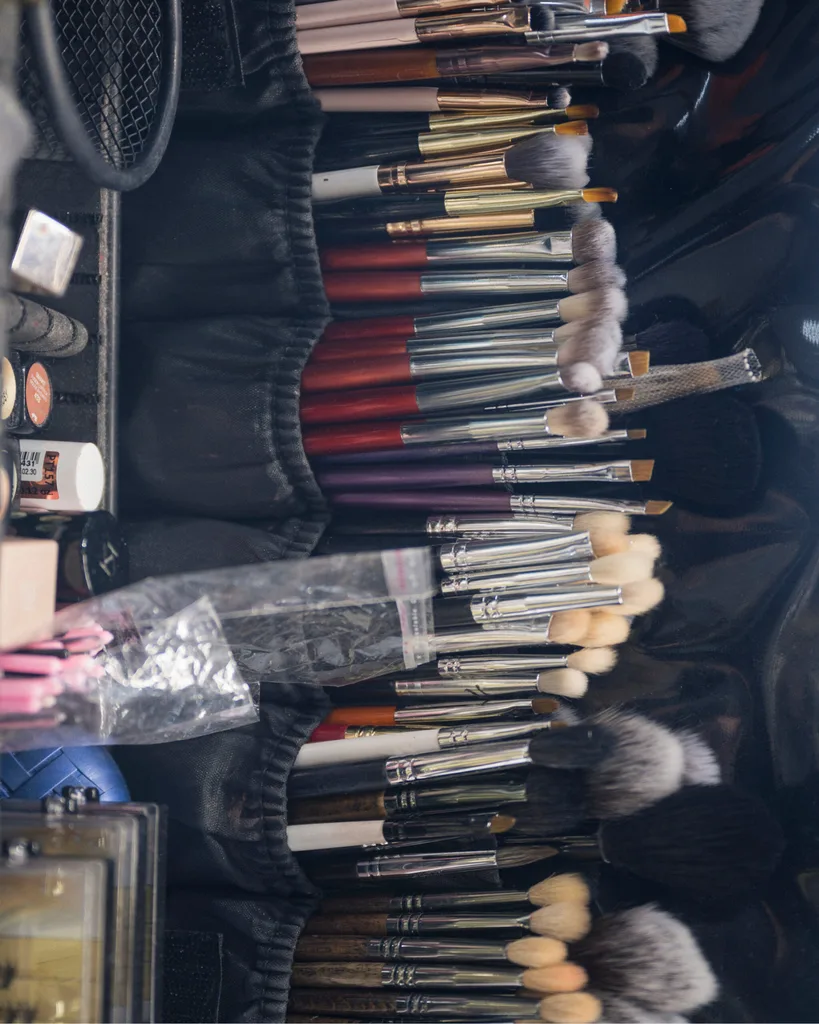
Shamarina opened her salon in February 2026 to earn income that she and her husband could save for their future retirement.
The salon is located in the basement of an apartment building, which at times operates as a shelter for those seeking cover from Russian attacks. The lighting in the salon is dim, and there are two rooms: one large space for hair, manicures and pedicures, and the room we sat in, an aesthetician’s room that offers facials and makeovers.
Above the entrance of the room was a small etching of a cross drawn in white chalk – a blessing given by the previous renters of the space to protect it from outside threats. The biggest problem plaguing Shamarina’s salon is the dangers of living in Kharkiv.
Given the city’s close proximity to Russia, there is often little warning before a missile or drone attack occurs, and the city’s air defence units have to work with great speed to shoot them down before they cause mass casualties.
Shamarina constantly fears that Russia will target the building that her salon is in, leaving her without her main source of income, which is already struggling.
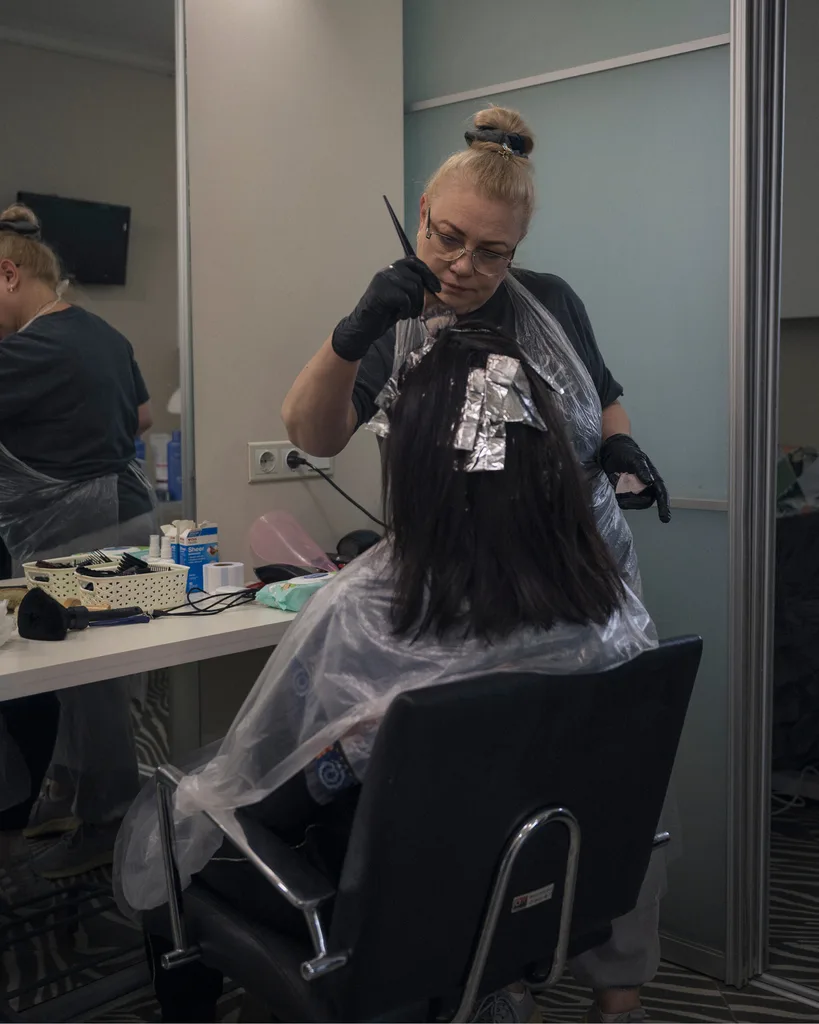
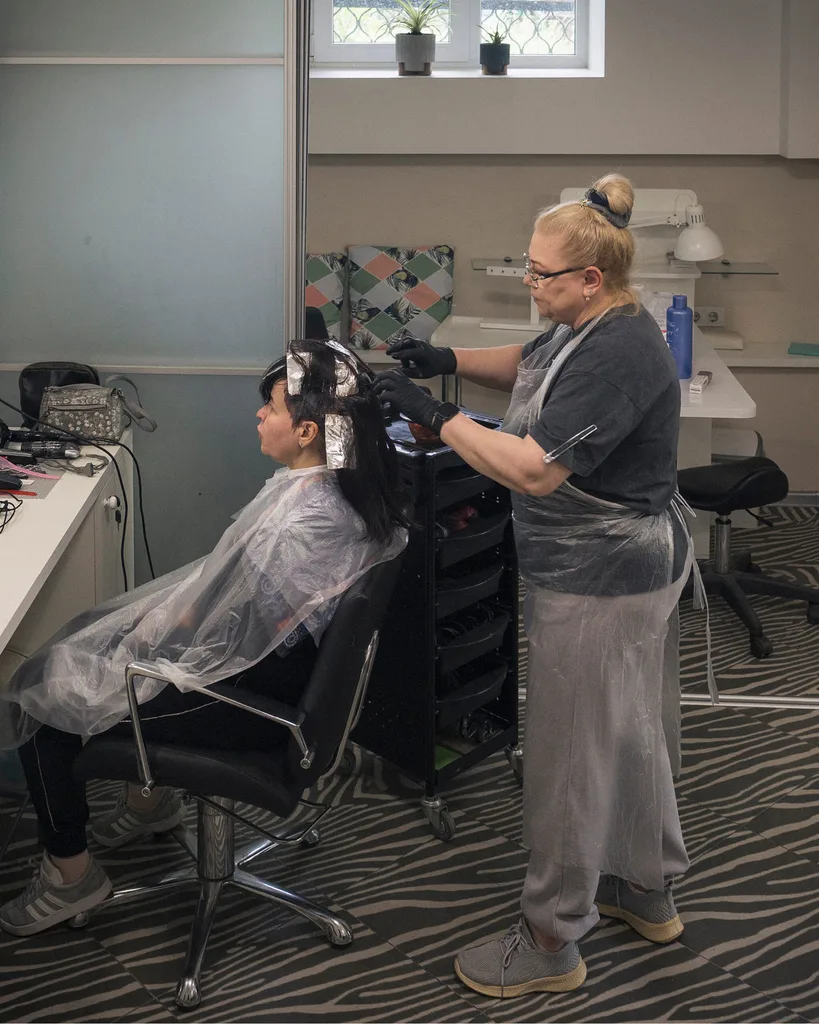
Business is slow at the salon, and most clients are regulars or were referred by word of mouth. One client was present in the salon as we spoke – Yulia Zhuk, who was having the roots of her dark brown hair touched up by the stylist, Oksana Shevchuk.
“When the war started, a month later, I was already colouring my hair again. At first, it was at a stylist’s home, and then I met Oksana,” Zhuk said with a smile. “I wanted to feel like a beautiful woman despite all those extreme circumstances. We kept working and going on with our lives. We never stopped.”
For the first month of the war, Zhuk lived in a bomb shelter in Kharkiv that was equipped with hot water and an electric stove. There, the women cooked meals together, comforted one another and coloured each other’s hair when it was needed.
“It was a way to show that Ukrainians can’t be broken by anything,” Zhuk said of that time.
As she painted Zhuk’s hair, Shevchuk said she had been working as a hairstylist for the past 26 years and loved her job. Ukrainian women still tend to their beauty needs during the war, she explained, because “it’s about mood and lifting the spirit”. “We are resilient – our women are used to this. Looking good is important to us,” she stressed.
An estimated 15 million people in Ukraine are in need of psychological support, according to a recent report by the country’s Ministry of Health.
A 2023 report by the journal of the European Psychiatric Association found that nearly two in every five women in Ukraine screened positive for a mental health condition. The suffering of the Ukrainian people is felt throughout the country, where life is plagued by death, destruction and loss.
Many Ukrainians are searching for someone to vent to about their struggles – the deep fear that the frontlines are growing closer to their homes, the husbands and sons sent to fight on those frontlines and the constant stress of yet another attack.
For Ukrainian women, the person they can pour their hearts out to is their beauty masters, who have become wartime therapists.
Between sips of tea as manicurists paint nails and long hours sitting in a hairstylist’s chair, beauty salons offer an emotional release, a way to assure Ukrainian women that they are not alone in their struggles.
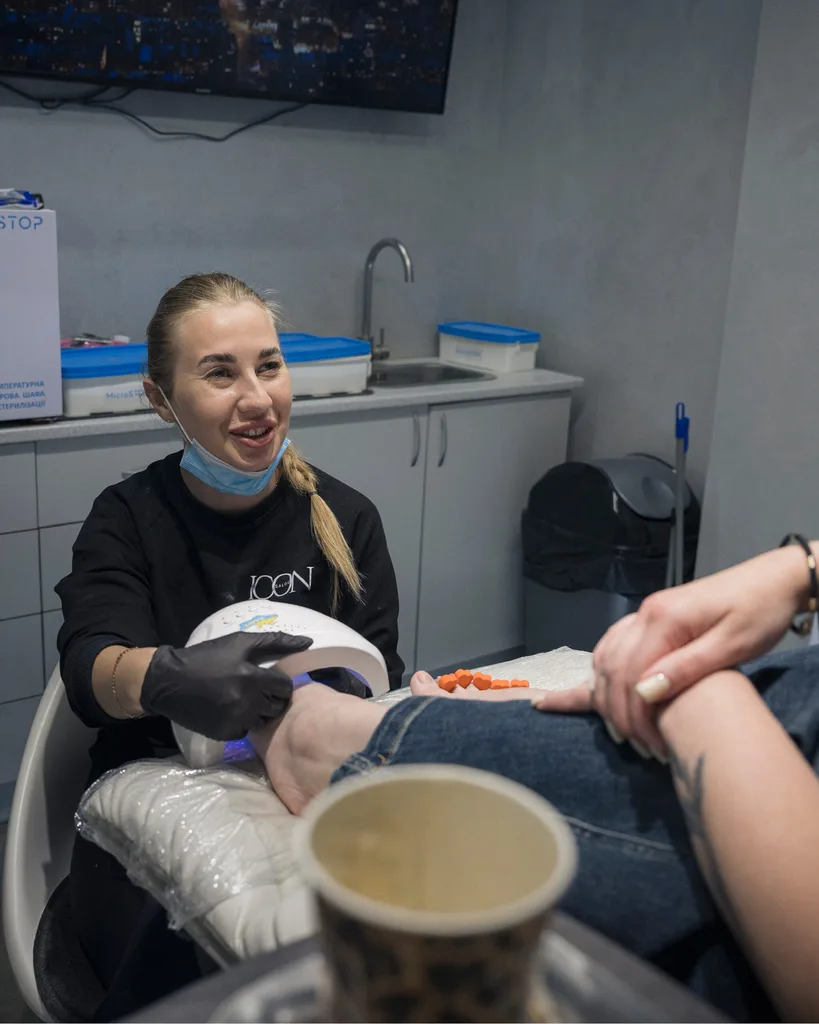
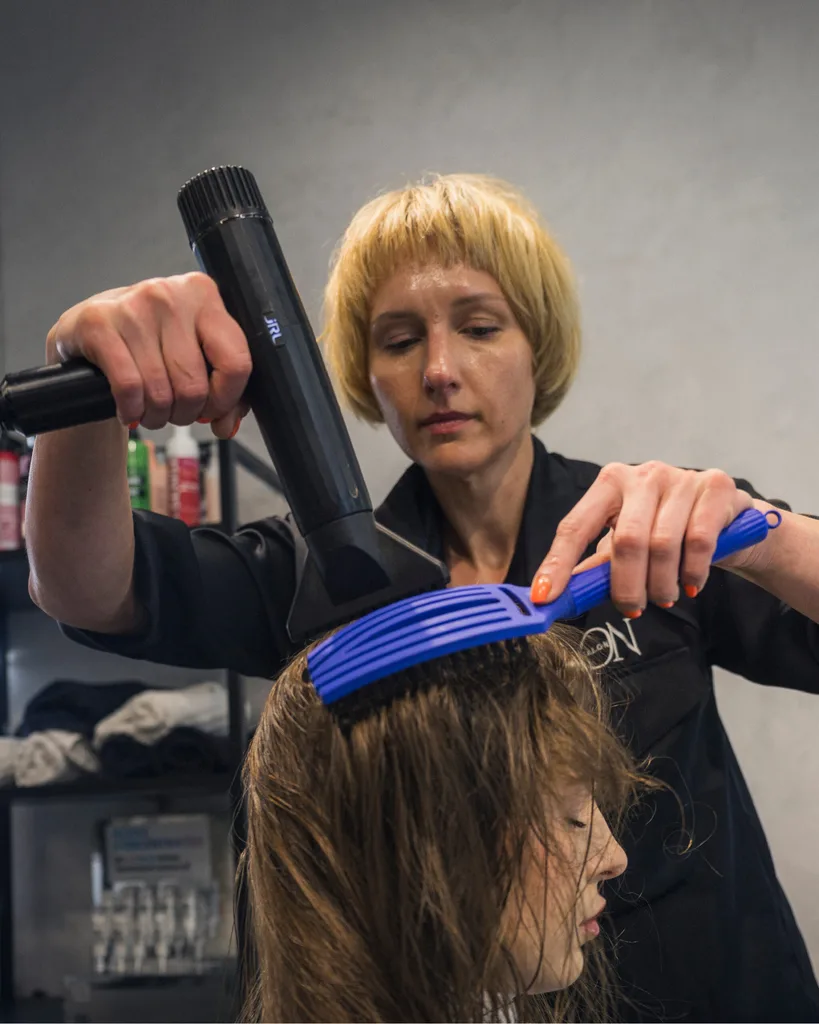
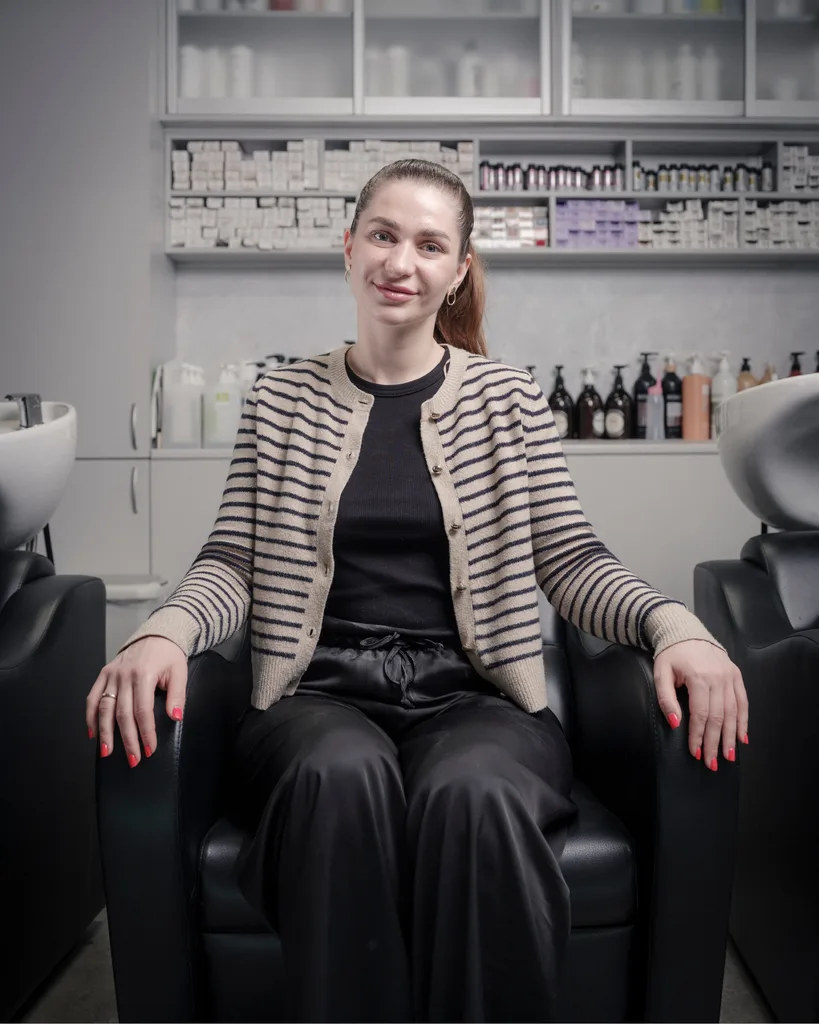
At Kharkiv’s Icon beauty salon, four women sit in rows of tables as manicurists tend to their nails. Icon has 300 gel nail polish colours to choose from. Red is the most common colour.
One young woman sits in a black chair at a salon mirror, laughing with an aesthetician who shapes and waxes her eyebrows.
At another chair, a woman with shoulder-length brown hair shows a Pinterest photo of a woman with a bob cut to her hairstylist as a reference for what she wanted done. Icon is frequently busy – seven days a week from 9am to 7pm, women come in despite what is happening in Kharkiv, said manager Alyona Demchenko.
“We often get messages like: ‘There was an attack near my building this morning. Can I move my appointment 30 minutes later? I’m just running late. They’re boarding up my windows now, and I’ll come right after that,’” she said.
“For women, it’s not just about services – it gives them that feminine energy that allows them to feel inspired and to inspire others,” Demchenko added with a smile. But the war is a constant conversation at Icon, and some women who come in have escaped from the frontlines or occupied areas of Ukraine.
At the beginning of the war, a client brought her mother – who had lived through occupation – into the salon in the hopes of helping her “almost come back to life,” Demchenko recalled. “She said that everything felt completely unfamiliar to her – like she had been away for an eternity,” added Demchenko.
The mother was scared and spoke of how uncomfortable she felt in “normal” social environments, and that she was still trying to adjust. People smiling and getting manicures felt strange to her, and her body told her to find somewhere safe to hide.
“People always want to share what they carry inside,” said Icon’s owner, Daria Honchar. Hearing constant stories of suffering from the war is “always deeply painful”, she added with a sigh.
The staff at Icon process the war by choosing to adapt and continue their lives – the only ones they have, said Honchar. “Being a Ukrainian woman means being strong and resilient,” she explained, adding that the war has only reinforced that belief.
At Icon, the staff support their clients and help them rediscover “their own beauty and worth,” she said passionately. “When a woman chooses herself, we are there to support her in that. And here, she is choosing self-love.”
Related stories
Native ad body.
Native ad body.



Native ad body.