For years, Married At First Sight has thrived on social combustion.
The dinner party is its most reliable pressure point, a soirée designed to corral frayed relationships, unresolved grievances and performative honesty, then wait for impact. But last night, the spectacle tipped into something genuinely uncomfortable.
Bride Brook Crompton did not wander in to stir the pot. She arrived with a hit list and the confidence of someone who had rehearsed the scene in the mirror.


From the moment the 27-year-old model entered late, telling producers she was there “for my own reasons”, the tone was set. Those reasons quickly revealed themselves as a sustained, targeted attack on the other women at the table.
It felt less like unfinished business and more like an open audition for Villain of the Season. The shortlist was Brook, Gia and Brook’s husband, and, spoiler alert: Brook cleared the field last night.
Her pivot into antagonist territory in Episode 8, amplified by her alliance with Gia, initially read as basic reality TV fodder. Yes, we need a villain, but not someone campaigning this hard for the role.
The mockery directed at Stella and Alissa last night was not entertaining. This isn’t the familiar, silly drama MAFS serves up. It was humiliation, staged and platformed. Everything from their shoes to the way they speak became fair game, for reasons viewers were never given.
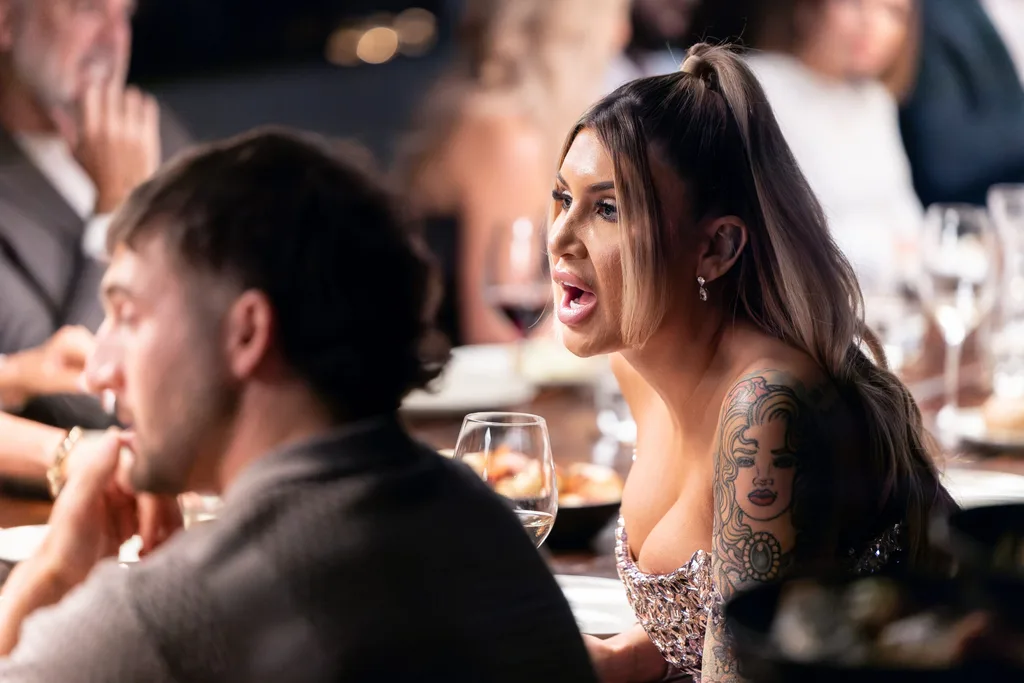
Of course, Brook does not operate in isolation. Reality TV loves a tightly choreographed moment. She did not drift into that dinner party on a whim, she was flown back, briefed, positioned and gently nudged into chaos. In that sense, she delivered the spectacle the format rewards.
Still, spectacle does not absolve responsibility.
Nothing shown on screen has warranted the level of animosity directed at Stella and Alissa, not only by Brook but by Gia and Bec. Last night’s language was less confrontation than degradation. The irony is that Brook and Gia both describe themselves as “girls’ girls”.
What plays out on MAFS is rarely just about the individuals involved. The show trades in a familiar cultural script, the spectacle of women in conflict. The idea that women are natural competitors, that solidarity is conditional, that intimacy between us is fragile. Many of us grow up absorbing that logic. It is exhausting, and it is not accidental.
The language of the “girl’s girl” is meant to signal solidarity, yet “not a girl’s girl” has become a social verdict, less an observation than a character assassination. Watching the rhetoric of female loyalty used to publicly dismantle other women would be funny if it were not so tired.
We tell ourselves we are empowering women by calling out others, without noticing how quickly righteousness becomes its own performance. As though respect were a limited resource, and dominance just another word for honesty.
Reality television will keep rewarding the loudest rupture. That does not mean we have to mistake cruelty for entertainment, or spectacle for substance. The women on MAFS can, and should, do better.
Since exiting the experiment, Brook has shared that she is expecting a child and is now engaged to her former partner. One hopes this next chapter brings her a little more calm and clarity.