There’s nothing that grips audiences quite like a cult thriller. Enter: Netflix’s new show, Unchosen.
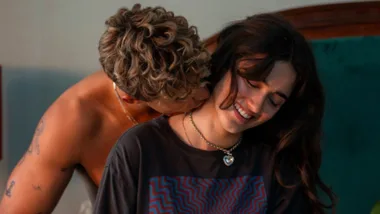
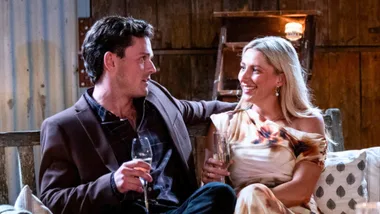
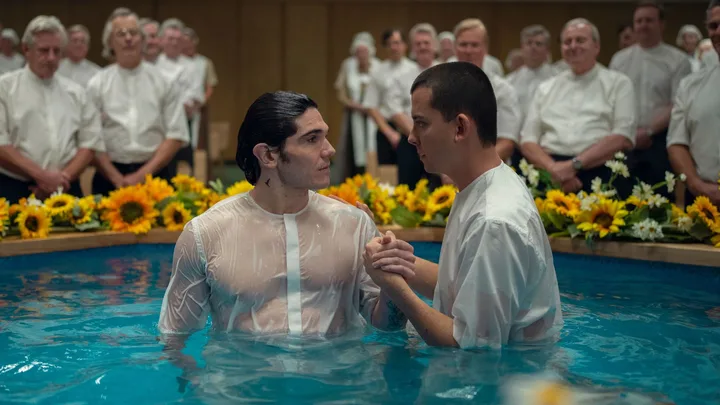
The six-episode limited series follows Rosie (Molly Windsor), a young woman trapped in an oppressive religious community known as the Fellowship, where her marriage to Adam (Asa Butterfield) is tightly controlled by doctrine and expectation.
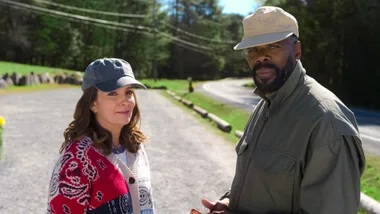
When charismatic outsider Sam (Fra Fee) arrives, his influence begins to destabilise the group, exposing hidden tensions and manipulation.
As loyalties shift and secrets surface, Rosie is forced to confront the truth about the cult and fight for a way out. For those who have, understandably, binged their way through all six eps, you’re probably reeling from the finale. So let’s unpack the meaning behind it.
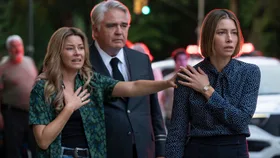
What Happens At The End Of Unchosen?
By the end of Unchosen our main characters are divided by starkly different outcomes. Rosie manages to escape the cult with her daughter Grace, Adam helps facilitate that escape while remaining emotionally conflicted, and Sam ultimately ascends to power within the Fellowship.
It turns out, Sam has been “using Rosie and Adam as pawns” from the beginning, carefully manipulating events to position himself at the centre of control.
Not how you saw the show ending? You’re not alone.
Unchosen Ending, Explained
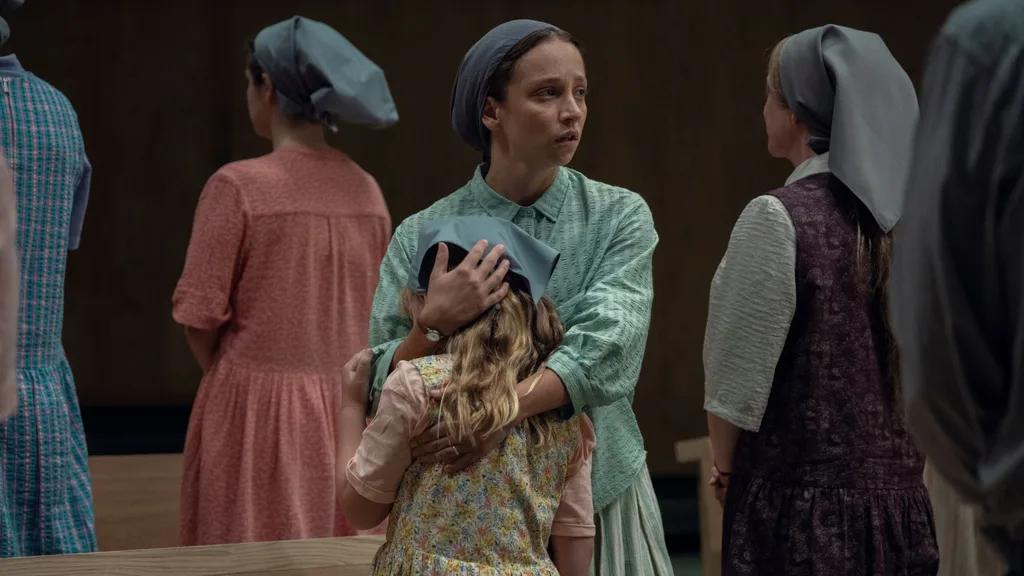
Rosie’s storyline reaches its peak when she decides to leave both her abusive marriage and the Fellowship, a choice that culminates in a chaotic and violent confrontation with Sam in which he nearly kills her before abruptly stopping. She does succeed in escaping with Grace, aided by Adam in a moment that underscores both love and loss.
“She’s got a whole other journey to go on now. I think, generally, when you go through something really scary or traumatic, you’re in shock and just getting through it,” Molly tells Tudum. “It’s not until after that you go, ‘Whoa, that was a lot.’”
As for her husband Adam, his ending may be more subdued but it’s just as revealing. While he ultimately helps Rosie and Grace escape in a significant act of defiance, he does not experience the same clarity or liberation, instead remaining caught in a psychological struggle that continues beyond the finale.
As Butterfield notes, Adam still has “an internal journey” ahead of him, suggesting that his ties to the Fellowship are not easily severed.
Then, there’s our unuspecting villain: Sam. One of the finale’s most striking moments occurs when Sam, in the midst of attempting to drown Rosie, suddenly stops, a decision that introduces a layer of ambiguity into his character. According to actor Fra Fee, something momentarily cuts through his rage, suggesting he is not entirely devoid of humanity.
It doesn’t minimise the danger Sam poses however, revealing that while he is capable of emotion he’s just as dangerous, if not more so.
As we flash forward one year, we see Sam not as a fugitive or outsider, but as a fully established leader within the Fellowship, respected and embedded in the very structure he once infiltrated.

Related stories

Native ad body.

Native ad body.



Native ad body.