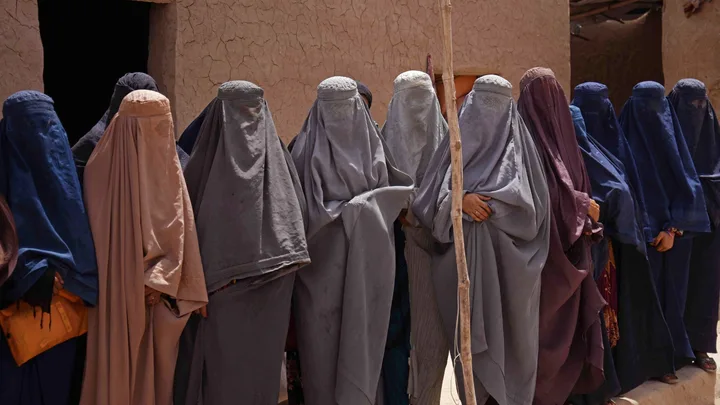
The Taliban has enacted a new penal code that effectively legalises domestic violence against women, allowing husbands to beat their wives and children provided the violence does not result in “broken bones or open wounds.”
The 60 page document, obtained by The Telegraph and signed by Taliban supreme leader Hibatullah Akhundzada, has been distributed to courts across Afghanistan. It classifies spousal violence as “ta’zir”, a discretionary punishment, rather than a criminal offence.

Even in cases where serious injury can be proven, the maximum penalty for a husband is 15 days in prison.
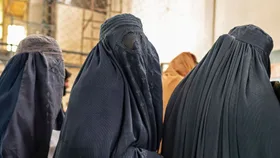
In practice, the threshold for accountability is almost impossible to meet. Women who wish to lodge a complaint must present their injuries in person to a male judge, while fully veiled and accompanied by a male guardian. In most domestic violence cases, that guardian is the husband accused of carrying out the assault.
The code contains no provisions prohibiting physical, psychological or sexual violence against women.
The law also criminalises women who attempt to flee abuse. Under Article 34, a woman who goes to her parents’ home without her husband’s permission, even to escape violence, faces up to three months in prison. Family members who shelter her are subject to the same punishment, effectively trapping women in abusive households.
The new penal code dismantles protections introduced under Afghanistan’s previous government, including a 2009 law that criminalised forced marriage, rape and gender based violence. It replaces due process with the unchecked discretion of Taliban judges. There is no right to a lawyer, no right of appeal and no oversight mechanism.
Since returning to power in August 2021, the Taliban has systematically stripped Afghan women of basic freedoms. Women have been barred from education, ordered to cover their faces in public, restricted from travelling or driving, discouraged from speaking in the presence of men and warned not to speak loudly inside their own homes. The Taliban has also ruled that discussing the new penal code itself is a criminal offence.
Narges, a former university student in Herat, told The Telegraph: “No one sees us. No one cares about us. This new law is not just a law. It is making our bodies their field of control. No one would see our pain unless our bones are broken. They are legalising fear. We are living in fear and silence.”
A United Nations report released in July 2024 warned that the Taliban’s morality ministry was creating a climate of fear and intimidation through its edicts and methods of enforcement. As the group attempts to position itself as a functioning government, the new code underscores how far Afghanistan’s legal system has moved from protecting women to institutionalising their harm.

Related stories

Native ad body.

Native ad body.



Native ad body.