

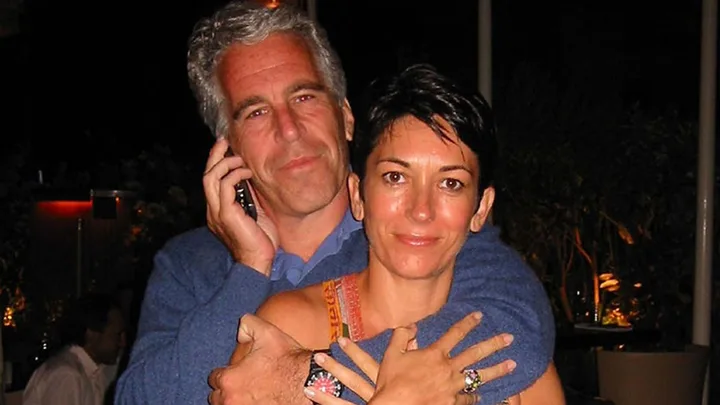
The newest release of documents from the United States Justice Department does not so much rewrite the story of Jeffrey Epstein as sharpen its most troubling outlines. The files, millions of pages made public under a transparency law passed last year, confirm what investigators, journalists and victims have long argued: that Epstein’s conviction in 2008 did not end his access to power, prestige or protection. Quite the opposite.
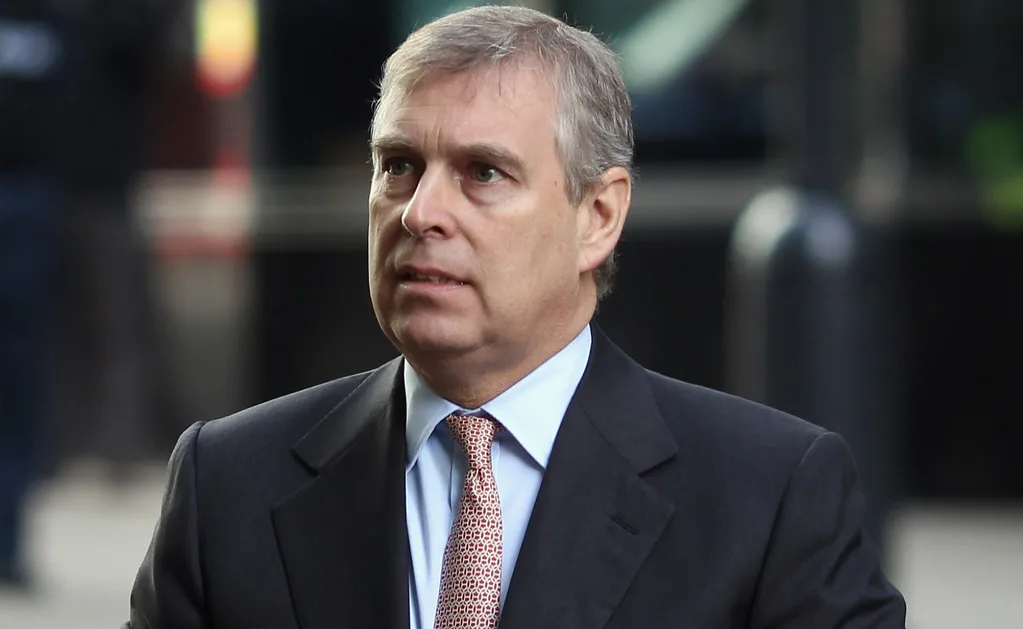
Among the most consequential revelations are emails that appear to show continued contact between Epstein and the man formerly known as Prince Andrew, now Andrew Mountbatten-Windsor, well after Epstein had pleaded guilty to soliciting a minor for prostitution. In one exchange from August 2010, Epstein offers to introduce “The Duke” to a 26-year-old Russian woman, described, in his idiosyncratic spelling, as “clevere beautiful, trustworthy.” The reply is swift and warm. “Of course,” the correspondent writes, signed simply “A.” “I would be delighted to see her.”
In another message a month later, Epstein proposes a meeting in London. The response suggests dinner at Buckingham Palace, “and lots of privacy.” Epstein replies: “bp please.” Whether such a meeting took place is unclear. What is clear is that this correspondence sits uneasily beside the former prince’s repeated claims that he had cut ties with Epstein after the financier’s conviction.
The Andrew Problem
The documents do not establish criminal wrongdoing by Mountbatten-Windsor. The presence of a name in an investigative file, prosecutors are careful to note, is not proof of guilt. But they do complicate the narrative he offered in a disastrous 2019 BBC interview, in which he said he had travelled to the United States to end the friendship in person. Three months after the emails, the two men were photographed walking together in New York’s Central Park.
For Britain’s monarchy, the timing is both awkward and clarifying. King Charles III stripped his younger brother of his remaining royal titles three months ago, a move widely interpreted as an attempt to quarantine the institution from a scandal that has lingered for more than a decade. The new material suggests that decision may have been less pre-emptive than belated. “They had to do something to separate Andrew from the rest of the family,” said Craig Prescott, a constitutional law expert at Royal Holloway, University of London. “As more comes out, you do feel that they have been justified.”
The emails are not the only unsettling artifacts in the release. Three photographs, undated and unattributed, appear to show a man resembling Mountbatten-Windsor kneeling over an unidentified person whose face has been redacted. In one image he looks directly at the camera; in others, his hand rests on the person’s abdomen. The pictures come without context, and their meaning is unknown. Still, they underscore a recurring feature of the Epstein archive: a steady accumulation of fragments that resist neat explanation but deepen the sense of a hidden world operating in plain sight.
That world, the files suggest, was sustained less by secrecy than by social habit. Epstein’s conviction in 2008 marked him as toxic in public, but in private he remained a fixer, a connector, a man whose wealth and access continued to open doors.
A Network That Survived Disgrace
Sarah Ferguson, Mountbatten-Windsor’s former wife, thanked Epstein in a 2009 email for being the “brother” she had “always wished for.” Peter Mandelson, a senior British politician, asked to stay at one of Epstein’s properties while he was serving his sentence. Epstein sent money to Mandelson’s husband for an osteopathy course. The American financier was, even in disgrace, still functioning as a node in elite networks.
The pattern extends well beyond Britain. The files show that Epstein corresponded with figures across politics, technology, sports and entertainment. Elon Musk appears to have asked him in 2012 which night on his island would host “the wildest party.” The New York Giants co-owner Steve Tisch is mentioned hundreds of times, though he says he never visited the island and regrets the association. Casey Wasserman, now head of the Los Angeles Olympics organizing committee, exchanged flirtatious emails with Ghislaine Maxwell years before her conviction for child sex trafficking.
Not all of these contacts imply complicity in Epstein’s crimes, and several of the individuals named have denied any wrongdoing. Some of the material involving public figures, particularly allegations recorded by the F.B.I. hotline about Donald Trump, is explicitly described by the Justice Department as unsubstantiated or false. But taken together, the documents illustrate something more durable than individual scandal: the way power can normalize proximity to disgrace, and how reputational risk is often weighed against convenience, access and favour.
The Testimony That Never Came
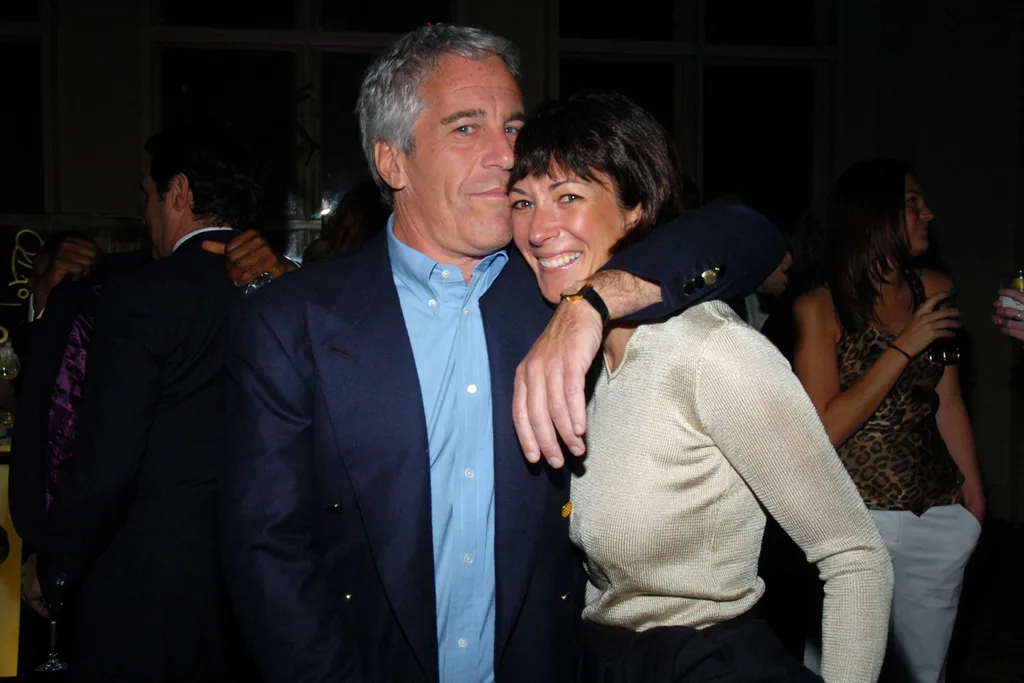
They also highlight what remains unresolved. Epstein died in a Manhattan jail cell in 2019 while awaiting trial on new charges, cutting short the possibility of a full accounting. His accomplice, Ghislaine Maxwell, is serving a 20-year sentence, but the broader ecosystem that enabled Epstein has never been comprehensively mapped in court. Less than two weeks before his death, prosecutors and his lawyers discussed the possibility of cooperation. Whatever he might have said, he never did.
In Britain, the political pressure is now turning more explicit. Prime Minister Keir Starmer has said that Mountbatten-Windsor should testify before the U.S. Congress if asked, arguing that a victim-centered approach requires anyone with relevant information to share it. American prosecutors previously sought his cooperation, only to abandon efforts after months of negotiation. There is no indication he has ever provided formal testimony.
What, Then, Have We Learned From This Latest Release?
Not that Epstein was a monster – that was established long ago. Not that powerful people exercised poor judgment – that, too, is familiar. The more unsettling lesson is how little his conviction seemed to change the behaviour of those around him. The scandal is not only what Epstein did. It is how many people, for so long, found ways to keep going about their business anyway.

Related stories
Native ad body.
Native ad body.

Native ad body.



Share this post