The tradwife phenomenon has become one of the internet’s biggest cultural flashpoints. But according to bestselling author Caro Claire Burke, the movement’s origins are far darker than its wholesome aesthetic suggests.
There are few corners of the internet as mesmerising as Tradwife TikTok.
The videos are hypnotic: women in flowing linen dresses baking sourdough from scratch, tending sprawling vegetable gardens, hanging washing in golden-hour sunlight and serving elaborate home-cooked meals to smiling husbands and perfectly behaved children. It’s a fantasy of slower living that’s captivated millions of viewers – and sparked endless debate about whether it’s simply harmless escapism or something much more insidious.
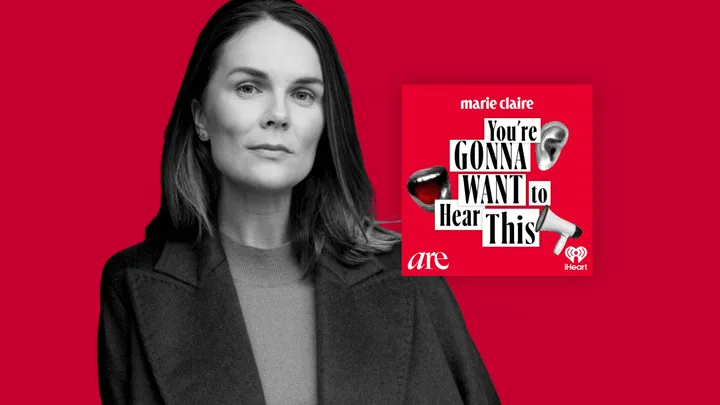
Listen To You’re Gonna Want To Hear This
But according to Yesteryear author Caro Claire Burke, we’ve misunderstood the movement from the very beginning.
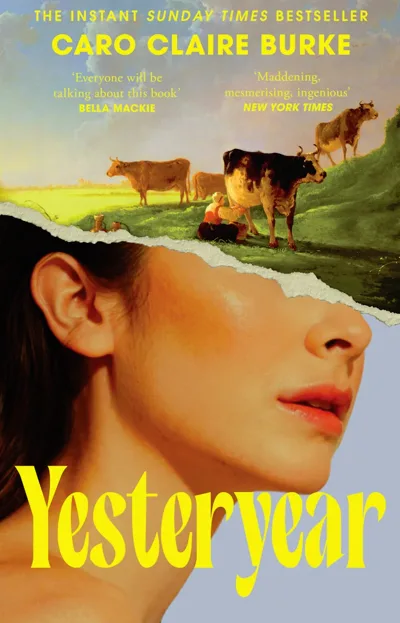
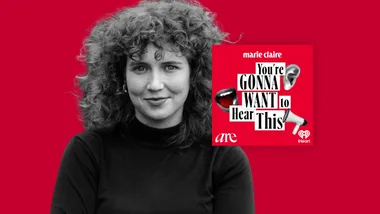
Speaking on Marie Claire Australia’s podcast You’re Gonna Wanna Hear This, Burke revealed that the term “tradwife” wasn’t created by women reclaiming traditional domesticity at all. Instead, she says, it originated in one of the darkest corners of the internet.
“My favourite fun fact about this whole topic is that the term tradwife was coined by men,” Burke says.
“It’s a term that men came up with to basically describe a woman who doesn’t exist. It was coined by incels… describing the type of woman that wasn’t in their own lives. A woman who always did everything with a smile.”
It’s a revelation that fundamentally changes how we understand one of social media’s most talked-about movements.
For years, tradwife influencers have presented themselves as women choosing a simpler, slower way of life – one centred around homemaking, raising children and embracing traditional gender roles. Their videos have attracted enormous audiences, not only from conservatives but also from women who simply find the aesthetic comforting amid increasingly chaotic modern lives.
Burke understands exactly why the content is so seductive. In fact, she admits she found herself unexpectedly pulled into the rabbit hole.
“I remember being surprised by how interested I was in it,” she says.
“I remember thinking, ‘I shouldn’t find this appealing, but I do.'”
Before long, she found herself fantasising about country life, wondering why she suddenly wanted a farmhouse kitchen, chickens and a slower existence – even though, by her own admission, it wasn’t remotely her lifestyle.
“The visuals are beautiful,” she explains. “You’re looking at rolling fields and beautiful women whose children never cry. Their houses are simple but beautiful. It almost feels attainable… and of course you don’t realise it’s a million-dollar kitchen.”
That contradiction became the seed for Yesteryear, Burke’s bestselling novel about a glamorous tradwife influencer who suddenly finds herself transported back to the brutal realities of the 1850s.
But Burke insists the book isn’t really about tradwives.
It’s about misinformation.
“It’s a book about misinformation,” she says, explaining that she intentionally played with historical inaccuracies and distorted facts throughout the novel to mirror the way information is manipulated online.
Perhaps the most confronting idea Burke explores is the relationship between tradwife culture and the manosphere – online communities built around rigid ideas of masculinity that have increasingly been linked to misogyny and radicalisation.
While many people see them as entirely separate online worlds, Burke believes they’re actually reflections of one another.
“I think they’re mirror worlds,” she says.
“The rabbit hole of becoming a tradwife is basically the online doppelgänger of the manosphere.”
She argues that although one presents itself through soft-focus domesticity and the other through hypermasculinity, both ultimately sell the same promise: that returning to rigid gender roles will solve modern life’s problems.
“For women it has to look soft because women are meant to be soft,” Burke says. “For men it has to look hard because men are meant to be hard.”
“They’re meant to be a perfect symbiosis.”
At their core, she argues, both ecosystems rely on influencers selling certainty.
“It’s a bunch of grifters,” she says. “They’re selling you a class or an overpriced bag of flour… with the promise that you’ll reach your gender alignment and everything in your life will come together.”
It’s a provocative argument, but one that resonates at a time when conversations around gender, identity and social media have become increasingly polarised.
Still, Burke is careful not to condemn women who find aspects of the tradwife aesthetic appealing.
In fact, she openly admits she does too.
“To be clear,” she says, “all of it is partially appealing to me at all times.”
Who wouldn’t want fresh food, slower mornings and less pressure?
“I think everyone should be entitled to access to fresh food,” she laughs. “I want someone to make my food from scratch.”
For Burke, that’s precisely why the conversation is worth having.
The appeal isn’t necessarily political. Often it’s deeply human – a longing for rest, simplicity and community in a world that feels increasingly exhausting.
The danger, she suggests, comes when carefully curated fantasy becomes confused with reality.
It’s a timely message, particularly as algorithms continue rewarding increasingly idealised versions of life.
As Burke’s novel – and the passionate debates surrounding it – make clear, the most powerful stories aren’t always the ones telling us what to think. Sometimes they’re simply the ones asking us why we’re so eager to believe the fantasy in the first place.
To hear the full conversation with Caro Claire Burke, listen to the latest episode of You’re Gonna Wanna Hear This, available now wherever you get your podcasts.

Related stories
Native ad body.
Native ad body.
Native ad body.