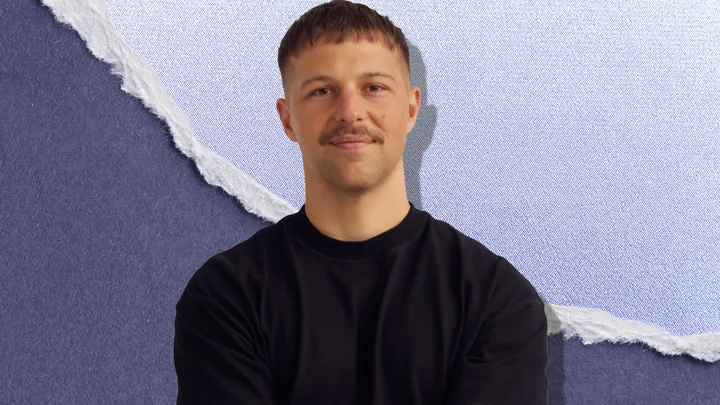
Over the past decade, Daniel Principe has stepped into more than 3000 classrooms to talk to boys about masculinity, consent and their attitudes towards women. Here, the consent educator shares what those conversations have taught him about how to champion young boys into good men.
“I didn’t receive a healthy sex education until I was in my early 20s. Up until then, it was pornography, the internet and asking my mates for life and dating advice, which, unsurprisingly, did not set me up well. I fell pretty short of being a decent fella, friend and partner. I’d grown up around a performative, “ladsy” version of masculinity that was rewarded by the male culture I was in. It wasn’t until I left high school and university and transitioned into adult life that I started to see something different. I was spending time with people older than me and watching their relationships. For the first time, I could see what it looked like to form healthier friendships and romantic relationships. The problem was, I didn’t feel as though I had the skills to create that for myself. Over the next five-plus years, I started grappling with that. I became incredibly grateful for the female friends and mentors who shaped me throughout my 20s, who modelled different ways of being in the world and shared their experiences with me. They gave me reading material, and I started on what became a bit of a homework program. It helped me make sense not only of my own experiences, but also the experiences women had shared with me. Eventually, that led me to the work I do today as a youth advocate and consent educator.
Since starting this work a decade ago, I’ve reached more than 110,000 students and 95 per cent of my sessions are with boys. Despite being a national consent ambassador, I’ve also been critical of the way we talk about consent because consent isn’t the only ethical consideration. We need a more fulsome vision of what it means to know what you’re consenting to and why, and to feel like you have agency in it. For boys, it shouldn’t just be a desire to get consent, but a desire to care about the other person: their needs, their safety, their wellbeing, their pleasure and their voice.
I’m not talking about the mechanics of sex. I’m talking about the meaning of sex. Sadly, heterosexual men and boys are often socialised through what is modelled to them, broader social norms, pop culture and porn culture to see men as dominating women and sex as conquest: something that proves your masculinity and gives you a story to bring back to the boys at lunchtime. My work is about trying to challenge that and invite boys into a far more equal, shared and pleasurable experience of sexuality that isn’t centred on male dominance, control and conquest. That sounds simple. The difficult question is: how do you actually do it?
I spend a lot of time talking to boys about entitlement. Recently, I was in Brisbane working with a group of boys and asked them what an entitled person looks like. Twenty hands went up. They were very good at articulating what they don’t like about entitled people. Then we progressed to sexual entitlement and how to tell if someone is uncomfortable. These are the kinds of social and emotional skills we need to cultivate: listening, respecting boundaries, being patient, emotionally regulating and having empathy. You’re not born with or without empathy. You can cultivate it. You can grow that moral muscle.
After my sessions, a handful of young men often stick around and ask incredibly personal questions. Some disclose struggles with obsessive body image issues, not eating or over-exercising. There’s this bombardment of looksmaxxing and the idea that you’ve got to get jacked and rich and successful, and some of them feel quite demoralised by it. Then there are the young men who have witnessed the harms done to women and girls. A couple of beautiful young men came up to me recently because they had seen what their girlfriends had experienced at the hands of other young men, and they wanted to talk about what they were feeling and how they could show up for them. In many ways, that is similar to my own story. I had my eyes opened pretty young to the harms women and girls had been subjected to physically and sexually by men. But I would love to think we could raise boys and men who don’t need that to happen to somebody they know personally before they care. That we could care because that is someone. That is a human. For me, that would be the sign that this work is really translating. That we’ve seen a real cultural shift.

There is cause for hope. But there is also cause for concern. I ask boys all the time to put their hands up if they’re seeing horrific things said about women and girls online. More than 90 per cent of them put their hands up every single day. That doesn’t mean they believe it, but we cannot have boys telling us every day that they’re seeing content saying women are gold diggers, that women should be submissive and all this other misogynistic stuff, and expect it to slide off them like water off a duck’s back. It will have an impact. At the same time, some of the young men I meet today are light years ahead of where I was at their age. They are sweet, thoughtful, kind and respectful. Yet in the same room, I can encounter callousness and apathy. That’s what makes this work difficult. Sometimes it feels like you need to have four simultaneous conversations with four different groups of boys: the ones who are fully with you and the ones who make you worry about what they might be capable of in the future.
That is why I think too much is being asked of schools. Of course, schools have an important role to play, but these attitudes are being shaped long before teenagers walk into a consent education session. Parents are raising children in uniquely difficult times. No other generation has had to raise children with smartphones, social media, accessible pornography and AI. I have enormous empathy for that. But we can’t continuously outsource this work to schools. We need parents to feel equipped to help young people understand what safe, loving relationships feel like; that ‘no’ can come in many forms; what it feels like to be rejected or have a disappointing day and manage the emotions that come with it. These conversations start when children are very little. It might be not taking a toy from your daughter simply because your son gets upset and wants it, because what does that model to him? That if he gets upset enough, he gets what he wants.
Consent, ultimately, is not just about sex. It can be as simple as taking a photo with a friend and asking, We both look cute. Can I post this online? That is me checking in with you because I recognise you as another person. I genuinely care about this other person. They matter to me.
How hopeful am I for the future? It depends which day you get me on. Right now, it feels pretty tough. There is cause for concern, and there is cause for hope. We have more information than ever and, in many ways, we already know what we need to do. The question is whether we are willing to do it. But I remain hopeful because every day I get to work with communities, school leaders and university leaders who live and breathe this work and want good for others. There are people already showing up massively in this space. We just have to keep at it.”

Related stories
Native ad body.
Native ad body.



Native ad body.