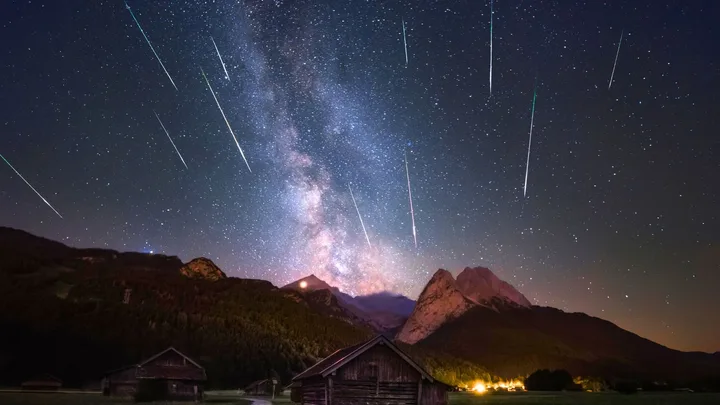
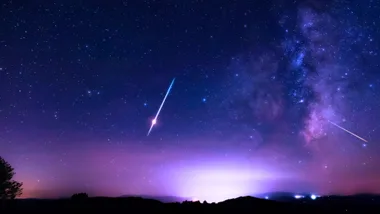
Australians are set to be treated to one of the year’s most reliable sky shows, with the Geminid meteor shower reaching its peak this weekend.
The Geminids are expected to deliver bright, frequent streaks as the shower intensifies late Sunday December 14th and into the early hours of Monday December 15th. Early forecasts point to favourable viewing conditions across much of the country, and experts say this year’s low lunar interference could make the display one of the strongest in recent seasons.
For anyone curious about when, where and how to watch, here’s what to know now.
Yes. The Geminids are visible across Australia — everyone from Darwin to Hobart can catch meteors during the peak window, though how many you see depends on latitude, light pollution and cloud cover.
Northern Australia typically enjoys the highest hourly rates because the shower’s radiant rides higher in the sky up north; southern viewers still get a beautiful show, just fewer meteors per hour on average.
“The Geminids will be particularly good this year — the Moon is out of the way, so the sky will be really dark,” says Professor Jonti Horner (USQ), told SBS News.
The Geminids are active for many nights, but the peak for 2025 falls on the weekend around Sunday 14 December into the early hours of Monday 15 December (local dates). You’ll see meteors anytime after twilight, but the richest display tends to be from midnight through pre-dawn, with a pronounced peak in the early-morning hours (roughly 2–4 a.m. local time in much of Australia).
EarthSky and NASA predict the nominal peak for this year around mid-December, and multiple Australian observatories and news outlets confirm the strongest rates on the weekend nights.
Practical tip: the night before and after peak often still produce a high tally — so if clouds roll in on Sunday, Monday morning can still be rewarding.
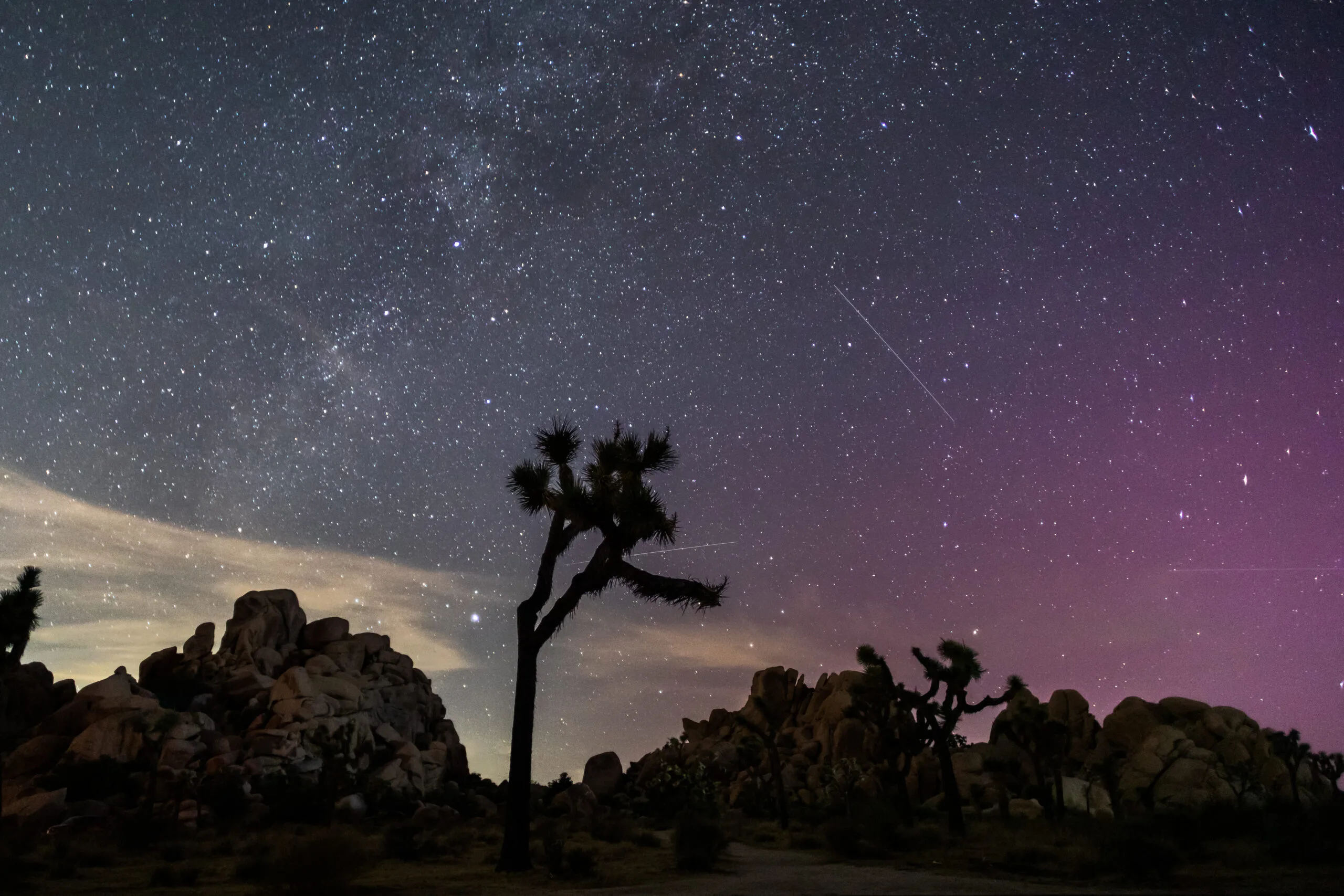
Aim for the early-morning window when the radiant is higher and the sky is darkest. For most Australian cities that means:
– Be outside after midnight, with peak odds between 2:00–3:30 a.m. local time. ABC
Before you head out:
– Let your eyes adapt to the dark for at least 15–30 minutes (no phone screens).
– Find a wide, open view with the least light pollution possible.
– Bring a blanket, a reclining chair, and a thermos — you’ll be on deck for a while.
| City / Region | Best Viewing Window (Local Time) | Peak Conditions |
|---|---|---|
| Sydney | 2:00–4:00 a.m. | Radiant high enough for strong hourly rates. |
| Melbourne | 2:30–4:30 a.m. | Later rise of Gemini delays the best viewing. |
| Brisbane | 1:30–3:30 a.m. | Radiant climbs earlier due to latitude. |
| Perth | 2:00–4:00 a.m. | Dark western skies offer excellent contrast. |
| Adelaide | 2:00–4:00 a.m. | Steady rise of the radiant through the night. |
| Hobart | 2:30–4:30 a.m. | Lower radiant height pushes the peak slightly later. |
| Darwin | 1:00–3:00 a.m. | One of the earliest and strongest peak windows. |
| Canberra | 2:00–4:00 a.m. | High-quality dark-sky viewing just outside the city. |
There are no guarantees when it comes to the number of meteors we can expect to see during the shower, but given the expected favourable conditions, ABC Science reporting, local observatories and NASA have shared their estimates. The numbers vary per state, starting at an estimated 10 to 20 in Victoria and ranging upward of 40+ in Queensland. See the full breakdown below.
| State / Territory | Expected Meteors Per Hour | Notes |
|---|---|---|
| NSW | 15–30 | Best if viewing inland or along darker coastal stretches. |
| Victoria | 10–20 | Lower radiant height; rural VIC performs noticeably better. |
| Queensland | 20–40+ | Northern QLD often sees the strongest rates in Australia. |
| Western Australia | 15–35 | WA’s dry skies and open horizons help lift numbers. |
| South Australia | 12–25 | Ideal outside Adelaide’s light dome. |
| Tasmania | 10–20 | Crisp southern skies, but radiant sits lower. |
| Northern Territory | 30+ | High radiant altitude makes NT one of the best spots. |
| ACT | 15–30 | Great dark-sky access just outside Canberra. |
Happy viewing!

Related stories

Native ad body.
Native ad body.



Native ad body.