


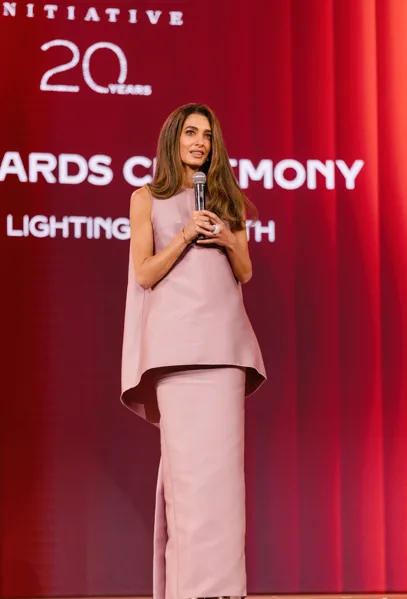
There are few rooms as inspiring as one filled with women who have decided the world’s biggest problems are theirs to solve. In Bangkok, as the Cartier Women’s Initiative celebrates its twentieth anniversary, founders from more than 30 countries gathered alongside business leaders, philanthropists and advocates – including Amal Clooney – to celebrate ideas that are changing lives.
The Cartier Women’s Initiative has become one of the world’s most influential incubators for female impact entrepreneurs. Since 2006 it has supported more than 330 fellows across 66 countries, awarded US$14.1 million in grants and, perhaps more importantly, built a global community that believes business can be one of the most powerful forces for social change.
This year, the ceremony took place inside Bangkok’s Chulalongkorn University Auditorium, but the real work had already happened. For several days beforehand, the thirty fellows have been immersed in leadership training, debate, mentoring, executive education and media coaching. It is, says Cartier Women’s Initiative Director Kiyo Taga, transformational.


“It’s really not about the dollar amount,” she tells marie claire. “The grant helps, but what the fellows value most is the coaching, the mentoring and the leadership development.” Watching the latest cohort together has become one of her favourite parts of the programme. “Within just three days, you could see the shift. By the end, they weren’t just listening – they were challenging each other, debating ideas and finding their voices.” She smiles recalling one particularly revealing moment: thirty exhausted founders, fresh from intensive leadership sessions, reluctantly arriving at a boxing class led by British-Somali boxer Ramla Ali. “They showed up haggard,” she laughs. “By the end they were cheering each other on. Nobody was left behind. That’s really the philosophy of the Cartier Women’s Initiative.”
Confidence, after all, compounds much like investment. Cartier understands this perhaps better than most. A maison built on craftsmanship knows that the invisible work often matters more than the visible result. “We didn’t start this because it was a trend,” says Yanina Novitskaya, CEO of Cartier Southeast Asia and Oceania. “We started it because supporting women has always been part of Cartier’s DNA.” Having spent almost two decades at Cartier herself, she has witnessed what she describes as its evolution into something far bigger than an entrepreneurship programme. “We don’t do this because it’s expected of us,” she says. “We do it because it’s genuinely close to our hearts.”
The entrepreneurs themselves span healthcare, education, biodiversity, disability inclusion and climate resilience, but Novitskaya believes they all share the same defining characteristic. “They have courage,” she says. “They are brave enough to stand up and say, ‘There is a problem, and I want to be part of the solution.'” Many are solving problems they have experienced themselves. Melbourne-based fellow Rosie Dumbrell, founder of Everform Therapywear, is tackling an issue millions of women quietly endure, developing non-invasive wearable technology to help treat incontinence, pelvic pain and prolapse. Then there’s Adelaide-based Alexandra Cannizzaro, founder of Platform Zero, who is reducing food waste by connecting growers and wholesalers through a digital marketplace that helps fresh produce move from farm to plate more efficiently. Ruby Riethmuller – from Wagga Wagga in NSW – founded an organisation called Womn-Kind, which is giving girls and gender-diverse young people the tools to build resilience, leadership and belonging through preventative mental health education.
Beyond Australia, the breadth of this year’s fellowship is extraordinary. In France, Élise Thorel is helping immigrant women rebuild their careers through a catering business that celebrates cultural heritage. Across Africa, Mylène Fifamè is equipping workers with practical, job-ready skills through online education, while Adeline Pelage is reimagining the continent’s biscuit industry with locally made, preservative-free snacks that create jobs and improve nutrition. In Cameroon, Alice Ndeh is building financial resilience for individuals and small businesses through accessible money management, while in the United States, Keely Cat-Wells is helping companies recruit, train and retain talented professionals with disabilities. And for neurodivergent children, Vanessa Castañeda Gill is using education as empowerment, creating social-emotional learning tools that encourage young people to embrace their identities and advocate for themselves. Different continents, different challenges, yet all arriving at the same conclusion: meaningful businesses are often born from a personal understanding of what a community needs most.
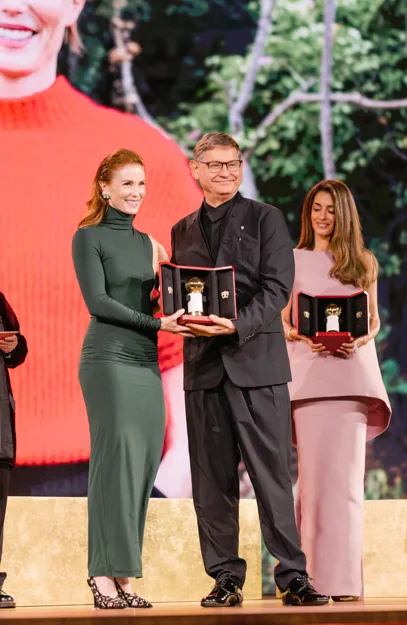
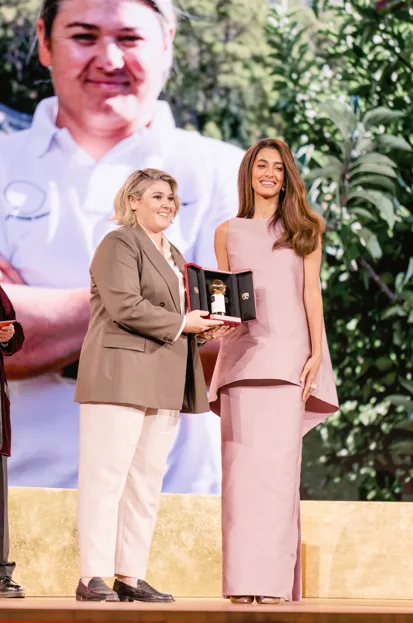
“Opportunities are not universal, but talent is,” says Taga. It is one of those deceptively simple observations that neatly explains why the initiative has endured while countless others have faded. Cartier deliberately looks beyond the obvious innovation hubs, searching instead for extraordinary women in places where venture capital rarely reaches.
For Novitskaya, diversity of geography also demands diversity of thinking. “Sometimes culture is even more important than business education,” she says. “When you lead across so many countries and cultures, cultural intelligence becomes essential.” It is why creativity, she argues, should be understood far more broadly than art or design. “Creativity isn’t just making art,” she says. “Creativity is finding new solutions, creating greater impact with the same resources and seeing opportunities where others see challenges.”
The statistics tell one story. Ninety-seven per cent of fellows report increased confidence. Ninety-four per cent stronger leadership skills. Every participant says they leave feeling part of a global community. The more revealing measure, however, may be what happens after the applause. More than 500 fellows remain active within the Cartier Women’s Initiative community long after the ceremony ends. They mentor one another, collaborate across continents and open doors for the next generation.
“When they’re standing on that stage,” says Taga, “they always say, ‘For the first time in my life, I feel seen.'” Perhaps that, more than any grant, is the initiative’s greatest gift. “We often talk about how men should support women more,” says Novitskaya. “But I also believe women need to support one another more. That’s where real change happens.”
Taga agrees. “That little voice telling you you’re not good enough? Silence it. If you have the conviction and the motivation, keep going.”
In an era obsessed with disruption, perhaps the Cartier Women’s Initiative offers something more enduring: proof that changing the world rarely begins with money alone. More often, it begins when one woman believes in another before she has quite learned to believe in herself.
Go to cartierwomensinitiative.com

Related stories

Native ad body.

Native ad body.




Native ad body.





Share this post